
Best Dual SIM Refurbished iPhones for US Buyers in 2026

Buy an unlocked, certified refurbished iPhone from a trusted refurbisher that discloses the model identifier, SIM type, battery health, cosmetic grade, and warranty. The rest is knowing which models actually support Dual SIM and what the US eSIM-only shift means for your physical SIM cards.
Best immediate options by model family:
- XS / XR through iPhone 12: nano-SIM + one eSIM slot; physical tray present; solid hybrid choice
- iPhone 13 / 13 Pro / 13 Pro Max / 13 mini: dual eSIM capable; no second physical tray, but two eSIM profiles can run simultaneously
- iPhone 14 / 15 / 16 (US market): eSIM-only; no physical SIM tray at all on US-sold units
- China / HK / Macau variants (select models): dual physical nano-SIM trays; no eSIM
US buyers, pay attention: iPhone 14 and later sold in the United States ship without a physical SIM tray. If your carrier or travel plan requires a physical SIM card, buy a non-US market listing or stick with iPhone 13 or older.
Key Takeaways
Buying a dual SIM refurbished iPhone comes down to three decisions: the right model generation, confirmed unlocked status, and a certified refurbisher who discloses battery health and grade upfront.
| Point | Details |
|---|---|
| US iPhone 14+ are eSIM-only | No physical SIM tray on US-market iPhone 14, 15, and 16; buy non-US listing or iPhone 13 if you need a physical slot. |
| Always buy unlocked | A carrier-locked unit restricts both Dual SIM lines to one carrier, defeating the purpose for most buyers. |
| Verify battery health and grade | Request a battery health screenshot and confirm the A–D cosmetic grade before paying; below 85% warrants a price discount. |
| Check the model identifier | The A-series model number (not just “iPhone 14”) confirms the market SKU and SIM configuration. |
| Devicegiant for certified inventory | Devicegiant’s TrueGrade inspection, 90-day return policy, and disclosed battery health reduce Dual SIM purchase risk. |
Table of Contents
- What should you check when buying a dual SIM refurbished iPhone?
- Which iPhone models support Dual SIM, and how does it differ by market?
- How does Dual SIM work on iPhone, and how do you set it up?
- How can you verify Dual SIM support before you buy?
- What do refurbished Dual SIM iPhones cost, and how does condition affect price?
- Why buy from a certified refurbisher for your Dual SIM iPhone?
- The part most buyers skip that actually matters most
- Devicegiant has certified Dual SIM iPhones ready to ship
- Sources
What should you check when buying a dual SIM refurbished iPhone?
Getting this wrong costs you a return shipping label and two weeks of frustration. Before you pay, confirm every item on this list:
- Exact model identifier: The model number (e.g., A2483 for a US iPhone 13 Pro) tells you the market SKU. Don’t accept “iPhone 13” alone.
- Region / market code: US models for iPhone 14+ are eSIM-only. A non-US model of the same generation may have a physical tray.
- SIM type supported: eSIM-only, nano + eSIM (hybrid), or dual physical nano-SIM (China variants).
- Unlocked status: Carrier-locked refurbished phones restrict multi-carrier Dual SIM use. An unlocked device lets you run two lines from different carriers simultaneously.
- Battery health percentage: Disclosed upfront by reputable sellers. Below 85% warrants a price discount or a pass.
- Cosmetic grade: A through D grading tells you screen and body condition. Grade A means minimal wear; Grade D means visible damage.
- Warranty and return policy: A 90-day return window is the floor for a trustworthy refurbished purchase.
Carrier compatibility matters more than most buyers realize. An unlocked iPhone lets you activate a local eSIM from any supported carrier while keeping your primary line active on the other slot. A carrier-locked unit limits both lines to that carrier’s plans, which defeats the purpose of Dual SIM for most people.
Refurbishment disclosures are where sellers separate themselves. A rigorous inspection like Devicegiant’s TrueGrade 25-point checklist covers functional tests, radio performance, SIM tray integrity, eSIM activation, and battery health. Grade definitions (A through D) with honest cosmetic descriptions give you a real picture of what arrives at your door.
Pro Tip: Ask the seller for the full model number (starts with “A” followed by four digits) and cross-reference it on Apple’s tech specs page. A seller who can’t or won’t provide this in under five minutes is a red flag. For Devicegiant listings, the model identifier and cosmetic grade appear directly on the product page.
Which iPhone models support Dual SIM, and how does it differ by market?
Model and region determine SIM configuration far more than the refurbishment process itself. The table below maps generation ranges to their supported SIM types across key markets.
iLounge’s model-compatibility mapping confirms these regional exceptions, including the China/HK/Macau dual physical nano-SIM variants and the US eSIM-only shift starting with iPhone 14.
Apple also documents regional differences for dual physical SIM models in China, Hong Kong, and Macao, where select models ship with two physical nano-SIM trays instead of eSIM hardware.
Quick compatibility checklist:
- Need a physical SIM tray? Buy a non-US market listing or choose iPhone 13 or older.
- Need two eSIM profiles? iPhone 13 or later works; verify your carrier supports eSIM before buying.
- Traveling internationally with local SIMs? A US eSIM-only iPhone 14+ is actually convenient since local eSIMs download instantly without swapping cards.
- Importing a China-variant for dual physical SIMs? Confirm the model has no eSIM hardware, since those variants traded eSIM for the second tray.
How does Dual SIM work on iPhone, and how do you set it up?
Apple’s Dual SIM documentation explains that iPhone uses Dual SIM Dual Standby (DSDS): both numbers can make and receive calls, FaceTime calls, and messages simultaneously, but the device uses only one cellular data network at a time. You can set which line handles data by default, and Allow Cellular Data Switching lets the phone use the other line’s data when the primary is unavailable.
Setup steps (physical + eSIM or dual eSIM):
- Go to Settings > Cellular and tap Add Cellular Plan.
- Scan the QR code your carrier provides, or use your carrier’s app to download the eSIM profile.
- Label each line (e.g., “Work” and “Personal”) when prompted.
- Set your Default Voice Line and Default Data Line under Cellular settings.
- Toggle Allow Cellular Data Switching on if you want automatic fallback to the secondary line’s data.
Apple’s setup guide covers line labeling, default voice and data selection, and the Allow Cellular Data Switching toggle in detail.
Troubleshooting tips if Dual SIM won’t activate:
- Confirm the device is fully unlocked. A carrier-locked iPhone will reject a second carrier’s eSIM.
- Verify your carrier supports eSIM. Not all US carriers or MVNOs do.
- Check Wi-Fi Calling settings. When one line is active on a call, the other line may need Wi-Fi Calling enabled to receive incoming calls simultaneously.
- If an eSIM profile won’t download, restart the device and retry. If it still fails, contact the carrier directly with the EID number from Settings > General > About.
On battery: running two active radio profiles draws more power than a single SIM. Turning off Allow Cellular Data Switching when you don’t need it, and keeping one line on LTE rather than 5G, helps offset that drain.
How can you verify Dual SIM support before you buy?
A refurbished iPhone retains its original eSIM hardware. Refurbishment removes prior owners’ eSIM profiles and user data, so you activate your own carrier eSIM fresh after setup. What refurbishment does not change is whether the hardware supports eSIM at all. That is determined by the original model and market SKU.
Verification checklist to request from the seller:
- Full model number (A-series identifier, not just “iPhone 14”)
- IMEI number for an independent lookup
- Screenshot of Settings > General > About showing model and IMEI
- Battery health screenshot from Settings > Battery > Battery Health & Charging
- Written confirmation the device is carrier-unlocked
To check a model’s original market, run the IMEI through Apple’s coverage checker at checkcoverage.apple.com or use a third-party IMEI lookup tool. The result shows the original country of sale and carrier lock status.
Red flags in listings:
- Model listed as just “iPhone 14” with no A-series identifier
- No battery health disclosed or seller says “battery is fine”
- Seller declines to show Settings screenshots
- Warranty listed as “1 year” from a private seller with no certification backing
- Shipping times of 3–4 weeks from overseas with no tracking detail
If a seller won’t provide the model identifier, IMEI, and a battery health screenshot, walk away or request a written conditional return policy before paying. Macworld’s refurbished iPhone buying guide reinforces this: certified refurbishers with transparent disclosures are the safer route over private listings precisely because the documentation exists before you pay.
What do refurbished Dual SIM iPhones cost, and how does condition affect price?
Price varies significantly by generation, condition grade, and unlocked status. Broad bands give you a realistic baseline:
- XS / XR / iPhone 11 series: typically $60–$150 for unlocked, Grade B or C units with disclosed battery health
- iPhone 12 series: $130–$200 range; refurbished iPhone 12 models from Devicegiant start around $163
- iPhone 13 series: $150–$280; a refurbished iPhone 13 with dual eSIM capability starts around $39 for entry-grade units
- iPhone 14 series (US eSIM-only): $200–$320; iPhone 14 Midnight from Devicegiant from $219
- iPhone 15 series: $280–$420; refurbished iPhone 15 from Devicegiant from $278
Battery health and cosmetic grade create step changes in price. Units with lower battery health generally cost less. Grade A cosmetic condition commands a premium; lower grade units trade appearance for savings. Carrier-locked units are cheaper but limit your Dual SIM options to one carrier’s plans for both lines.
Red flags on pricing:
- A brand-new-generation model priced 60%+ below typical refurbished market rates
- No cosmetic grade listed alongside a “like new” description
- Shipping from overseas with no US-based return address
Refurbished iPhones can cost up to 70% less than new retail price, which is the core value proposition. The savings are real, but only when the listing discloses enough detail to confirm what you’re actually getting.
Why buy from a certified refurbisher for your Dual SIM iPhone?
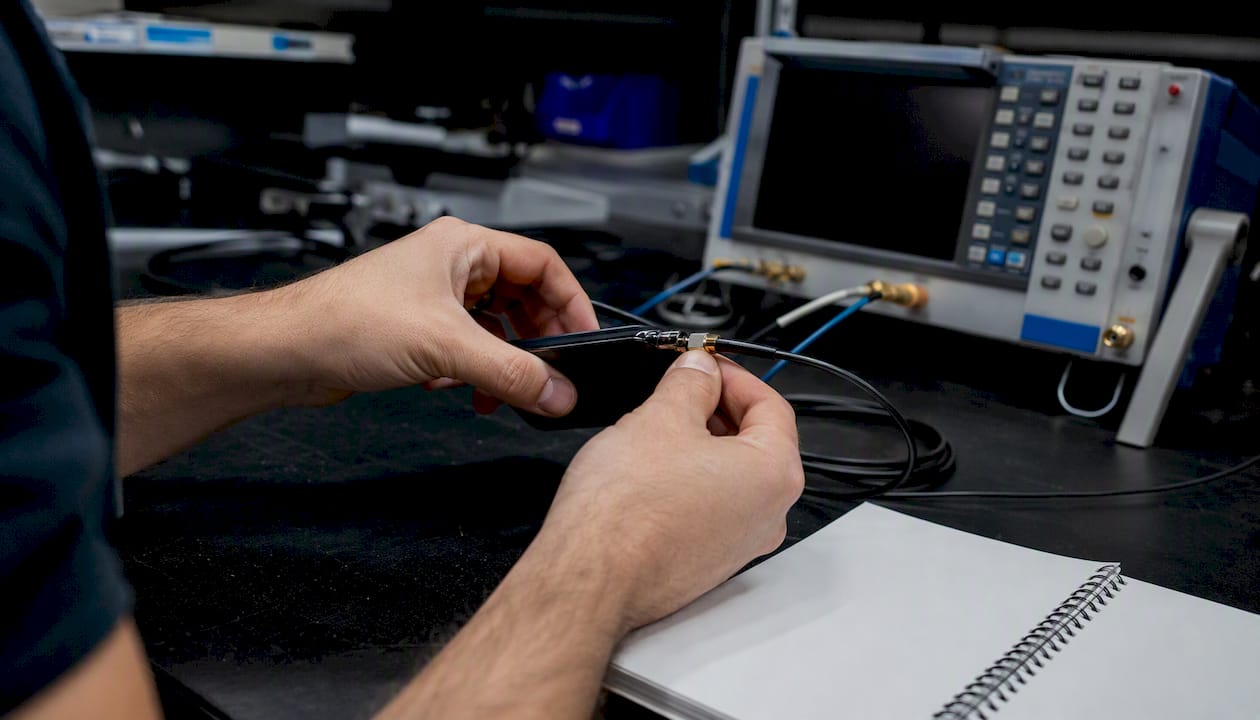
Devicegiant’s TrueGrade inspection runs each device through a 25-point functional checklist before it ships. For Dual SIM buyers, the relevant checks include radio performance (cellular, Wi-Fi, Bluetooth), SIM tray integrity on hybrid models, eSIM activation testing, and battery health measurement. A device that passes all 25 points ships with a disclosed grade and battery percentage, not a vague “tested and working” label.
The 90-day return policy matters specifically for Dual SIM purchases because eSIM activation issues sometimes surface after the device is in your hands and you’ve attempted carrier setup. A 90-day window gives you time to test both lines with your actual carriers before the return option closes.
Devicegiant’s 99.8% positive feedback on eBay reflects consistent grading accuracy and post-purchase support. For Dual SIM buyers, that post-purchase support includes help with eSIM activation questions.
Trust signals to look for in any certified refurbisher:
- Disclosed battery health percentage on every listing
- A-through-D cosmetic grading with honest descriptions
- Transparent product photos showing actual device condition
- A return policy with a defined window (90 days is the benchmark)
- Seller feedback or verified ratings from real buyers
Pro Tip: When contacting Devicegiant support about a specific listing, ask directly: “Is this unit carrier-unlocked, and has the eSIM slot been tested?” For hybrid models (iPhone XS through 13), also ask whether the nano-SIM tray is present and undamaged. These two questions take 30 seconds and eliminate the most common Dual SIM surprises.
The part most buyers skip that actually matters most
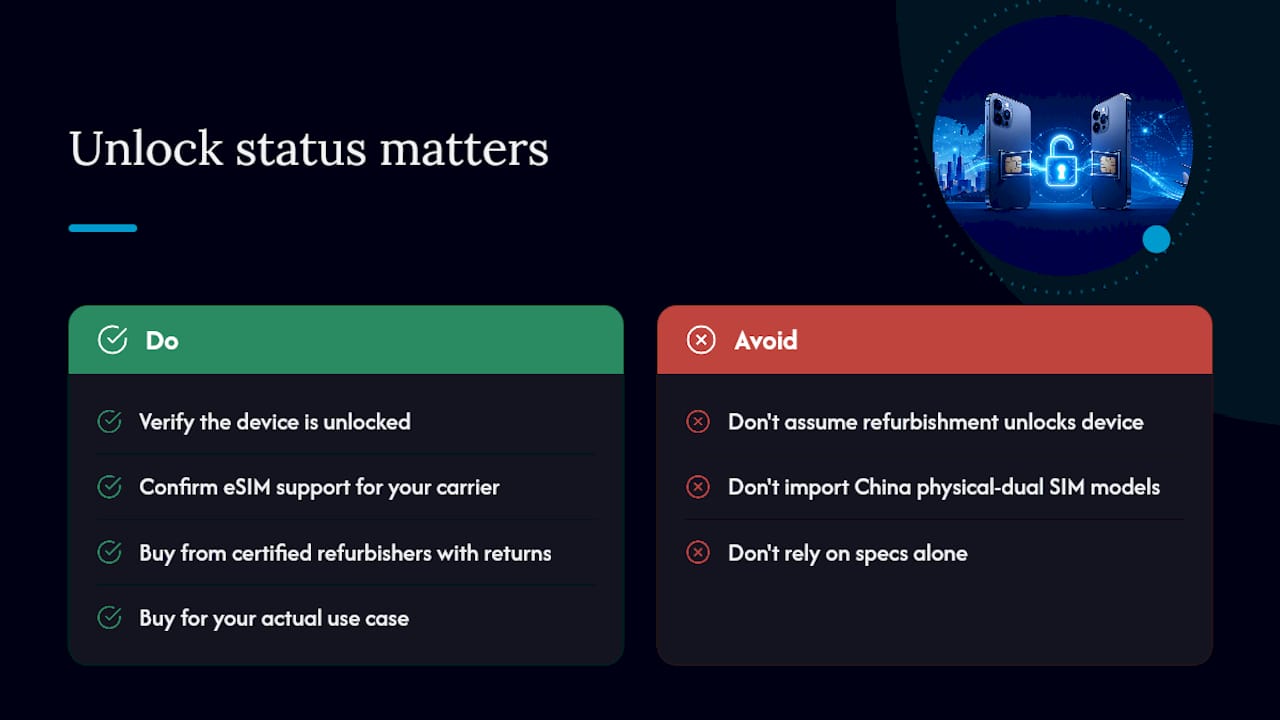
Most Dual SIM iPhone guides spend their energy on model specs and setup steps. The part buyers consistently underestimate is the unlocked status check, and it’s the one that actually determines whether Dual SIM works the way they expect.
A carrier-locked refurbished iPhone 14 with eSIM-only hardware is technically a Dual SIM device. In practice, if it’s locked to AT&T, your second “line” has to be another AT&T plan. That’s not Dual SIM in any meaningful sense for someone who wants a T-Mobile travel eSIM alongside their Verizon primary line.
The eSIM-only shift on US iPhone 14+ models is genuinely useful once you accept it. Downloading a local carrier eSIM in seconds at an airport beats hunting for a SIM card vendor. But that only works if the device is unlocked. The refurbishment process doesn’t change the lock status; the seller either unlocked it or didn’t.
The other thing worth saying plainly: the China-variant dual physical SIM iPhones are not a clever workaround for US buyers who want a physical tray. Those models lack eSIM hardware entirely. If you import one and your US carrier has moved to eSIM-only activation, you have a problem. Buy for your actual use case, not for the spec sheet.
Certified refurbishers with transparent grading and a real return policy aren’t just a nice-to-have. They’re the only way to verify unlocked status, battery health, and SIM configuration before the device is in your hands.
Devicegiant has certified Dual SIM iPhones ready to ship
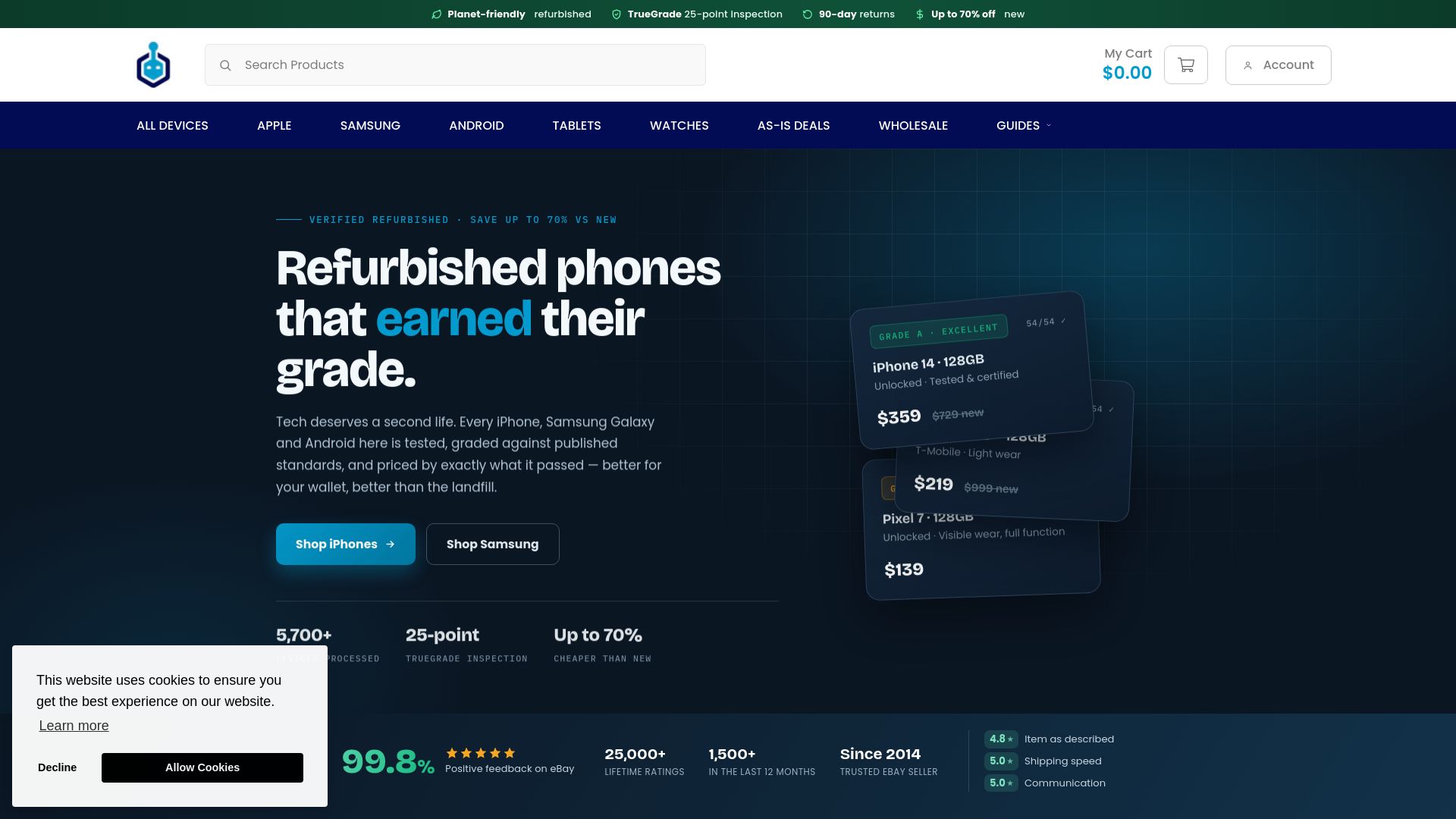
Devicegiant lists unlocked, certified refurbished iPhones with disclosed battery health percentages, A-through-D cosmetic grades, and a 90-day return policy on every unit. Every device passes the TrueGrade 25-point inspection before it ships, including radio and eSIM activation testing.
For Dual SIM buyers specifically:
- Unlocked inventory across iPhone XS through iPhone 15 series
- Battery health disclosed on every listing
- eSIM activation support available post-purchase
- Standard US shipping with tracking
To find Dual SIM-capable models, filter by model generation (iPhone XS or later) and select “unlocked” in the carrier filter. Use the A-series model identifier on each product page to confirm the market SKU before checkout. Shop refurbished iPhones at Devicegiant and use the model identifier to run your own IMEI check before placing the order.
Sources
- Use Dual SIM on iPhone - Apple Support
- Can I use eSIM on a refurbished iPhone
- iPhones with Dual SIM Support - 2026
- Best places to buy refurbished iPhone


