
Verify 5G on Refurbished Phones for U.S. Buyers: 25 Point Checklist

Yes, refurbished phones can absolutely support 5G, but only when the specific model and variant were built with 5G hardware and match your carrier’s bands. Not every refurbished listing is 5G capable, and even one that is can still fail on your network if it’s the wrong model number, locked to another carrier, or missing IMEI clearance. Before you buy, verify the model variant, band support, unlock status, and the seller’s inspection and warranty terms.
TL;DR:
- Verify the exact model number and compare its supported 5G bands with your carrier’s coverage map before purchasing.
- Ensure the refurbished device is unlocked, has a clean IMEI, and was manufactured in 2019 or later to guarantee 5G hardware compatibility.
- Ask about RF components, antennas, and thermal shielding during refurbishment, as poor repair quality can impair 5G performance.
- Test the phone by inserting a SIM, activating 5G in settings, and running a speed test within the return window to confirm proper network connection.
- Choose reputable refurbishers with transparent diagnostics, extended warranties, and clear documentation to ensure consistent 5G support and long-term reliability.
Table of Contents
- How Do I Check 5G Compatibility on a Refurbished Phone?
- How Does Refurbishment Quality Affect 5G Performance?
- What Should You Test or Ask Before Buying?
- What Warranty and Return Protections Should You Expect?
- What Does a Verified Refurbishment Process Actually Look Like?
- Cost Differences Between Refurbished and New 5G Phones
- How Long Does Buying a Refurbished 5G Phone Take?
- Will Software Updates Keep 5G Working Long Term?
- Where to Verify 5G Bands, Unlocking Rules, and Refurbisher Standards
- The Checklist Matters More Than the Brand Name
- Get a 5G-Ready Refurbished Phone Without the Guesswork
- Sources
- FAQ
How Do I Check 5G Compatibility on a Refurbished Phone?
Start with the exact model number, not the marketing name. “iPhone 12” and “Galaxy S22” cover multiple hardware variants sold to different carriers worldwide, and only some of those variants support the bands your carrier actually uses in the United States. Pull up the model number in Settings (usually under “About Phone”) or ask the seller for it before you buy, then cross-reference it against your carrier’s coverage maps.
Here’s the verification sequence that actually catches problems before they become your problem:
- Find the exact model/variant number. Skip the nickname and get the alphanumeric code (for example, an iPhone’s model number starting with “A”).
- Compare supported bands to your carrier’s list. Every 5G device needs the right hardware and band support to connect, and that support varies by model and carrier, according to the FCC’s 5G guidance. Sub-6 GHz bands cover most nationwide 5G, while mmWave is rarer and carrier-specific.
- Confirm unlock status and run an IMEI check. A phone sold as “unlocked” isn’t automatically clean. Carriers maintain their own unlocking and blacklist policies, and the FCC’s unlocking guide explains why you should verify eligibility rather than take a listing’s word for it.
- Check SIM/eSIM compatibility and provisioning needs. Some carriers must provision a device on their network before 5G activates, even on fully compatible hardware.
- Ask for a refurbishment report. Request confirmation of battery health and whether any RF components were replaced during servicing.
A few extra checks are worth the five minutes they take:
- Search the model number on your carrier’s own device-compatibility tool, not a third-party blog.
- Look up the manufacturer’s support page for that exact model. Google’s Pixel 5G support page is a good example of how band details vary even within one product line.
- Confirm the phone was manufactured in 2019 or later. Commercial 5G modems, including the Qualcomm Snapdragon X55, only reached devices starting that year, so anything older simply lacks the radio hardware.
- If you’re set on a specific carrier, resources like Devicegiant’s Spectrum Mobile compatibility guide walk through the same band-matching logic for a real network.
How Does Refurbishment Quality Affect 5G Performance?
The parts that get replaced during refurbishment matter more for 5G than for older networks, because 5G relies on more antennas, tighter RF tuning, and better thermal management than 4G ever did. A rushed repair can leave a phone technically “5G capable” on paper while performing poorly in practice.
Components worth asking about:
- Antennas and RF modules. Physical damage or a low-quality replacement antenna can knock out mmWave or specific sub-6 bands entirely.
- Modem integration. The 5G modem has to communicate cleanly with the rest of the board; sloppy repair work can introduce intermittent drops.
- Thermal shielding. 5G radios generate more heat, and a refurbisher who skips thermal paste or shielding during a board repair can trigger throttling that looks like a signal problem.
- Battery health. A degraded battery can’t sustain the power draw 5G radios need, which shows up as the phone falling back to 4G under load.
Manufacturer-certified refurbishing programs tend to use authentic replacement parts, fresh batteries, and run extensive diagnostics, according to Consumer Reports, while third-party sellers vary widely in what they check and disclose. That gap is exactly why the same model number can perform differently depending on who refurbished it.
Symptoms that look like a bad SIM or dead zone but are actually refurbishment issues include: 5G icon appearing then dropping to LTE within seconds, overheating during video calls, and inconsistent signal bars in a spot where other phones get full 5G.
Pro Tip: Ask the seller directly whether any RF components were replaced during refurbishment. A seller who can’t answer, or who dodges the question, probably didn’t run that diagnostic in the first place.
What Should You Test or Ask Before Buying?
Testing takes ten minutes and it’s the difference between a confident purchase and a return-shipping hassle. Do this before you hand over money, or immediately after if buying online with a return window.
- Insert a working SIM card and open cellular settings to confirm 5G appears as an option (not just LTE/4G).
- Watch for the 5G icon in the status bar, then run a quick speed test in an area with known 5G coverage.
- Check Settings for network mode options; on an iPhone, Apple’s own guide on using 5G with your iPhone walks through exactly where these toggles live.
- If 5G doesn’t appear, restart the phone and toggle airplane mode. Provisioning delays are common and often resolve within a few minutes.
Documentation worth requesting from the seller:
- A screenshot of Settings showing 5G capability
- Current battery health percentage
- An IMEI check confirming clean status, not blacklisted
- The refurbishment checklist or report
Ask the seller plainly: “Is this model unlocked for all major carriers, and can you confirm the IMEI is clean?” A seller with nothing to hide answers immediately with documentation. If 5G still won’t activate after your SIM is inserted, call your carrier first. Provisioning issues are common, and a phone can be fully compatible in hardware terms and still need the carrier to activate 5G on its end. If the carrier confirms a hardware problem, use your return window right away.
What Warranty and Return Protections Should You Expect?
Warranty length varies widely across the refurbished market, and it directly affects whether you’re covered if a 5G-related defect shows up weeks later. Ninety-day windows are common; some sellers offer a full year, and others offer none at all.
The FTC’s guidance on buying used devices recommends confirming return and refund rules before you pay, not after, and reading the actual warranty terms rather than trusting a seller’s summary. That same guidance points to safer payment methods, credit cards over wire transfers or gift cards, because card issuers offer purchase protections that most other payment methods don’t.
Red flags that justify walking away from a listing:
- No IMEI or model number provided in the listing
- Vague refurbishment language like “fully tested” with no detail on what that means
- No stated return policy, or a return window under 14 days
- Seller feedback history that’s thin, unverifiable, or mostly recent
A working repair partner matters here too. Services like Mobile Care USA handle the kind of diagnostic and RF repair work that separates a properly refurbished phone from one that just looks clean.
What Does a Verified Refurbishment Process Actually Look Like?
Devicegiant runs every device through a TrueGrade 25-point inspection before it’s listed, covering functional checks alongside disclosed cosmetic grading from A to D. For 5G specifically, that means antenna and RF performance, battery health, and IMEI status all get checked and documented rather than assumed.
What that looks like on a real listing:
- Unlocked and carrier-specific options are labeled clearly, so you’re not guessing about compatibility
- Battery health is disclosed, not hidden behind “good condition” language
- A 90-day return policy backs the purchase if something doesn’t work as described
- A track record of 99.8% positive feedback on eBay reflects consistency across thousands of sales
Pro Tip: Whichever refurbisher you buy from, require the same three things Devicegiant discloses by default: unlock status, battery health, and a clean IMEI check. If a listing is missing all three, keep looking.
Cost Differences Between Refurbished and New 5G Phones
Refurbished 5G phones typically cost significantly less than the same model new, often with discounts varying widely depending on condition grade and age. That gap widens for flagship models a generation or two old, since the newest phones hold their new-retail price the longest.
Grading matters as much as the model here. A device graded closer to like new will cost more than one with visible cosmetic wear (scratches, minor dents) even though both pass the same functional and 5G checks. If you don’t care about cosmetics, a lower grade gets you the same radio hardware and the same 5G bands for less money.
The other cost consideration is longevity math. A refurbished flagship from two years ago often has more 5G headroom left, in terms of software support and band coverage, than a brand-new budget phone. Paying more upfront for a new low-end 5G phone doesn’t necessarily buy you more usable years than a refurbished high-end one.
One more factor: carrier-specific refurbished phones are usually cheaper than unlocked ones, because the market for locked devices is smaller. If you’re loyal to one carrier and don’t plan to switch, buying carrier-locked can shave more off the price without touching your 5G experience at all.
How Long Does Buying a Refurbished 5G Phone Take?
The full process, from research to a working phone in hand, typically runs anywhere from same-day (buying locally in person) to about a week for online orders with shipping.
A realistic timeline looks like this: model research and band comparison takes 15 to 30 minutes if you’re using carrier compatibility tools directly. Reading seller listings, checking IMEI status, and confirming return policy adds another 15 minutes per listing you’re seriously considering. Placing the order and waiting for shipping is where most of the time goes, usually 2 to 5 business days for standard shipping from most online refurbishers.

Once the phone arrives, testing 5G takes minutes: insert your SIM, check settings, run a speed test. If everything checks out, you’re done. If it doesn’t, most sellers with a 90-day return window give you plenty of room to sort out a provisioning issue with your carrier before you need to decide on a return.
The one step people skip and shouldn’t: confirming carrier provisioning before the return window gets tight. If 5G doesn’t show up in the first day or two, call your carrier immediately rather than waiting. Provisioning problems are usually quick fixes, but only if you catch them early enough to still act on your return policy.
Will Software Updates Keep 5G Working Long Term?
Software support cutoffs are the quiet risk with any refurbished phone, 5G or not. Manufacturers eventually stop shipping security and carrier-configuration updates for older models, and that matters more for 5G than for basic calling because 5G networks change their configurations over time.
Carriers periodically update how devices need to be provisioned or which bands are prioritized in a given area. A phone that’s still receiving OS and carrier-settings updates adapts automatically. One that’s aged out of support can start losing 5G reliability even though the hardware itself hasn’t changed at all.
This is where model age matters twice: once for whether the phone ever had 5G hardware, and again for how many years of updates it has left. A refurbished phone from a line still under active manufacturer support is a safer long-term bet than an older 5G-capable model nearing its update cutoff, even if both work fine on day one.
Check the manufacturer’s own support page for the specific model’s update timeline before buying, not just its current specs. That single check tells you whether you’re buying a phone with years of 5G-relevant updates ahead of it, or one that’s already close to the end of its support life.

Where to Verify 5G Bands, Unlocking Rules, and Refurbisher Standards
A few official sources settle most compatibility questions faster than any forum thread:
- The FCC’s 5G FAQ covers hardware basics and how band support determines whether a device works on a given network.
- The FCC’s cell phone unlocking guide explains IMEI and carrier unlock rules in plain terms.
- Consumer Reports and manufacturer support pages cover model-specific band details and what separates a certified refurbishment from a cosmetic-only one.
The Checklist Matters More Than the Brand Name
Most advice on refurbished 5G phones focuses on which brand or which marketplace to trust, and that’s the wrong starting point. The technical facts don’t care about brand loyalty: a phone either has the right modem, the right bands, and a clean IMEI, or it doesn’t. Buyers who skip the model-number step and go straight to “is this seller trustworthy” end up solving the wrong problem first.
What the research actually supports is a sequencing issue. Verify hardware and band compatibility before you evaluate seller reputation, not after. A five-star seller can still sell you the wrong variant for your carrier, and a great return policy doesn’t help much if you didn’t catch the mismatch until week ten.
The other overlooked piece is provisioning. People assume a 5G icon that doesn’t appear means bad hardware, when it’s often the carrier’s side of the handshake that’s missing. A five-minute call before a return request saves a lot of unnecessary shipping.
Some refurbishers use technical checks including unlock status, IMEI, and battery health upfront, rather than treating them as an afterthought to cosmetic grading.
— Saad
Get a 5G-Ready Refurbished Phone Without the Guesswork
You’ve just read through everything a seller should be able to answer about band support, unlock status, and IMEI history. Some sellers disclose all of this upfront on every listing, instead of making you extract it through back-and-forth messages. Devices that undergo a thorough inspection covering functional performance and cosmetic grading may have 5G capability, battery health, and unlock status disclosed before purchase, rather than discovered after.
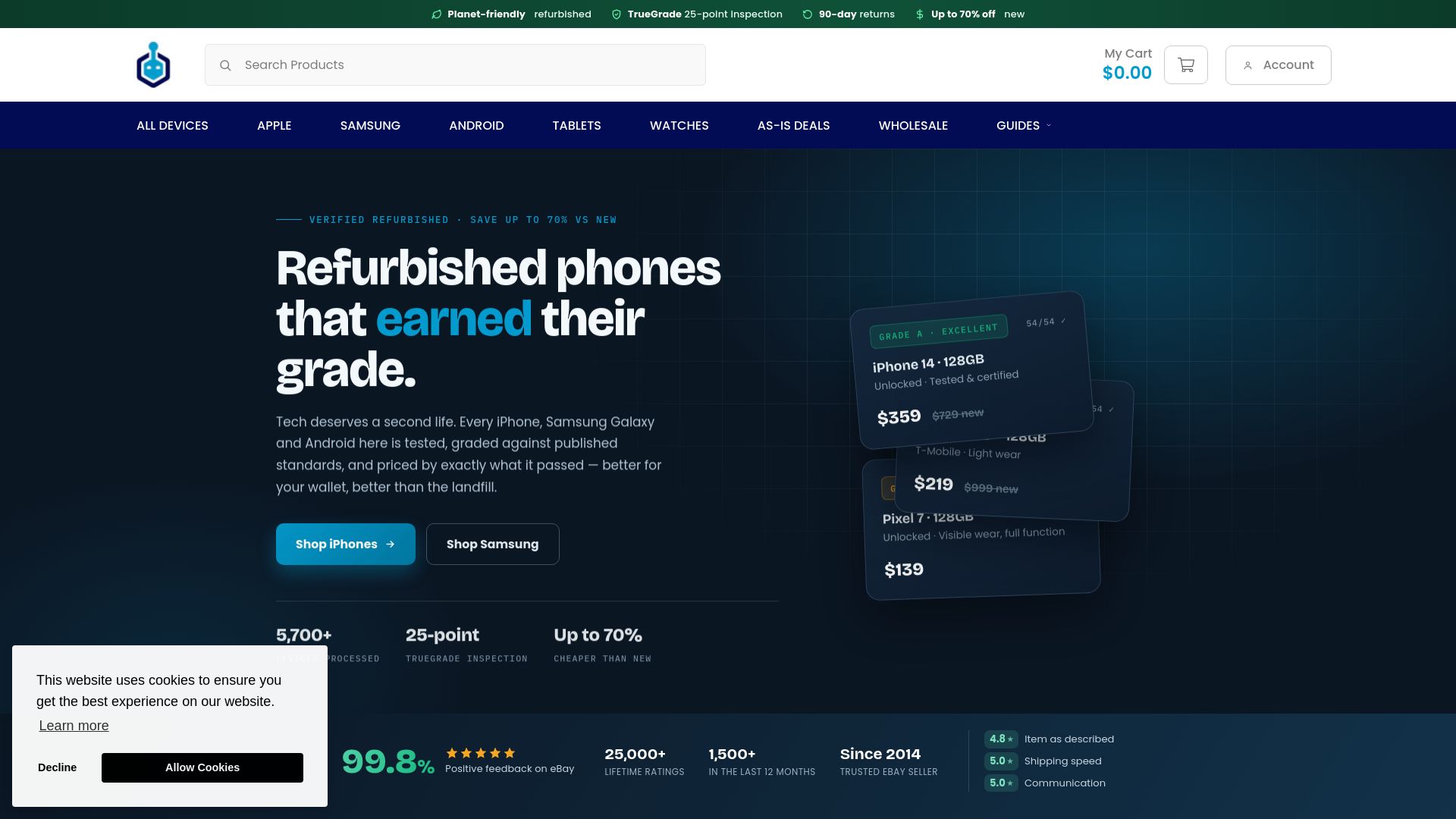
Some sellers offer return policies of around 90 days, providing buyers time to act if a 5G provisioning issue turns out to be a real hardware fault. Browse Devicegiant’s current lineup of unlocked and carrier-specific 5G phones, or check out a specific model like the refurbished iPhone 15 to see exactly how band support and grading get disclosed on a real listing.
Sources
- 5G FAQs | Federal Communications Commission
- Cell Phone Unlocking | Federal Communications Commission
- Should You Buy a Refurbished Phone? - Consumer Reports
- Use 5G with your iPhone - Apple Support
FAQ
What Is the Oldest Phone That Supports 5G?
Commercial 5G hardware, including modems like the Qualcomm Snapdragon X55, started shipping in devices released in 2019. Anything manufactured before late 2019 almost certainly lacks 5G radio hardware entirely, regardless of software updates.
What Are the Disadvantages of a Refurbished Phone?
The main risks are inconsistent quality between sellers, shorter remaining software-update life compared to a brand-new device, and battery health that’s already partway through its lifespan. Buying from a refurbisher with a documented inspection process and a return policy like Devicegiant’s 90-day window addresses most of these concerns directly.
Does 5G Work on Old Phones?
No, a phone needs 5G-specific hardware, meaning the right modem and antennas, to connect to 5G networks at all. A phone without that hardware will always fall back to 4G LTE no matter what network or SIM card you use, according to FCC guidance on 5G devices.
Which Refurbished Phone Is the Best 5G Option?
There’s no single best model. The right choice depends on matching the exact variant’s supported bands to your carrier and confirming unlock and IMEI status. Devices from manufacturer-certified refurbishment programs, like those covered by Consumer Reports, tend to offer more reliable diagnostics than uncertified third-party listings, and models like the refurbished Galaxy S22 show what a properly disclosed 5G listing should include.


