
Buyers: Certified Refurbished Phones Verified by 25 Point Inspection

Certified refurbished phones from verified sellers are the most effective, affordable way to cut your smartphone’s environmental footprint. A verified refurbishment inspection and a 90-day return policy make this a low-risk path. Before you buy: confirm the warranty and return window in writing, then test the device the day it arrives.
TL;DR:
- Certified refurbished phones undergo rigorous diagnostic testing, ensuring functionality comparable to new devices, with clear warranty and grade disclosures.
- Buying from manufacturer-certified or specialist refurbishers offers higher reliability, documented inspection standards, and longer return and warranty periods.
- Battery health is a critical factor; a lower-capacity battery may reduce performance and lifespan more than cosmetic imperfections or an older model.
- Refurbished phones typically produce significantly less CO2—around 77% to 91% reduction—compared to new devices, with most impact coming from manufacturing phase avoidance.
- Proper initial testing and verification within the first 24 hours prevent issues, especially regarding IMEI status, battery health, and lock removal, before the return window closes.
Table of Contents
- Why Refurbished Phones Are the Best Eco-Friendly Smartphones
- What “Certified Refurbished” Actually Means
- How Long Will Software Updates Last on This Model?
- Where to Buy a Refurbished Phone: Comparing Your Options
- How Devicegiant Verifies Every Phone Before It Ships
- Testing Your Refurbished Phone on Day One
- Materials and Manufacturing in Eco-Friendly Smartphones
- Energy Efficiency and Battery Impact
- Sustainability Certifications and Brand Commitments Worth Knowing
- Do Eco-Friendly Choices Mean Giving Up Performance?
- What Happens to Your Old Phone When You’re Done With It
- Publisher Perspective: Why We Push Certified Refurbished, Not Just “Green” Marketing
- Get a Verified Refurbished Phone From Devicegiant
- Sources
Why Refurbished Phones Are the Best Eco-Friendly Smartphones
Manufacturing, not daily use, is what wrecks a phone’s environmental record. Mining rare earth metals, smelting them, and assembling circuit boards accounts for most of a device’s lifetime carbon output, which is why buying used beats any efficiency gain you’d get from a new model’s slightly better chip.
The numbers back this up. A refurbished smartphone generates roughly 11 kg of CO2 across its footprint compared to about 56 kg for a new one, according to an Environment America factsheet on refurbished technology. That’s a reduction between 77% and 91% depending on the model and study. A separate life-cycle assessment published in E3S Conference Proceedings found refurbished units carry 60% to 71% lower global warming potential than new ones, largely because most internal components get reused instead of manufactured from scratch.
Refurbished vs. new smartphone impact: ~11 kg CO2 for a refurbished device vs. ~56 kg CO2 for new, per Environment America.
The gains aren’t unlimited, though. Nature’s empirical analysis of the secondhand smartphone market found each secondhand transaction displaces only about 0.40 new devices, since some buyers would have kept using an old phone anyway. Circular users still see roughly a 34% lower annual carbon footprint, a real number, just not a one-to-one swap.
What “Certified Refurbished” Actually Means
“Refurbished” on its own means nothing. Anyone can wipe a phone, wrap it in a plastic bag, and call it refurbished. “Certified” or “verified” refurbished is supposed to mean the device went through documented diagnostics, functional testing, and a real grading system before it reached you.
Consumer Reports notes that a high-quality certified refurbished phone should be functionally indistinguishable from a new one once it clears rigorous diagnostic testing. That testing, not the word “refurbished” itself, is what separates a trustworthy purchase from a gamble.
A credible refurbishment process typically includes:
- Full diagnostic scans of the motherboard, sensors, and radios
- Functional testing of the screen, cameras, speakers, microphones, and buttons
- Battery health measurement against original capacity
- Replacement of worn parts (batteries, screens, charging ports) where needed
- A complete factory data wipe and removal of prior account locks
Before you pay, get these five things in writing:
- Warranty length. Twelve months is a common benchmark cited by buyer guides like TechZoom, though many sellers offer less.
- Return window. Look for at least 30 days; anything shorter leaves little room to catch hidden faults.
- Battery policy. Does the seller guarantee a minimum battery health percentage, and will they replace it if it fails early?
- IMEI and lock disclosure. The listing should explicitly state the device is unlocked and clear of any activation or carrier lock.
- Cosmetic grade definition. “Grade A,” “Grade B,” and similar labels should come with an actual description, not just a letter.
The risk profile shifts depending on who’s selling. Manufacturer-certified programs tend to be safest but pricier. Retailer-certified programs land in the middle. Third-party specialists can offer the best value, but only when they publish clear grading and warranty terms, according to buyer comparisons from MoneySavingExpert.
How Long Will Software Updates Last on This Model?
A refurbished phone that stops getting security patches in eight months isn’t a bargain, it’s a liability. Before buying any specific model, check the manufacturer’s official support page for its update timeline. Android devices typically get three to five years of security patches depending on the maker; recent iPhones often get five years or more.
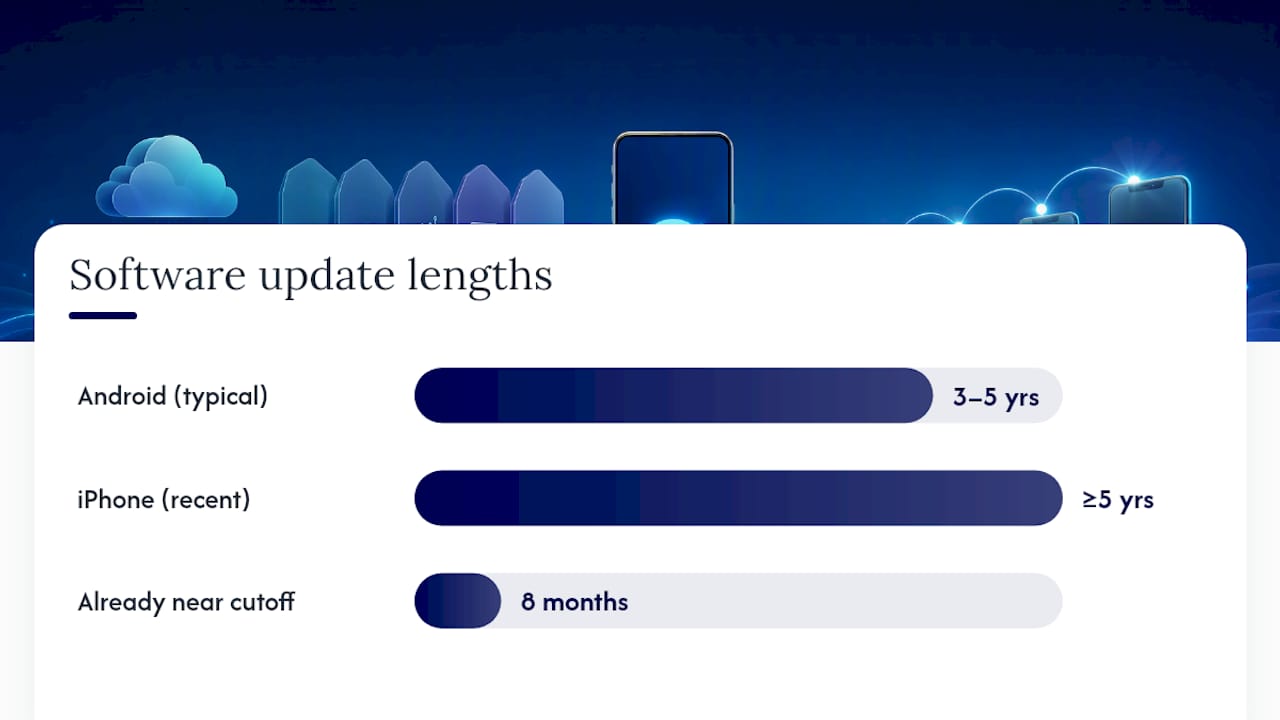
A practical rule of thumb: avoid buying a phone that’s already within a year of its update cutoff, unless the price reflects that shrinking runway.
Battery health matters more than a scuffed corner. A Springer-published comparison of repair, refurbishing, and remanufacturing impacts backs up what most buyer guides already say: a lower cosmetic grade with a healthy battery beats a mint-condition phone with a tired one. Scratches don’t affect performance. A battery stuck at 78% capacity does, every single day.
- Check listed battery health percentage before anything else.
- Factor in battery replacement cost (often $30 to $80) if the listed health is below 85%.
- Weigh a Grade B or C phone with a strong battery against a Grade A phone with a weak one. The former usually wins on total value.
Pro Tip: Ask the seller directly whether the battery was replaced during refurbishment. A fresh battery in an older model can outlast the original battery in a newer one.
Where to Buy a Refurbished Phone: Comparing Your Options
Not all refurbished channels carry the same risk, and price alone won’t tell you which one you’re dealing with.
- Manufacturer-certified programs. These usually include a new battery, genuine parts, and a full one-year warranty. You pay a premium for that certainty.
- Retailer or specialist refurbishment programs. Solid middle ground: documented grading, meaningful return windows, and prices well below manufacturer-certified tiers when the seller discloses their inspection process clearly.
- Specialist refurbishers with transparent grading. Often the best value per dollar, provided the warranty and cosmetic grade definitions are spelled out before checkout.
- Peer-to-peer marketplaces. The highest risk unless you’re buying from a registered business seller with a real return policy. A private listing with no recourse is a gamble, not a purchase.
How Devicegiant Verifies Every Phone Before It Ships
A reputable refurbishment process runs every device through a 25-point functional and cosmetic inspection before it’s listed for sale. That checklist covers battery health, screen and camera function, port integrity, and biometric sensors, the same categories buyer guides recommend checking yourself.
What that verification gets you:
- Devices priced significantly less than buying new
- A 90-day return window
- Disclosed cosmetic grading so you know what condition you’re paying for
- A track record backed by positive customer feedback on major marketplaces
Buying from an unverified private seller means you’re the one running diagnostics after the sale, often after your money is already gone. A documented inspection process, paired with a real refurbished phone warranty, shifts that risk back where it belongs: onto the seller, before you ever click “buy.”
Testing Your Refurbished Phone on Day One
Run this checklist the moment your phone arrives, ideally within the first 24 hours, so you’re still inside the return window if something’s wrong.
- Check the IMEI against a blacklist database to confirm it isn’t reported lost or stolen.
- Verify there’s no lingering activation lock or prior owner’s account tied to the device.
- Check battery health in settings against what the listing promised.
- Test all cameras, the microphone, and both speakers.
- Plug in a charging cable and confirm the port and battery charge normally.
- Test Wi-Fi, Bluetooth, NFC, and GPS.
- Confirm fingerprint or face unlock registers correctly.
- Inspect the body under good lighting against the seller’s stated cosmetic grade.
If anything fails, photograph and video it immediately with a visible timestamp, then file a claim before your return window closes. Wired’s refurbished-electronics guide treats this same sequence, IMEI, battery, lock check, as the highest-impact set of steps for catching problems early.
Pro Tip: Do this test before you install a single app or transfer your data. It’s much easier to return a phone that’s still in its out-of-box state.
Materials and Manufacturing in Eco-Friendly Smartphones
New phones marketed as sustainable often use recycled aluminum housings, tin from recycled solder, or cobalt sourced through audited supply chains. Those steps genuinely reduce virgin material extraction compared to a fully new-material device.
But refurbishment sidesteps the manufacturing question entirely. When you buy a refurbished phone, the aluminum, glass, and rare earth elements already inside it never need re-mining, re-smelting, or re-assembling. The E3S Conference Proceedings LCA points out that production and import phases dominate a phone’s water use and several other impact categories, so keeping an existing device’s materials in circulation avoids that entire process rather than just making it slightly cleaner.
That said, refurbishment isn’t impact-free. Testing, repackaging, and shipping a refurbished device still consume energy and generate some emissions. Sellers who disclose their logistics, air freight versus ground shipping, for instance, and their electricity mix during testing give buyers a clearer picture of the actual environmental math, since transport and power sourcing can meaningfully affect the final footprint.
Energy Efficiency and Battery Impact
A phone’s chip efficiency matters far less to its lifetime footprint than how long you keep using it. Newer processors sip slightly less power per task, but that marginal gain rarely offsets the manufacturing emissions of replacing a working phone early.
Battery health is the real variable. A degraded battery forces more frequent charging cycles and, eventually, a full battery swap, which adds a small but real manufacturing footprint of its own.
Charging habits play a role too. Frequent fast-charging generates more heat and accelerates battery wear, shortening the window before a replacement is needed. Buyers who charge overnight on standard speeds, rather than relying on fast chargers for every top-up, typically get more usable years out of the same battery.
Sustainability Certifications and Brand Commitments Worth Knowing
Several standards exist to help buyers gauge a device’s environmental credentials. EPEAT certification evaluates electronics against criteria covering material reduction, energy efficiency, and end-of-life design, and it’s widely used across the electronics industry as a baseline sustainability benchmark.
These certifications matter most when you’re evaluating new devices marketed on sustainability claims. For refurbished buyers, the more relevant commitment isn’t a manufacturing certification, it’s whether the refurbisher discloses its inspection standards, battery policies, and return terms clearly. A detailed, published grading system does for a refurbished purchase what a certification label does for a new one: it gives you something concrete to hold the seller accountable to.
Do Eco-Friendly Choices Mean Giving Up Performance?
Buying refurbished used to mean settling for an outdated processor and a compromised camera. That tradeoff has mostly disappeared. Because refurbished inventory includes phones that were flagship models just one or two years ago, you’re often getting last generation’s top-tier camera system and processor at a fraction of the original price, not a downgraded budget device.
The real tradeoff is elsewhere: a slightly worn battery, a possible cosmetic scuff, or missing accessories like the original box and charger. None of those affect how the phone actually performs day to day, provided the battery health is disclosed and acceptable.
Where performance can genuinely suffer is software longevity. An older refurbished model might be a year or two away from losing security updates, which is a real limitation worth weighing against the discount. Checking the manufacturer’s update timeline before buying, covered earlier, is how you avoid that specific tradeoff rather than discovering it after the fact.
What Happens to Your Old Phone When You’re Done With It
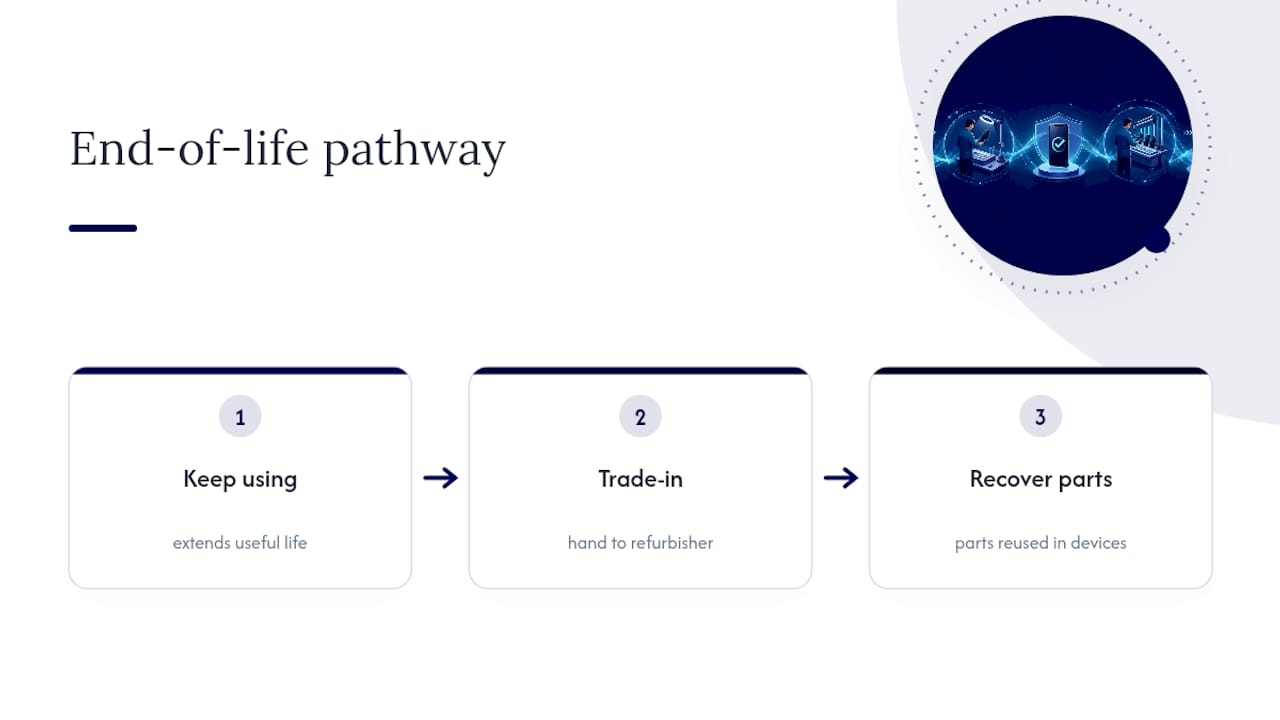
A refurbished phone eventually reaches the end of its useful life too, and what you do with it then matters almost as much as the purchase decision itself. Devices that end up in a drawer or, worse, the trash lose whatever material value remains in their batteries, circuit boards, and rare earth components.
Many refurbishers and retailers run trade-in or recycling programs that recover usable parts from devices too old or damaged to resell. Handing off a dead or dying phone through one of these channels keeps its materials in circulation instead of a landfill, closing the loop that made buying refurbished worthwhile in the first place. Devicegiant’s own writing on e-waste and smartphone disposal breaks down what actually happens to a phone once it can’t be repaired or resold, and why that stage of the lifecycle deserves as much attention as the purchase decision.
Publisher Perspective: Why We Push Certified Refurbished, Not Just “Green” Marketing
A lot of sustainability marketing around phones focuses on recycled aluminum casings and ethical cobalt sourcing, real efforts, but modest compared to the impact of simply not manufacturing a new device at all. The biggest lever any buyer has isn’t which new phone they choose. It’s whether they buy new at all.
That’s who this approach serves best: buyers who want a genuinely lower environmental footprint and don’t want to pay a premium to get it. A certified refurbished phone, backed by real inspection standards and an honest warranty, does more for the planet than most eco-marketing campaigns and costs less than the phone it’s replacing. If you’re weighing whether refurbished is worth it in the long run, our take on refurbished phone value digs into that question further.
— Saad
Get a Verified Refurbished Phone From Devicegiant
This company turns the eco-friendly phone decision into something you can actually verify, not just take on faith. Devices listed clear a thorough 25-point inspection before listing, come with disclosed cosmetic grading so you know what you’re buying, and ship with a 90-day return window that gives you real time to run the arrival checklist covered above.
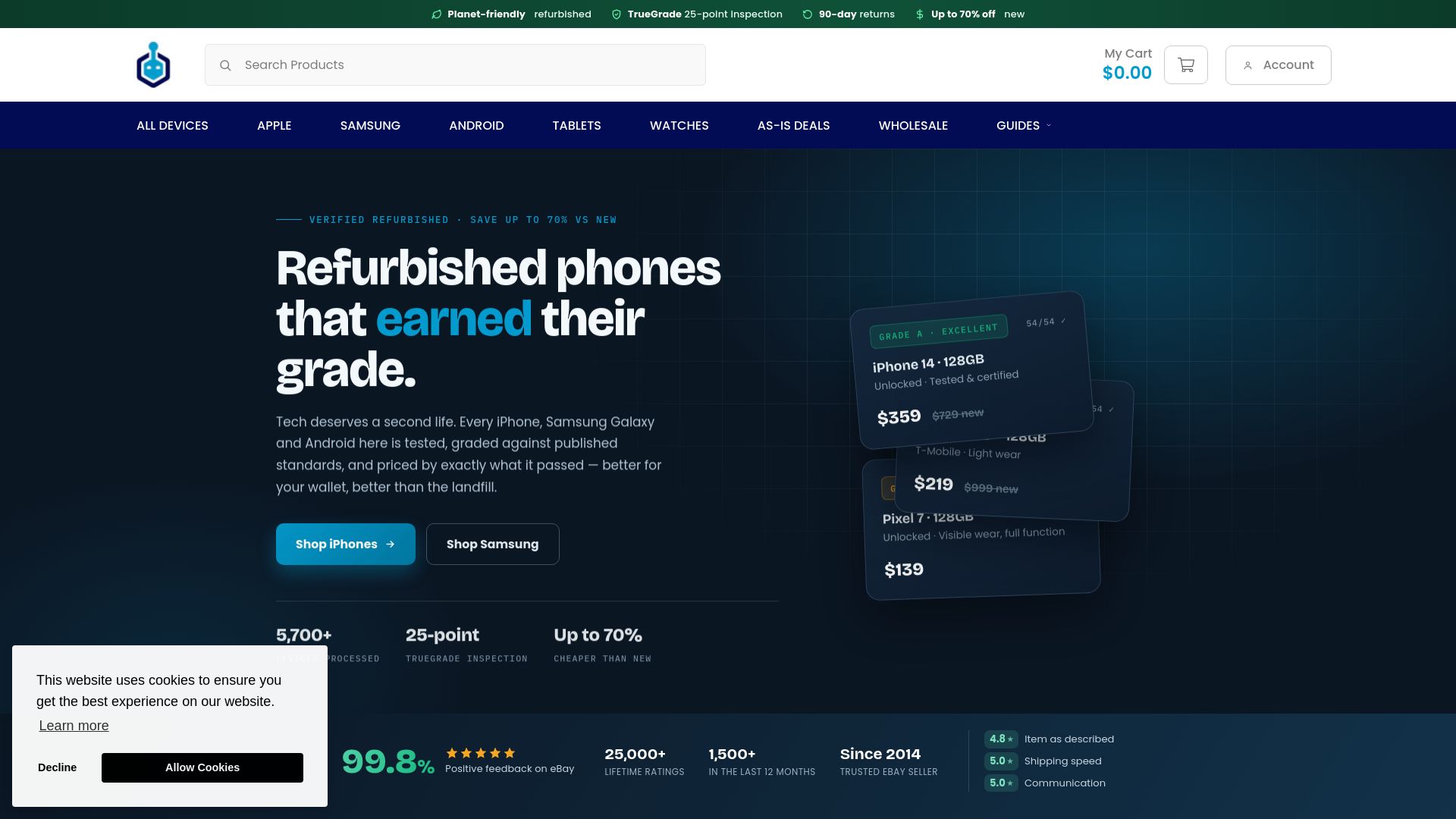
Start by browsing Devicegiant’s refurbished phone selection, where prices run up to 70% below new. Filter by model and check the manufacturer’s update timeline before you commit, choose a cosmetic grade that fits your budget and tolerance for wear, and once your phone arrives, run through the IMEI, battery, and lock checks the same day. If something’s off, you’ve got 90 days and a documented inspection standard behind you, not a stranger’s word on a marketplace listing.
Sources
- Fixed for the holidays: Refurbished technology factsheet — Environment America
- Should you buy a refurbished phone? — Consumer Reports
- Empirical analysis of second-hand smartphone market and cumulative effects — Nature (preview)
- How to buy refurbished electronics — Wired
- How to buy a refurbished phone — TechZoom


