
Refurbished Phone Warranty: What You're Actually Covered For

Most reputable refurbished phones sold in the U.S. come with a limited warranty ranging from 90 days to one year. Manufacturer-certified programs sometimes offer up to two years of warranty coverage. Before you buy anything, do two things: confirm the warranty length is stated in writing in the listing, and run the IMEI or serial number through a blacklist checker to verify the device is clean.
Here’s what to look for at a glance:
- Warranty length in writing: A limited warranty is expected from trustworthy sellers; certified programs typically offer longer warranty periods. Consumer Reports recommends avoiding any refurbished purchase that does not include an explicit warranty.
- Who backs it: Manufacturer, seller/retailer, or a third-party insurer (like Allstate, which backs eBay’s Certified Refurbished program).
- Transferability: Some warranties are tied to the original buyer. Check before you buy.
- IMEI/serial status: A blacklisted or activation-locked phone is worthless, even with a warranty attached.
- Certification level: Manufacturer-certified refurbished programs carry stronger coverage than generic “seller refurbished” listings.
Devicegiant’s verified refurbished phones go through a 25-point TrueGrade inspection and come with a 90-day return policy, which puts them well above the “as-is” listings that dominate the lower end of the market.
Table of Contents
- What types of refurbished phone warranty protection exist?
- What does a refurbished phone warranty actually cover?
- How long do refurbished phone warranties usually last?
- How do you verify a refurbished phone’s warranty before buying?
- How do you file a warranty claim on a refurbished phone?
- What professional refurbishment includes — and why it matters for warranty coverage
- Key Takeaways
- The warranty gap most buyers ignore
- Devicegiant has verified refurbished phones with documented testing
- Useful sources for warranty and IMEI verification
What types of refurbished phone warranty protection exist?
Not all warranties are created equal, and the provider behind a warranty tells you a lot about how easy it will be to actually use it.
Manufacturer-certified refurbished is the gold standard. Apple Certified Refurbished, for example, comes with a one-year limited warranty and the option to add AppleCare+. The devices go through Apple’s own repair and testing process, and replacement parts are genuine. Samsung and Google run similar programs. These warranties are usually the most straightforward to claim because you’re dealing with the company that made the phone.
Seller or retailer warranties are the most common type you’ll encounter. A trusted refurbisher or retailer backs the warranty themselves, which means the claim process runs through their support team rather than a manufacturer. Quality varies significantly here. A seller with documented testing procedures and a clear grading system is far more reliable than one offering a vague “30-day guarantee” with no terms listed.
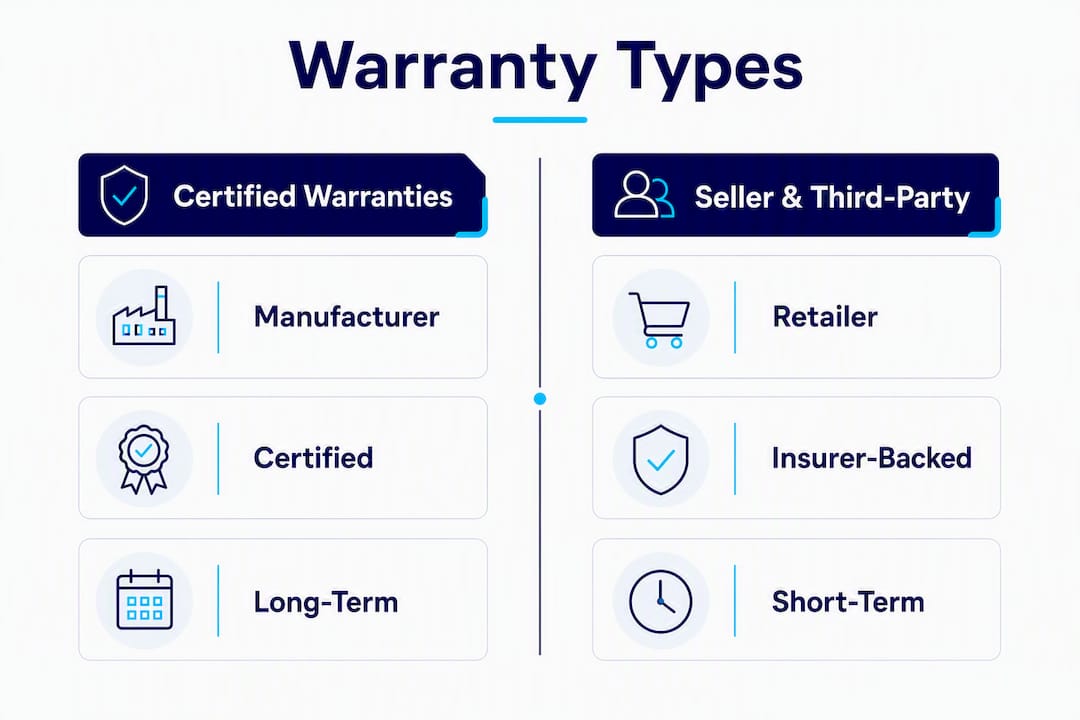
Third-party insurer-backed plans add a layer of financial security. eBay’s Certified Refurbished program is the clearest U.S. example: it’s backed by Allstate, which means the warranty has institutional weight behind it rather than just a seller’s promise. Certified-refurbished listings generally include a clearer standard of testing and a stronger warranty than random marketplace listings.
Extended protection plans are worth considering for higher-value devices. If you’re buying a flagship phone for $400+, a third-party plan that covers accidental damage fills the gap that most standard warranties leave open.
The key distinction to understand:
- Certified refurbished: — Tested to a defined standard, warranty backed by manufacturer or insurer, transferability often stated.
What does a refurbished phone warranty actually cover?
Standard limited warranties for refurbished phones cover functional defects — hardware failures that occur under normal use. That means a screen that stops responding, a charging port that fails, or a speaker that cuts out. Parts and labor for those repairs are typically included.

Battery coverage is less consistent. Some sellers replace the battery as part of refurbishment and warrant it explicitly; others don’t. Battery health is a top buyer concern and should be disclosed in the listing. If it isn’t, ask.
Common exclusions to watch for:
- Accidental damage (drops, cracked screens from user error)
- Liquid or water damage
- Cosmetic wear that was present at purchase and disclosed in the grade
- Third-party accessories and cases
- Lost or stolen devices (unless you’ve added a separate insurance plan)
- Damage from unauthorized repairs or modifications
The language in listings matters. “Manufacturer defect” coverage is narrow — it means the device failed on its own, not because of something you did. “Accidental damage” coverage is broader and almost always costs extra. If a listing says “warranty included” without specifying what type, that’s a red flag, not a reassurance.
Pro Tip: Before buying, search the seller’s warranty terms for the word “accidental.” If it doesn’t appear, assume drops and spills are not covered. For a phone over $300, that gap is worth filling with a separate protection plan.
Software troubleshooting — resetting network settings, running a factory restore — resolves many common complaints without needing a warranty claim. Try those steps first. Attempting hardware repairs yourself, though, voids most warranties immediately.
How long do refurbished phone warranties usually last?
Duration depends heavily on who issued the warranty and what certification level the device carries.
| Warranty Source | Typical Length | Coverage Strength | Notes |
|---|---|---|---|
| Marketplace (basic seller) | 30–90 days | Limited | Terms often vague; confirm in writing |
| Major retailer (seller-backed) | 90 days | Moderate | Return window may differ from warranty window |
| Trusted refurbisher | 90 days–1 year | Moderate to strong | Depends on documented testing process |
| Manufacturer-certified refurbished | 1 year | Strong | Genuine parts, clear claim process |
| Insurer-backed certified (e.g., eBay/Allstate) | Up to 2 years | Strong | Third-party insurer adds financial backing |
A limited warranty period is the practical minimum for a safe purchase, allowing time to identify any hardware issues. Longer warranty periods are preferable to cover common component failures.
One thing buyers miss: return windows and warranty periods are separate policies. A 90-day return window lets you send the phone back for a refund. A 1-year warranty means the seller will repair or replace a defective unit for up to a year, but may not offer a full refund after the return window closes. Track both dates.
Device age and software support also affect how much that warranty is worth in practice. Refurbished phones from reputable retailers typically last three to five years when sourced with functional testing and warranty coverage, but a phone that loses OS support in six months has limited long-term value regardless of warranty length. Check the manufacturer’s software support schedule before buying.
How do you verify a refurbished phone’s warranty before buying?
Verification takes about ten minutes and can save you from a purchase you’ll regret. Here’s the checklist:
- Confirm warranty length in writing. The listing or product page should state the exact duration. “Warranty included” with no length is not a warranty — it’s a placeholder.
- Identify who provides it. Manufacturer, seller, or third-party insurer? Each has a different claim process and reliability level.
- Check transferability. Some warranties are non-transferable and void if the device changes hands. If you’re buying from a reseller, ask whether the original warranty still applies.
- Review what’s covered and excluded. Look for the words “functional defects,” “manufacturer defect,” and “accidental damage” to understand the scope.
- Ask about battery health. Request the battery health percentage. Refurbished phones often include battery replacement as part of the process, but not always — and a battery at 70% health will degrade fast.
-
Verify IMEI/serial status. and may be unrecoverable even under warranty. Use a free IMEI checker (CTIA’s stolen phone checker or your carrier’s tool) before completing any purchase.
- Confirm Activation Lock is removed. For iPhones, ask the seller to show the device is signed out of iCloud. For Android, confirm Google account removal.
- Check the cosmetic grade against photos. The listing grade (A, B, C, or equivalent) should match the actual photos. Discrepancies between grade and images are a warning sign.
Red flags that should stop the purchase:
- No IMEI or serial number shown in the listing
- Seller refuses to provide battery health screenshots
- “As-is” language buried in the description alongside warranty claims
- Warranty terms link to a 404 page or generic policy not specific to the device
Pro Tip: Screenshot the listing page, warranty terms, and any seller messages before you buy. If you need to file a claim or dispute later, those screenshots are your primary evidence.
How do you file a warranty claim on a refurbished phone?
The process is straightforward when you’ve kept good records. Here’s how it works:
- Document the fault. Take dated photos or a short video showing the defect clearly. Note when the issue started and what conditions triggered it.
- Gather your purchase proof. You need the original order confirmation or invoice, the IMEI or serial number, and the warranty terms (the version that was live when you bought the device).
- Contact the right party. For manufacturer-certified devices, go directly to the manufacturer’s support line. For seller-backed warranties, contact the seller through the platform (eBay, the retailer’s support portal, etc.). For insurer-backed plans, the insurer’s claims portal is usually separate from the seller.
- Follow the RMA process. Most warranty claims require a Return Merchandise Authorization number before you ship anything. Get this in writing and keep it.
- Ship per their instructions. Use the shipping method they specify. If they provide a prepaid label, use it. If you pay for shipping, keep the tracking number and receipt — some warranties reimburse it.
- Track the claim. Note the claim ID, the date you shipped, and the expected turnaround. Typical timelines run 5–10 business days for assessment and 7–14 days for repair or replacement, though this varies by provider.
- Keep all correspondence. Save every email and chat transcript.
Possible costs to expect: some insurer-backed plans charge a deductible per claim (often $25–$50 for mid-range devices). Shipping fees may or may not be covered. Read the terms before you ship.
If the seller goes dark or refuses a valid claim, escalate. File a dispute through your credit card issuer (most major cards offer purchase protection for 60–120 days). The Better Business Bureau complaint process can also prompt a response from sellers who otherwise ignore support tickets.
What professional refurbishment includes — and why it matters for warranty coverage
A warranty is only as reliable as the process behind it. A seller who ran a 25-point diagnostic checklist and replaced the battery is making a very different promise than one who wiped the phone and put it in a box.
Professional refurbishment typically includes:
- Diagnostic testing: Every function checked — cellular, Wi-Fi, Bluetooth, camera, microphone, speakers, charging, and biometrics.
- Component replacement: Battery and screen replaced when they fall below a defined threshold; other components swapped as needed.
- Data wipe: Full factory reset with verification that no prior user data remains.
- OS and firmware verification: Confirmed on a supported, up-to-date version.
- Cosmetic grading: Honest assessment of scratches, dents, and screen condition, documented in the listing.
The warranty length and terms a seller offers reflect how confident they are in that process. A 30-day warranty signals low confidence. A one-year warranty with documented testing signals the opposite.
Devicegiant’s TrueGrade process runs each device through a 25-point functional checklist before grading and listing it. That inspection is what makes the 90-day return policy meaningful rather than a marketing line. When you see a disclosed grade (A through D) alongside a documented test process, you’re looking at a seller who has skin in the game.
Consumer Reports guidance consistently points to explicit warranty length, documented battery replacement disclosure, and detailed testing explanations as the three signals that separate a safe refurbished buy from a risky one. If a listing is missing all three, move on.
Key Takeaways
A refurbished phone warranty is only as strong as the seller’s testing process and the written terms behind it — verify both before you buy.
| Point | Details |
|---|---|
| Minimum warranty to accept | Look for at least 90 days in writing; certified programs typically provide a 1-year warranty. |
| Verify IMEI before purchase | A blacklisted or activation-locked device cannot be activated, even under warranty. |
| Return window vs. warranty period | These are separate policies — track both dates from your purchase confirmation. |
| Keep purchase records | Screenshots of the listing, invoice, and warranty terms are required for any claim. |
| Devicegiant’s coverage | Devicegiant’s 25-point TrueGrade inspection backs a 90-day return policy on all verified refurbished devices. |
The warranty gap most buyers ignore
The conventional wisdom on refurbished phones focuses on price savings. That’s the right starting point, but it misses where buyers actually get burned: the gap between a warranty that exists on paper and one that works when you need it.
A 90-day warranty from a seller with no documented testing process is not the same as a 90-day warranty from a seller who ran a 25-point checklist and can show you the results. The number is identical. The protection is not. What you’re really evaluating when you read a warranty is the seller’s confidence in their own work.
The other thing most guides skip: software support matters as much as hardware coverage. A phone with a solid one-year warranty but six months of OS updates left is a depreciating asset. The warranty covers the hardware; nobody covers the software cliff. Check both.
For most buyers, a certified or documented-refurbished phone from a seller with a clear grading system and a minimum 90-day warranty is the right call. For flagship devices over $400, an insurer-backed plan or extended protection is worth the extra cost. The math changes fast when a screen repair runs $200.
Devicegiant has verified refurbished phones with documented testing
Devicegiant sells refurbished smartphones at up to 70% less than new retail, with every device passing a 25-point TrueGrade functional inspection before it ships. Grades run A through D and are disclosed in every listing, so you know exactly what cosmetic condition to expect. The 90-day return policy applies across the inventory, and Devicegiant’s 99.8% positive feedback on eBay reflects a track record that’s easy to verify.
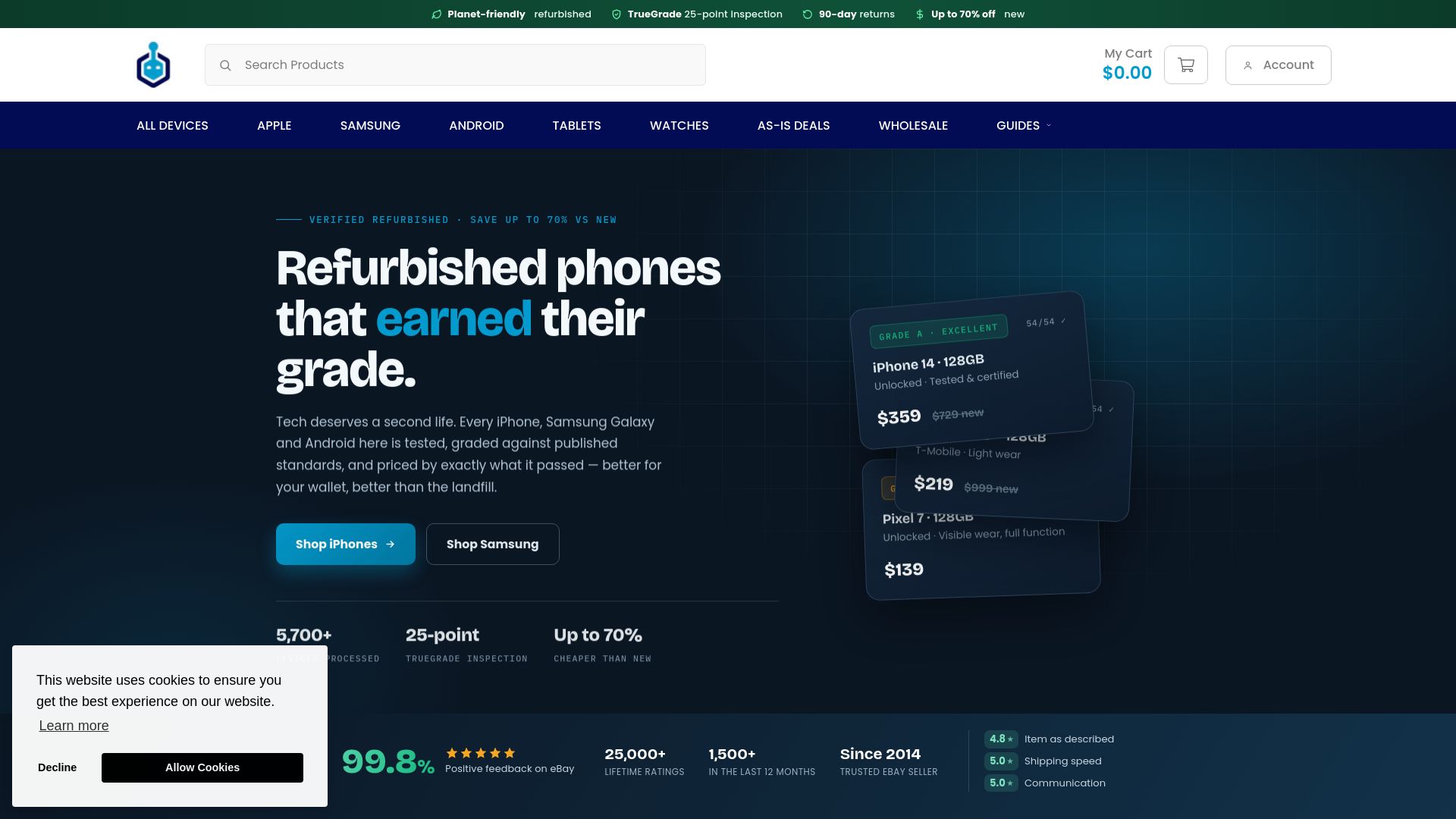
If you want a phone that’s been tested, graded, and backed by a clear return policy, browse the current inventory at Devicegiant’s refurbished phone store. For model-specific warranty questions before you buy, the support team is reachable directly through the site.
Useful sources for warranty and IMEI verification
Before you finalize any refurbished phone purchase, these resources help you verify coverage and device status:
- Consumer Reports: Should you buy a refurbished phone? — Best starting point for understanding what warranty terms to expect and what red flags to avoid. Use it to benchmark any listing you’re evaluating.
-
— Step-by-step guide to checking whether a device is blacklisted and confirming Activation Lock is cleared. Run this before any purchase.
- Manufacturer support pages — For Apple, Samsung, Google, and other brands, the manufacturer’s support site lets you enter a serial number to check warranty status and transferability. This is the authoritative source for certified-refurbished coverage.
- Android Police: Renewed vs. refurbished phones — Clear breakdown of what “renewed,” “refurbished,” and “certified” actually mean across different platforms, useful for comparing listings side by side.
Save screenshots of the listing, warranty terms, and any seller correspondence at the time of purchase. If you ever need to file a claim or dispute a charge, those documents are what move the process forward.


