
E-Waste Smartphones: What Eco-Conscious Buyers Should Do

E-waste smartphones are discarded mobile devices that contain both recoverable precious materials and hazardous components requiring careful handling. The single most important thing you can do right now: wipe your phone completely before it leaves your hands, then choose the highest option on this priority ladder: reuse, trade-in, donate, or certified recycling.
Before you hand off any device, run through this checklist:
- Back up photos, contacts, and app data to cloud storage or a computer
- Remove your SIM card and any microSD card
- Sign out of all accounts (Apple ID, Google, Samsung, payment apps)
- Disable Find My iPhone or Find My Device
- Encrypt the device if your OS supports it, then perform a factory reset
- Choose your next step: reuse/repurpose, sell/trade-in, donate, or drop off at a certified recycler
Three organizations set the standard for responsible handling in the U.S.: the U.S. Environmental Protection Agency (EPA), which provides national guidance and material-recovery data; the Responsible Recycling (R2) Standard, the most widely adopted certification for U.S. electronics recyclers; and the e-Stewards Standard, a stricter certification that prohibits export to developing nations.
Key Takeaways
The most effective way to address smartphone e-waste is to prioritize reuse over recycling, wipe your device completely before any handoff, and verify certification before choosing a recycler.
| Point | Details |
|---|---|
| Wipe before you hand off | Encrypt, then factory reset — this sequence makes residual data unreadable, not just deleted. |
| Reuse beats recycling | A refurbished phone displaces new manufacturing; recycling recovers only a fraction of a device’s embodied value. |
| Verify recycler certification | Look for R2 or e-Stewards certification; both programs maintain public directories you can check before drop-off. |
| Global scale is enormous | The world generates more than 50 million metric tons of e-waste annually, with collection rates remaining low. |
| Devicegiant offers a verified path | A 25-point TrueGrade inspection and 90-day return policy make Devicegiant’s refurbished phones a traceable, circular-economy choice. |
Table of Contents
- How big is the smartphone e-waste problem right now?
- Why smartphone e-waste harms people and the planet
- What should you do with an old smartphone?
- How U.S. phone recycling and refurbishment actually work
- Where can you safely recycle or trade in a phone in the U.S.?
- U.S. rules and certifications that govern smartphone e-waste
- Why buying refurbished is one of the highest-impact choices you can make
- Common myths about phone recycling, debunked
- The circular economy is the only framework that actually works
- Devicegiant’s verified refurbished phones: a direct path to circular-economy action
- Sources
How big is the smartphone e-waste problem right now?
The numbers are genuinely staggering. The Global E-waste Monitor 2024 reports that the world generates more than 50 million metric tons of electronic waste every year, and collection and recycling rates remain low globally. Smartphones are a fast-growing slice of that total: upgrade cycles have shortened, carriers push new models aggressively, and older devices pile up in drawers or head straight to landfills.
By the numbers: For every 1 million cell phones recycled, the EPA estimates recovery of roughly 35,000 lbs of copper, 772 lbs of silver, 75 lbs of gold, and 33 lbs of palladium.
In the U.S., a large number of phones change hands or are retired each year. Yet only a fraction are formally recycled through certified programs. The rest sit in storage, get tossed in regular trash (illegal in many states), or are exported informally. The gap between devices sold and devices properly recycled is one of the defining environmental failures of the consumer electronics era.
Why smartphone e-waste harms people and the planet
A smartphone is a dense package of chemistry. Each device contains more than 60 elements, including materials that are both precious and toxic. The hazardous side of that list includes:
- Lead (solder in circuit boards) — damages the nervous system
- Mercury (older LCD backlights) — accumulates in ecosystems and food chains
- Cadmium (rechargeable batteries) — a known carcinogen
- Lithium compounds (Li-ion batteries) — fire risk if punctured or improperly handled
- Conflict minerals (tantalum, tin, tungsten, gold) — often sourced from regions with documented human-rights abuses
Mining new materials to replace what could be recovered from old phones carries its own costs: habitat destruction, water contamination, and enormous carbon output. Recovering gold from circuit boards, by contrast, requires a fraction of the energy that primary gold mining demands.
The informal recycling sector makes this worse. In parts of West Africa and South Asia, workers burn circuit boards in open air to recover metals, releasing dioxins, furans, and heavy-metal particulates with no protective equipment.
The WHO) states that improper e-waste management exposes people and environments to hazardous substances that can cause serious harm, including developmental damage in children, respiratory disease, and cancer — underscoring why certified, traceable recycling chains matter.
Smartphones also contain recoverable value that informal methods waste. Industry estimates put the recoverable metal value of a single phone at roughly $10 or more in scrap, which is why certified recyclers have a real economic incentive to process devices properly rather than dump them.
What should you do with an old smartphone?
Work through this decision in order. The option highest on the list is almost always the better environmental choice.
1. Keep and repurpose
An old phone can serve as a dedicated security camera, a smart-home controller, a kids’ media device, or a backup GPS unit. No new materials extracted, no shipping emissions.

2. Sell or trade in
Carrier and retailer trade-in programs (offered by most major U.S. carriers and big-box electronics retailers) typically process a device within 1–2 weeks and apply credit to your account. Private sales through peer-to-peer platforms can net more cash but take longer. Either way, a working phone in your hands has real monetary value — often tens or even hundreds of dollars for a recent flagship.
3. Donate
Nonprofits and community organizations accept functional phones for domestic-violence survivors, veterans, low-income students, and seniors. Devices typically need to be functional and ideally unlocked. Processing time varies by organization, but most can accept a wiped device within days.
4. Repair or replace the battery
A swollen or degraded battery is often the only thing wrong with an otherwise capable phone. Battery replacement at a repair shop typically costs between several dozen and around one hundred dollars and extends device life by several years. Do not attempt to remove a swollen battery yourself — puncture risk is real. Take it to a qualified technician.
5. Recycle through a certified program
When a device is truly beyond use, drop it at a certified recycler (R2 or e-Stewards certified), a manufacturer take-back program, or a municipal hazardous-waste event. Certified recyclers typically process devices within a few weeks; materials recovery downstream can take months through smelting and refining.
Data-security checklist before any handoff
Follow these steps in order before selling, donating, or recycling:
- Back up everything to Google Drive, iCloud, or a local computer
- Sign out of Apple ID / Google account / Samsung account
- Remove the SIM card and any microSD card physically
- Disable Find My iPhone or Find My Device in settings
- If your phone supports encryption (most modern Android devices encrypt by default; iPhones are encrypted when a passcode is set), confirm it is active
- Perform a factory reset through the device’s settings menu
- For extra assurance, wipe your phone using a full guide before handing it off
Pro Tip: Encrypting the device before factory resetting makes any residual data on the storage chip effectively unreadable, even with forensic tools. On Android, go to Settings > Security > Encryption before you reset. On iPhone, encryption is automatic once a passcode is set.
Timeline: a full backup-to-reset sequence takes 30–90 minutes depending on how much data you have. Don’t rush it.
How U.S. phone recycling and refurbishment actually work
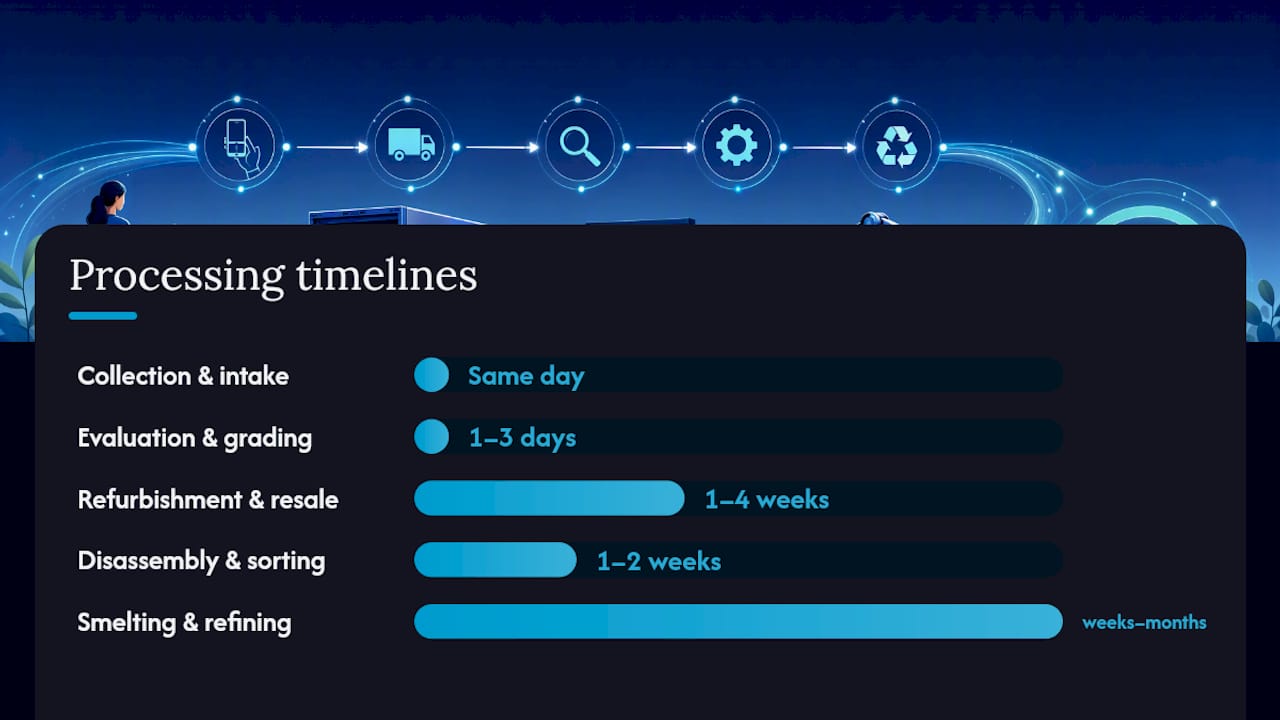
Most people picture recycling as a black box. Here is what actually happens after you drop off a device.
Collection: Phones arrive at a certified facility through drop-off events, mail-in programs, or retailer collection bins. Certified recyclers log each device with chain-of-custody documentation.
Evaluation: Technicians test each device for power-on capability, screen function, battery health, and physical damage. Many collected phones are still functional — a significant share get refurbished and resold rather than shredded.
Refurbishment or disassembly: Working devices are cleaned, repaired where needed, graded cosmetically, and relisted for resale. Non-functional devices are disassembled: batteries separated (lithium is a fire hazard in shredders), screens removed, and circuit boards sorted.
Material recovery: Circuit boards go to downstream processors and smelters that recover gold, silver, copper, and palladium. Rare earth elements from speakers and vibration motors are also recoverable. Batteries go to specialized lithium recyclers.
Downstream processing: Smelting and refining take the longest — weeks to months — before recovered metals re-enter the supply chain as raw material.
| Stage | Typical timeline | Outcome |
|---|---|---|
| Collection and intake | Same day | Device logged, data noted |
| Evaluation and grading | 1–3 days | Refurb or disassembly path decided |
| Refurbishment and resale | 1–4 weeks | Device back in use |
| Disassembly and sorting | 1–2 weeks | Materials separated by type |
| Smelting and refining | Weeks to months | Metals re-enter supply chain |
The EPA’s material-recovery figures make the economic case clear: the metals in a million phones are worth recovering. Certified recyclers have both the regulatory obligation and the financial incentive to do it right.
Where can you safely recycle or trade in a phone in the U.S.?
You have more options than most people realize, and the right one depends on your device’s condition and your priorities.
Program types to know:
- Manufacturer take-back programs: Most major phone brands offer mail-in or in-store recycling, sometimes with trade-in credit. Check the manufacturer’s sustainability page directly.
- Carrier and retailer trade-in: Available at most U.S. carriers and large electronics retailers. Fast, convenient, and often the highest-value option for a working phone.
- Municipal hazardous-waste events: Many U.S. counties hold periodic collection events for electronics and hazardous materials. Free, no questions asked, and appropriate for broken or non-functional devices.
- Certified recycler drop-offs: Facilities certified under R2 or e-Stewards accept devices year-round. The EPA’s certified recyclers page lists programs by state.
- Call2Recycle: A nonprofit network with thousands of drop-off locations across the U.S. for batteries and small electronics, including phones.
- Earth911: A searchable database at earth911.com where you enter your material type and ZIP code to find nearby drop-off options.
How to verify a recycler before you drop off:
- Confirm R2 or e-Stewards certification (both programs maintain public directories online)
- Ask whether they have a documented chain-of-custody policy
- Request a certificate of data destruction if you skipped the factory reset (reputable recyclers offer this)
- Avoid any facility that cannot explain where devices go after intake
State laws vary considerably. California’s Department of Toxic Substances Control (DTSC) runs one of the most developed state programs, with a covered electronic waste (CEW) recycling fee and an extensive authorized collector network. State-level rules differ widely, so check your state’s environmental agency website before disposal.
Pro Tip: Earth911’s search tool at earth911.com is the fastest way to find a certified drop-off near you. Enter “cell phone” and your ZIP code — results show distance, accepted materials, and whether the facility is certified.
U.S. rules and certifications that govern smartphone e-waste
The U.S. has no single federal law specifically governing consumer e-waste, which means the regulatory picture is a patchwork of state programs and voluntary certification standards.
Federal role: The EPA provides guidance, supports certification programs, and regulates hazardous-waste exports under the Resource Conservation and Recovery Act (RCRA). The agency does not mandate consumer recycling at the federal level but sets the framework that certified recyclers operate within.
State programs: More than 25 states have enacted some form of e-waste legislation. California’s DTSC program is among the most comprehensive, requiring retailers to collect a recycling fee at point of sale and funding an authorized collector network. Other states range from robust programs to minimal requirements. Always check your state environmental agency’s website for current rules.
Key certifications explained:
- R2 (Responsible Recycling) Standard: The most widely adopted U.S. certification, administered by Sustainable Electronics Recycling International (SERI). R2-certified facilities must document downstream vendors, maintain data-security practices, and meet environmental health and safety requirements.
- e-Stewards Standard: Administered by the Basel Action Network (BAN). Stricter than R2 on export: e-Stewards certified facilities are prohibited from exporting hazardous e-waste to developing nations, closing a loophole that allows some recyclers to ship waste overseas under the guise of “reuse.”
Both certifications matter to consumers because they signal that a recycler has been independently audited and meets documented standards for data security, environmental handling, and downstream accountability. An EPA implementation study on these programs found that consistent implementation and cross-border coordination remain ongoing challenges, which is exactly why the export-prohibition clause in e-Stewards carries real weight.
Why buying refurbished is one of the highest-impact choices you can make
Recycling is good. Reuse is better. Every refurbished phone that goes to a new owner displaces the need to manufacture a new device, which means less mining, less energy consumption, and less packaging waste. Refurbished purchases can meaningfully reduce the carbon footprint associated with smartphone ownership, since the bulk of a phone’s lifetime emissions come from manufacturing, not use.
The circular-economy case for refurbished is straightforward: a phone that gets a second life keeps its embodied energy and materials in productive use. A phone that gets shredded for metal recovery, however efficient the process, still loses most of that value.
What to look for when buying refurbished:
- Inspection and grading: Reputable sellers disclose cosmetic condition clearly (Grade A = near-mint, Grade B = light wear, Grade C = visible marks but fully functional). Understand what each grade means before buying.
- Warranty and return policy: A 30-day return window is the minimum; 90 days is the standard for a seller you can trust.
- Battery health: Ask or check the listing for battery capacity. Anything below 80% of original capacity will affect daily usability noticeably.
- Carrier compatibility: Confirm the device is unlocked or compatible with your specific carrier before purchasing.
- Data-wiping assurance: A reputable refurbisher wipes every device to factory settings before resale. Ask if you are unsure.
Devicegiant’s TrueGrade process checks each phone against a 25-point functional checklist, grades cosmetic condition transparently from A to D, and backs every sale with a 90-day return policy. That combination of inspection depth and return protection is what separates a verified refurbished phone from a random used device. Options range from budget-friendly picks like the refurbished TCL 40 T from $35 to mid-range flagships like the OnePlus 12R 5G from $265. For a deeper look at whether refurbished makes sense for your situation, Devicegiant’s refurbished phone guide walks through the full value case.
Pro Tip: Before buying any refurbished phone, check whether the seller lists battery health as a specific percentage. One who just says “good battery” is not.
Common myths about phone recycling, debunked
“I can throw my old phone in the regular trash.” You cannot, legally or responsibly. Most U.S. states prohibit disposing of electronics in municipal solid waste. Even where it is not explicitly illegal, lithium batteries in landfills are a documented fire hazard, and toxic materials leach into groundwater.
“Deleting my photos and doing a factory reset is enough for data security.” A standard factory reset removes the file index but may leave data recoverable with forensic tools. Encrypting the device before resetting makes residual data effectively unreadable. Security experts recommend the full sequence: backup, sign out, remove SIM, disable location services, encrypt, then reset.
“Broken phones have no value and should just be tossed.” A cracked-screen phone with a working motherboard still contains gold, silver, copper, and palladium worth recovering. Many certified recyclers and refurbishers accept broken devices. Some will even pay a small amount for them.
“Cheap ‘throwaway’ phones don’t need to be recycled properly.” Budget phones contain the same hazardous materials as flagships. The price of the device has no bearing on what’s inside it.
“Donating is always better than recycling.” Only if the device is functional and the recipient organization can actually use it. A non-functional phone donated to a nonprofit creates a disposal burden for them. Recycle non-working devices; donate working ones.
Pro Tip: Data-security anxiety is the most common reason people keep old phones in a drawer indefinitely. Run the full wipe sequence described above, and that hesitation disappears. A wiped phone sitting in a drawer is still an environmental problem — get it moving.
The circular economy is the only framework that actually works
The conventional framing around e-waste puts recycling at the center of the solution. That framing is too narrow. Recycling is the last resort in a hierarchy that starts with not needing a new device in the first place.
The EPA itself frames e-waste management as part of a shift to a circular economy: prioritize reuse and repair, then efficient material recovery when devices reach true end-of-life. That ordering matters. A phone that gets refurbished and resold keeps its full value in the system.
What this means practically: the most impactful thing most people can do is not recycle their old phone more responsibly. It is to buy a refurbished phone instead of a new one the next time they upgrade. That single decision cuts manufacturing demand, extends device life, and keeps functional electronics out of the waste stream simultaneously. Recycling is necessary and worth doing well. But reuse is where the real leverage is.
Devicegiant’s verified refurbished phones: a direct path to circular-economy action
Skipping the new-phone manufacturing cycle entirely is the sharpest environmental move available to a smartphone buyer. Devicegiant makes that straightforward: every device goes through a 25-point TrueGrade inspection, is graded transparently by cosmetic condition, and ships with a 90-day return policy.
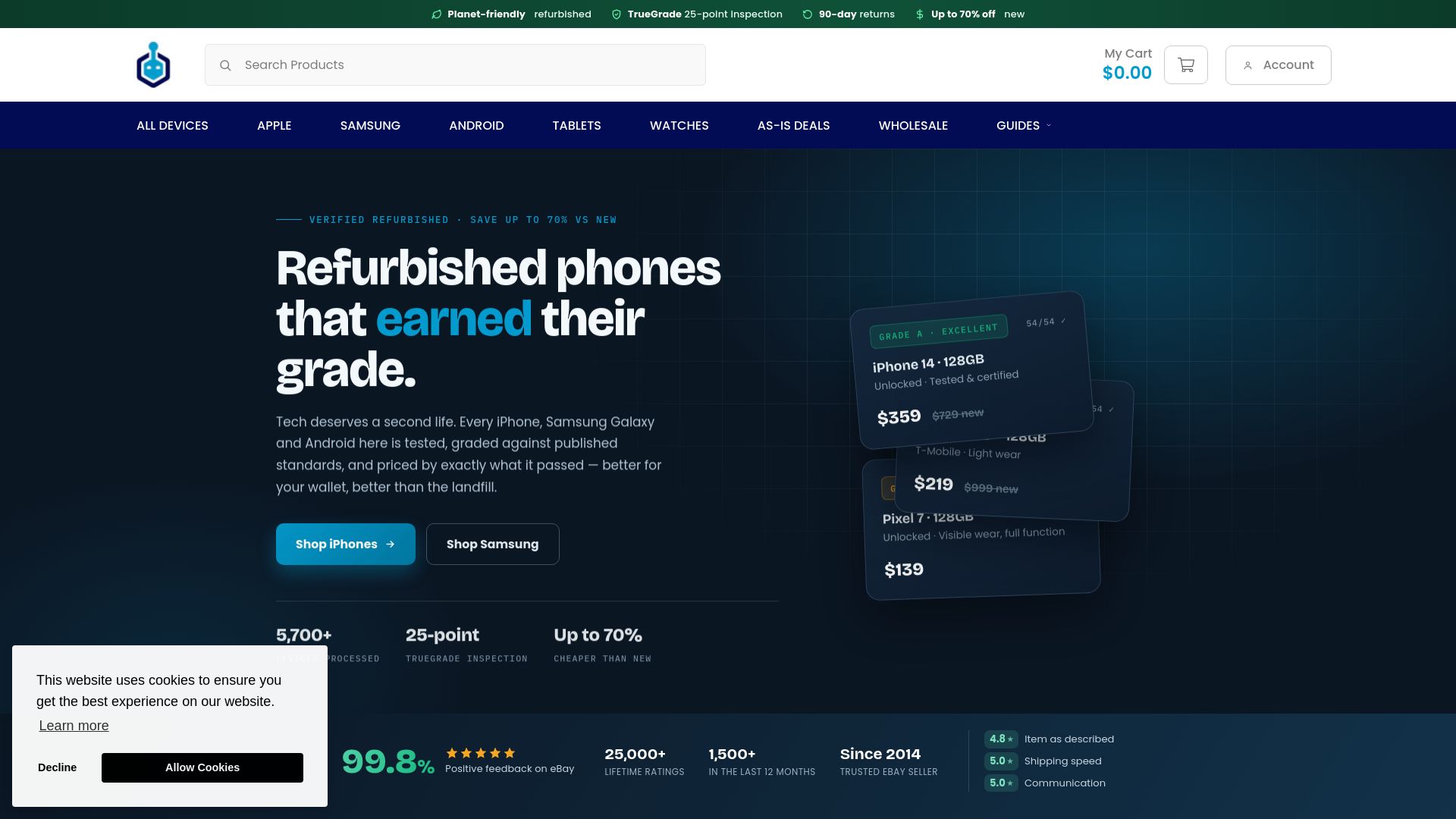
Prices start well below what you’d pay new, with options from budget picks to recent flagships. Devicegiant is both the publisher of this article and the seller, so the recommendation is direct: if you’re ready to act on what you’ve read here, browse verified refurbished phones at Devicegiant and put a circular-economy choice into practice today.
Sources
- Electronics Donation and Recycling | US EPA
- How to recycle your old electronics the right way, according to e-waste experts — AP News
- The Global E-waste Monitor 2024


