
Buy a Previous Gen iPhone Backed by a 25 Point TrueGrade Check

For most people, buying a previous-generation iPhone means finding a certified refurbished model from a vetted seller. You get a real warranty, a battery that’s been checked or replaced, and a device that’s been through an actual inspection process, like Devicegiant’s detailed multi-point inspection paired with a return window. Go new only if you need the longest warranty and a fresh battery from day one. Buy used only when the price gap is large and you can inspect the phone in person before handing over cash.
TL;DR:
- Buying from Apple’s refurbished store or vetted refurbishers ensures a warranty, a replaced battery, and thorough inspections, reducing risk significantly.
- Always verify IMEI and Activation Lock status, and check battery health for refurbished or used iPhones before purchasing to prevent activation or reliability issues.
- Refurbished iPhones with at least a six-month warranty and a return window of two weeks offer a good balance between cost savings and safety.
- The best time to buy discounted previous-generation iPhones is shortly after new models launch or during seasonal sales like Black Friday.
- Using a credit card and maintaining detailed screenshots of listings, IMEI checks, and payment confirmations safeguards against fraud from unreliable sellers.
Table of Contents
- Where To Buy a Previous Gen iPhone Safely
- New vs. Refurbished vs. Used: Which Should You Buy?
- What Should You Check Before Buying?
- Which Older iPhones Still Get Software Updates?
- When Is the Best Time to Buy an Older iPhone?
- Why Devicegiant Stands Out Among Refurbished Sellers
- How Long Will a Replacement Battery Actually Last?
- How Do You Spot a Fraudulent Seller?
- My Take: What I’d Buy at Different Budgets
- Ready To Browse Verified Previous-Gen iPhones?
- Sources
Where To Buy a Previous Gen iPhone Safely
Not every seller offers the same protection, and the differences matter more than most buyers realize. Apple’s own refurbished store sits at the top: every unit ships with a new battery, a new outer shell, and a full one-year warranty. Vetted refurbishers come next, offering clear grading, documented battery health, and a warranty, usually somewhere between 90 days and a year, plus a real return window.
Carrier certified pre-owned programs land in the middle. Coverage and grading standards vary by carrier, and returns can be shorter than what a dedicated refurbisher offers. Big-box retailer pre-owned sections are a mixed bag: some run their own inspection process, others just resell trade-ins with minimal disclosure. Private marketplaces carry the most risk by far, since there’s no standardized grading, no guaranteed IMEI check, and often no return policy at all.
Watch for these red flags no matter where you shop:
- No IMEI or serial number listed in the description
- “As-is” or “final sale” language with no return window
- A price that’s dramatically below every other listing for the same model and grade
- Seller refuses to confirm Activation Lock status before purchase
- No mention of battery health or warranty terms anywhere in the listing
New vs. Refurbished vs. Used: Which Should You Buy?
Here’s the tradeoff in plain terms. A new previous-gen iPhone gets you the longest warranty and a guaranteed fresh battery, but you’re paying close to full price for a model that’s already a generation or two behind. A used phone bought privately is the cheapest option on paper, but you’re taking on all the risk yourself, no warranty, no inspection, no recourse if something breaks in week two.
Refurbished sits in the middle, and for most buyers, it’s the smarter call. Certified refurbished iPhones typically include a replaced battery and a warranty of several months or more, which closes most of the gap with buying new at a fraction of the cost. The sweet spot specifically involves refurbished listings with clear grading, a return window of at least two weeks, and a warranty of six months or longer.
- New: Best warranty, freshest battery, highest price
- Refurbished: Warranty plus inspection, meaningfully lower price
- Used: Lowest price, highest risk, no safety net
If you plan to keep the phone three years or more, refurbished is worth the small premium overused. If you’re buying a short-term bridge device you’ll replace within a year, a well-inspected used phone at a steep discount can make sense, but only if you can test it in person first.
What Should You Check Before Buying?
Run through this sequence before you pay, whether you’re standing in front of the phone or it just arrived in the mail.
- Confirm Activation Lock is off and the IMEI is clean. This is non-negotiable. Apple’s own guidance is direct: never buy an iPhone that’s still tied to someone else’s Apple ID, and check the IMEI or ESN status before you commit.
- Check battery health. Go to Settings > Battery > Battery Health & Charging. Battery health under 80% is a real warning sign on a used device; push for 85% or higher on a refurbished unit and 80% or higher on used.
- Inspect the screen. Look for ghost touches, weak OLED black levels, or a display that flickers at low brightness, all signs of an aftermarket replacement. A genuine screen replacement done properly won’t show these symptoms, but a cheap one usually does.
- Test Face ID, cameras, speakers, and the charging port. Record a quick Voice Memos clip, place a short call, and plug in a cable to confirm charging works without a fight.
- Verify carrier lock status and get warranty terms in writing. Check Settings > General > About for carrier lock status, and don’t accept a verbal promise on returns.
Pro Tip: Ask the seller for a diagnostic screenshot, not just a screenshot of the Battery Health percentage. Some resellers can manipulate that number, but a full diagnostic report is much harder to fake.
Which Older iPhones Still Get Software Updates?
Software support is what separates a smart previous-gen purchase from a phone you’ll be replacing in six months. Models released before the iPhone 11 launched in September 2019 are unlikely to support the newest iOS versions expected to roll out in the mid-2020s, which means no current security patches and shrinking app compatibility.
Treat the iPhone 11 series as your practical floor. If you only need a phone for a year or so, an older model at a steep discount might still be fine. But if you want three or more years out of it, staying at or above the iPhone 11 generation protects you from zero-day vulnerabilities that never get patched and from repair shops that can’t source parts anymore.
When Is the Best Time to Buy an Older iPhone?
Timing changes what you pay more than most buyers expect. Prices on previous-gen models typically drop hardest right after Apple announces a new lineup each fall, when refurbishers and carriers reprice older inventory to move it. Seasonal sales around Black Friday and back-to-school season also tend to bring refurbished prices down further.
Set up price alerts across a few vetted refurbished platforms, and check Devicegiant’s best time to buy iPhone breakdown for how launch timing shifts previous-gen pricing. Compare grade and warranty length side by side, not just the sticker price, since a $40 savings isn’t worth losing three months of return coverage. Pay with a credit card whenever possible, since that gives you a dispute path if a seller doesn’t honor the warranty they promised.
Why Devicegiant Stands Out Among Refurbished Sellers
Every phone Devicegiant sells goes through TrueGrade, a 25-point inspection covering battery health, screen integrity, cameras, ports, and buttons before it’s ever listed. Buying refurbished also keeps a working device out of a landfill, which matters if you care where your electronics end up.
How Long Will a Replacement Battery Actually Last?
Apple rates its own batteries to retain 80% capacity after roughly 500 full charge cycles, and a battery replaced during refurbishing resets that clock.
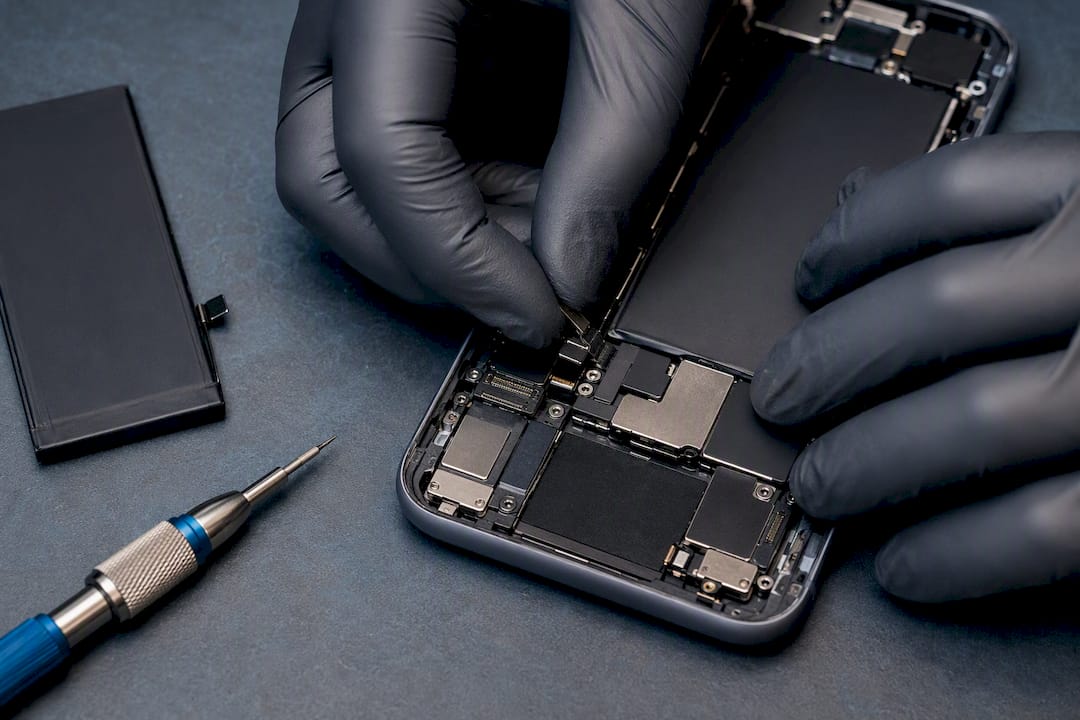
If you’re buying used and the seller claims the battery was replaced, ask when and by whom. Third-party batteries can report inflated health numbers in Settings without matching the real capacity, which is part of why diagnostic verification matters more than a Settings screenshot. Devicegiant’s guide to battery health on refurbished iPhones breaks down what the percentage actually tells you and when it’s worth pushing back on a listing.
If your refurbished unit’s battery degrades faster than expected within the return window, that’s exactly what the 90-day policy exists to catch. Outside that window, a battery replacement from an authorized shop typically runs far less than buying a new phone outright, which is worth factoring into your total cost of ownership before you commit to the cheapest listing on the page.
How Do You Spot a Fraudulent Seller?
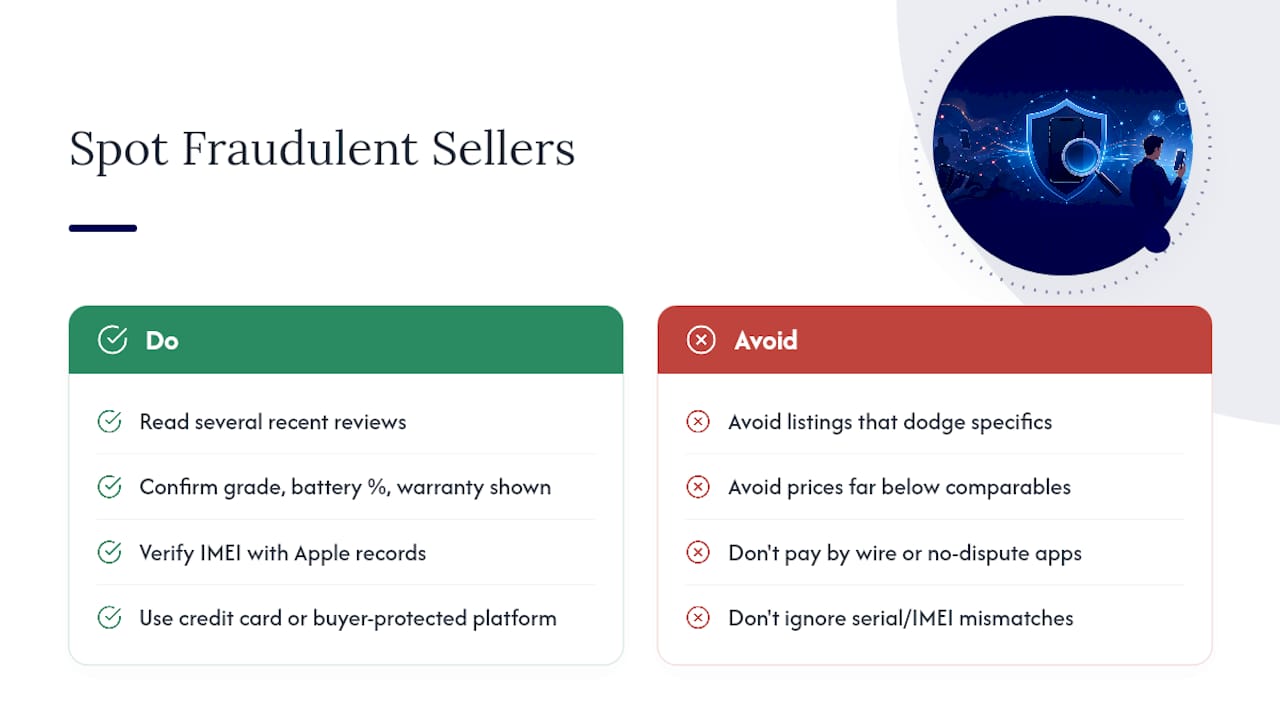
Seller credibility is the single biggest variable in how risky a purchase turns out to be. Read a handful of recent reviews, not just the star rating, since patterns of complaints about battery health or locked phones tend to repeat.
Cross-check the listing itself. A legitimate refurbisher discloses the grade, the battery health percentage, and the warranty term up front, without you having to ask. If a listing dodges specifics or the price sits far below every comparable listing you can find, that’s the clearest signal something is off. Cloned or “frankenphones,” built from mismatched parts, often show inconsistent serial numbers between the settings menu and the physical case, so checking the IMEI against Apple’s own records before you pay closes off one of the most common scams.
Payment method matters too. Use a credit card or a platform with built-in buyer protection rather than a wire transfer or a payment app with no dispute process. Keep every screenshot: the listing, the battery health reading, the IMEI check, and your payment confirmation. If a return dispute ever comes up, that paper trail is what gets your money back.
My Take: What I’d Buy at Different Budgets
At lower budgets, consider a well-graded used iPhone 11 or 12 with in-person inspection for short-term use. Mid-range budgets may be better suited to refurbished iPhone 13 models with some return coverage and verified battery health. Higher budgets could prioritize refurbished iPhone 15 models offering longer software support. Activation Lock and a clean IMEI are the two things I’d never compromise on, at any price.
— Saad
Ready To Browse Verified Previous-Gen iPhones?
Skip the guesswork of private listings and go straight to inventory that’s already been through the checks this guide just walked through. Devicegiant runs every phone through the 25-point TrueGrade inspection and backs it with a 90-day return window, so you get the price advantage of refurbished without gambling on battery health or a locked IMEI. Whether you’re after a previous-gen iPhone or comparing options like the Samsung Galaxy S22 5G, the inventory is graded and disclosed up front, not left for you to guess at.
Browse the current refurbished lineup at Devicegiant’s iPhone inventory, or reach out directly if you’re hunting for a specific model or storage size. If your budget stretches toward flagship territory, the Samsung Galaxy S22 Ultra 5G is worth a look too, graded and warrantied the same way.
Sources
- If you want to buy a preowned iPhone - Apple Support
- Don’t Buy A Used iPhone If It’s Older Than This In 2025 — SlashGear
- What to check before buying a used iPhone — MakeUseOf
- Refurb


