
Source Refurbished Phones: 25 Point Checklist and CTIA, FTC Checks

The most reliable way to source refurbished phones is through manufacturer-certified refurbishers, certified resellers or specialist refurbishers, and verified marketplace renewed programs, including vetted sellers like us. The deciding factors are a written warranty, clear condition grading and an inspection report. Before you add anything to your cart, check the warranty text and confirm how the seller’s grade maps to the device’s actual condition.
TL;DR:
- Choose seller types based on warranty length, transparency, and protection: OEM refurbishers offer the longest warranties, certified resellers provide inspection reports, and marketplaces include dispute protections.
- Always verify warranty terms, ensure the IMEI is clean, and request current battery health data before completing a purchase.
- Use a credit card for payment and screenshot refund policies to safeguard against disputes or policy changes.
- Rely on industry-standard grading systems like CTIA’s to compare device conditions accurately and ask about responsible battery recycling.
- Expect a detailed inspection and a 90-day return window to address the most common issues of functional failure, hidden damage, and battery decline.
Table of Contents
- Where to source refurbished phones: OEM programs, certified resellers, marketplaces, and wholesalers
- How to verify seller credibility and a device before purchase
- Warranty, returns, pricing expectations, and how they affect value
- Authoritative standards and sustainability signals buyers should rely on
- Publisher perspective: what a rigorous inspection actually buys you
- Device Giant: verified refurbished phones and where to start
- FAQ
- Sources
Where to source refurbished phones: OEM programs, certified resellers, marketplaces, and wholesalers
Not every refurbished seller works the same way, and the differences affect your price, your warranty, and how much risk you’re taking on.
Manufacturer-certified refurbishers sell devices reconditioned by the original brand or an authorized partner. You get factory parts and usually the longest warranty in the category, but you pay the most for that assurance.
Certified resellers and specialist refurbishers sit in the middle. These sellers publish their own grading standards and often provide an inspection report showing what was tested, from battery health to camera function. This is where transparency does the most work for your money, and it’s the category we operate in.
Marketplace renewed programs, including renewed listings on large platforms, offer buyer protections built into the platform itself: return windows, dispute resolution, and seller ratings you can check before buying. The FTC’s marketplace buying guidance recommends checking a seller’s return rules and looking for several photos of the actual item rather than a stock photo, since marketplace quality varies widely by seller.
Wholesale and bulk suppliers serve small businesses and resellers buying in volume. If you’re stocking a repair shop or reselling devices, demand a sample inspection report from the lot before committing, covering power-on, radios, cameras, sensors, and battery health, so you know the rest of the batch holds the same standard.
A quick way to sort these options by what matters most to you:
- Want the longest warranty and factory parts: choose a manufacturer-certified refurbisher.
- Want transparent grading and a documented inspection: choose a certified reseller or specialist refurbisher.
- Want built-in dispute protection and seller ratings: choose a verified marketplace renewed listing.
- Buying in volume for resale or repair stock: choose a wholesale supplier and request a sample inspection report first.
How to verify seller credibility and a device before purchase
Verification takes ten minutes and saves you from the most common refurbished-phone complaints: dead batteries, locked devices, and sellers who vanish after the sale.
- Read the written warranty before you buy. Federal law requires that warranty terms for products over $15 be available for inspection before purchase, so save a copy of what’s offered.
- Confirm the IMEI or serial number is clean and check for activation lock or leftover mobile device management (MDM) enrollment before you pay.
- Ask for current battery health data or confirmation that the battery was replaced during refurbishing.
- Request photos of the actual unit, not stock images, and ask exactly how the seller defines its cosmetic grade.
- For bulk or business purchases, ask for a device history or sample inspection report covering the lot, not just one unit.
Payment matters too. Use a credit card rather than a debit card or wire transfer, since card issuers offer dispute protection that bank transfers don’t. Confirm the return window in writing and ask how the seller handles a device that arrives with a problem.
If you’re buying for a small business, residual data is worth a second look. Factory resets on mobile devices often clear pointers rather than fully overwriting storage, so devices intended for staff or resale may need a documented wipe procedure rather than a basic reset. Tools like FactRated can help you compare published specs and battery metrics across listings before you commit, and resources on device sanitization are worth a look if you’re worried about residual enterprise enrollment on bulk purchases.

Pro Tip: Screenshot the seller’s warranty page and return policy at checkout. Policies change, and a saved copy is your proof if a dispute comes up later.
Warranty, returns, pricing expectations, and how they affect value
A warranty is only as good as what’s written down. Under FTC rules, sellers must make written warranty terms available before you buy, so look for specifics on repair versus replacement versus refund, who pays return shipping, and which service provider handles claims.
- Manufacturer-certified refurbishers typically offer the longest coverage, which can justify a higher sticker price.
- Certified resellers commonly offer 90-day windows; ours runs the length detailed on our refurbished phone warranty page.
- Marketplace sellers vary the most, so check the listing’s specific terms rather than assuming platform-wide policy.
- Watch for restocking fees and who covers return shipping, since both quietly raise your real cost.
Before you buy a separate extended warranty, check whether it actually adds coverage beyond what’s included, since overlapping contracts and hidden deductibles are common.
A longer return window reduces your financial risk on a device you haven’t tested yet, and it’s one of the clearest signals of seller confidence. Our return policy details what a 90-day window typically covers.
Authoritative standards and sustainability signals buyers should rely on
Grading language varies by seller, which is exactly why an industry standard helps. CTIA’s updated grading standard, Version 5.1, maps wholesale condition grades to consumer-facing terms and includes battery health declarations and testing guidance, giving you a reference point when a listing says “Grade A” or “Good” without explaining what that means. Our CTIA grading breakdown walks through how that mapping works in practice.
Reuse of electronics functions as source reduction, cutting greenhouse gas emissions compared to manufacturing new devices, while proper battery recycling prevents fires and environmental harm. EPA guidance on lithium-ion battery recycling
Use these standards as leverage when you’re comparing sellers:
- Ask for the specific grade mapping a seller uses, referenced against CTIA’s published scale.
- Insist on warranty text before purchase, not after, as FTC guidance requires.
- Ask what happens to batteries that fail inspection and whether they’re recycled responsibly.
Our e-waste guide covers what eco-conscious buyers can ask sellers about disposal and recycling practices.
Publisher perspective: what a rigorous inspection actually buys you

The most common refurbished-phone complaints trace back to three things: a device that doesn’t fully work, hidden cosmetic damage, and a battery that dies faster than advertised. A detailed inspection checklist exists specifically to catch those before a sale, not after a return request.
A TrueGrade process runs each device through a comprehensive functional check and assigns a cosmetic grade before listing, paired with a return window typical of reputable sellers. That combination addresses the exact risks buyers raise most often: functional failure, undisclosed wear, and battery degradation. The value of any inspection standard, ours or anyone else’s, is whether it’s documented and whether the seller stands behind it with a real warranty.
— Saad
Device Giant: verified refurbished phones and where to start
The process is built around a checklist this article walks through: devices get a 25-point functional inspection, a disclosed cosmetic grade, and a 90-day return window.
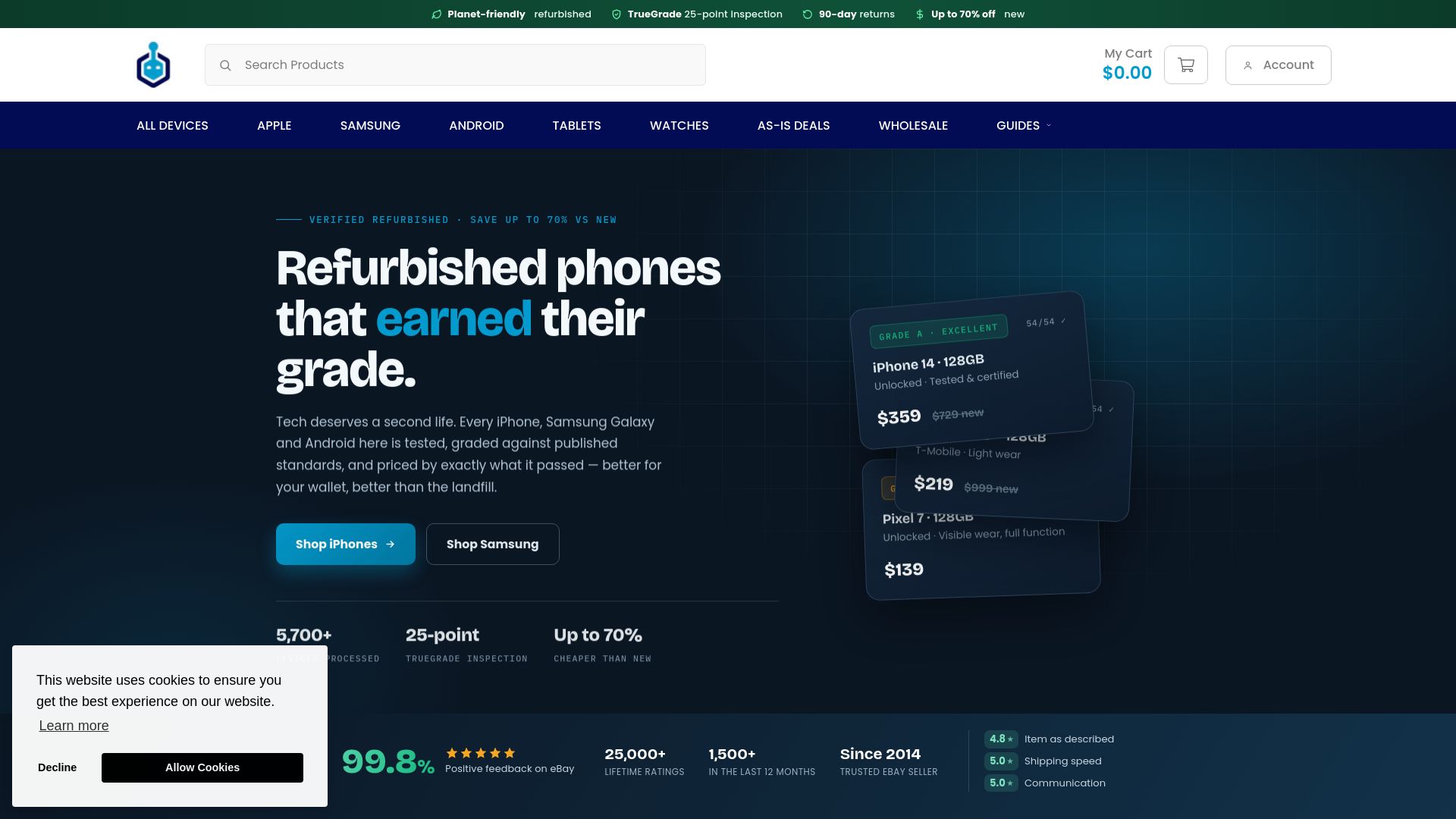
- Shop our refurbished inventory, including Apple, Samsung, and Android devices.
- Check battery health details on listings like the refurbished iPhone 15 in Pink, starting at $278.
- Compare options such as the iPhone 15 in Blue, from $297, or the iPhone 14 in Purple, from $204.
- Reach out about wholesale and bulk orders if you’re stocking a repair shop or reseller inventory.
If you’re comparing us against a marketplace listing or a manufacturer program, the tradeoff comes down to effort: we handle the grading, inspection, and warranty terms upfront so you’re not piecing together seller history yourself. Start browsing our verified devices and check the warranty and grade details before you buy.
FAQ
What is the best site to buy a refurbished phone?
There’s no single best site for every buyer. A manufacturer-certified refurbisher suits buyers who want the longest warranty, while a certified reseller with published grading and inspection reports, like our TrueGrade process, suits buyers who want transparency and value together.
Where is the most trusted place to buy refurbished phones?
Trust comes down to three things: a written warranty available before purchase, as FTC rules require, a clear grading standard mapped to CTIA’s published scale, and a documented inspection report. Sellers that provide all three, across any channel, are the safer choice.
Which company is best for refurbished phones?
The right seller depends on whether you prioritize warranty length, price, or grading transparency. We focus on combining a 25-point inspection with a 90-day return window, which covers the main risks buyers report: functional issues, hidden damage, and battery wear.
Where should I buy refurbished phones from?
Buy from a seller that discloses its grading system, provides a written warranty before you pay, and offers real photos of the unit rather than stock images, consistent with FTC marketplace guidance. Certified resellers and manufacturer programs both qualify if they meet those standards.
What should I check before buying a refurbished phone for resale?
Request a sample inspection report from the lot covering power, radios, cameras, sensors, and battery health before committing to bulk stock. Confirm devices are free of activation lock or leftover enterprise enrollment, since residual MDM access is a common issue with bulk lots.
Sources
- A businessperson’s guide to federal warranty law — FTC
- Buying from an online marketplace — FTC
- CTIA publishes wireless device grading standard
- Lithium-ion battery recycling — EPA

