
Keep Camera Software: Best Used Camera Phones with 25 Point Check

The best move right now is a recent flagship or pro-tier phone bought refurbished rather than from an anonymous reseller, because photo quality on a used phone depends less on megapixels and more on how much software support remains and whether the unit was actually inspected. A verified refurbishment process, the kind that checks cameras, battery, and parts history against a fixed list, turns a risky used purchase into a predictable one.
TL;DR:
- Choose refurbished flagship or pro-tier phones inspected with a standardized process to ensure camera performance, battery health, and condition reliability.
- Prioritize sensor size, stabilization, and remaining software support over megapixels, especially for low-light and zoom photography needs.
- Confirm that the phone still runs current capture modes and has at least two years of software updates left before purchasing.
- Avoid deals lacking documented inspection, clear IMEI, and return policies; red flags include unknown part replacements and missing proof of condition.
- Expect older flagship phones to deliver comparable photo quality in good light, but software support duration is more critical than device age for enduring camera capability.
Table of Contents
- 1. Match your photography needs to the right used phone
- 2. What to check before buying: camera, software, and condition
- 3. How to test a used camera phone before you buy
- 4. Why megapixel count doesn’t tell you much about photo quality
- 5. What camera performance to expect at each price tier
- 6. Where to buy safely and the red flags that should stop you
- 7. How verified refurbishment addresses these exact risks
- 8. The trade-off photographers should actually accept
- 9. Get a verified refurbished camera phone without the guesswork
- FAQ
- Sources
1. Match your photography needs to the right used phone
Not every photographer needs the same camera, and matching your actual shooting habits to a device category saves money without sacrificing the shots you care about. Before comparing specs, decide which bucket you fall into.
Everyday and family photos. You want reliable autofocus, accurate color, and a phone that processes a shot in under a second so you do not miss the moment. A two- or three-year-old flagship handles this easily, and you rarely need the top-tier tele module. Prioritize a device with at least two more years of guaranteed software updates, since Pixel phones document multi-year update policies that extend well past the purchase date on certain lines, including Pixel 8 and later models getting seven years of OS and security updates in the US.
Low-light and indoor shooters. Sensor size and pixel binning matter more here than raw resolution. A larger main sensor gathers more light per pixel, which is why a phone with a smaller sensor but a higher megapixel count can still look noisier in a dim room. DXOMARK’s testing of the Google Pixel 8 Pro shows that no single phone wins every lighting scenario: a device that excels outdoors can struggle indoors, and vice versa, so if indoor and evening shots dominate your library, weight your decision toward documented low-light performance rather than headline specs.
Zoom and wildlife or event photographers. A dedicated tele or periscope module is non-negotiable, and optical image stabilization becomes critical at longer focal lengths because even small hand tremors get magnified. DXOMARK’s iPhone 15 Pro camera test notes that tele configuration differs even within the same phone family, with the Pro Max carrying a longer tele module than the standard Pro. If zoom reach is your priority, confirm the exact tele focal length on the listing rather than assuming “Pro” means the longest lens available.
Vlogging and video creators. Stabilization and microphone quality outweigh photo-specific features. Look for a phone with optical and electronic stabilization working together, a wide-angle front camera for group shots, and confirm the microphones were tested during inspection, since a stuck or muffled mic is a common used-phone fault that photo-only buyers never notice.
A practical heuristic across all four buckets:
- Aim for a device no older than three generations behind the current flagship line.
- Confirm at least two years of remaining software support before buying.
- Accept an older battery or a minor cosmetic flaw before accepting a camera with no remaining update path.
- Skip the newest flagship if your bucket does not need its specific camera advantage, since that premium rarely pays off for everyday or low-light shooters.
If budget forces a compromise, give up resolution before you give up stabilization or update support. A noisier photo is fixable in editing; a camera module that cannot autofocus is not, and a phone that stops receiving security patches becomes a liability no matter how good its sensor once was.
2. What to check before buying: camera, software, and condition
A used camera phone lives or dies on four factors that have nothing to do with the marketing spec sheet: how long it will keep receiving updates, what hardware sits behind the lens, whether the camera app still supports advanced capture modes, and what condition clues reveal about its repair history.
- Confirm remaining software support first. Ask the seller or check the manufacturer’s own policy before looking at anything else. Google documents exactly how long each Pixel line receives updates, and similar documentation exists for other major lines. A phone with one year of support left will lose camera-adjacent features and security patches sooner than one with four years left, even if both have identical hardware today.
- Look past megapixels to sensor size, aperture, and stabilization. Apple’s own tech specs for the iPhone 15 Pro Max list aperture, sensor characteristics, and tele focal lengths precisely because these numbers predict image quality better than resolution alone. A wider aperture lets in more light, a larger sensor reduces noise, and optical image stabilization reduces blur in handheld shots, especially at night or at zoom.
- Check camera-app and format support. Confirm the phone still runs Pro or RAW capture modes if you edit photos afterward. Features like Apple ProRAW, referenced in Apple’s iPhone 15 Pro specifications, depend on both the hardware and an active software version, so a phone locked on an old OS build may have lost access to modes it originally shipped with.
- Read condition signals that affect camera quality specifically. A phone that has had a camera module replaced with a non-original part sometimes triggers an unknown-part notice. That notice does not automatically mean the camera is broken, but it does mean you should test image quality more thoroughly and insist on a longer return window before committing.
Pro Tip: Ask the seller directly whether the battery is original or replaced, since a swapped battery with no documentation is one of the most common hidden issues in listings that otherwise look clean.
Water damage indicators are worth a specific mention. Many phones have internal moisture sensors that change color on contact with liquid, and a seller who cannot or will not confirm these sensors are clean is giving you a reason to walk away, not negotiate. Corrosion around the charging port or camera bezel is another visible clue that a phone has a history the listing did not mention.
For readers who want to cross-check hardware claims against standardized data rather than relying on a single listing’s description, independent comparison tools like FactRated’s objective product data let you compare supplier-declared specs across devices before you even start messaging sellers.
3. How to test a used camera phone before you buy
Testing a used phone takes fifteen minutes and catches the problems that photos in a listing never reveal. Work through this sequence in order, since each step narrows down what could be wrong before you move to the next.
- Verify the IMEI and lock status first. Dial the IMEI check code on the phone itself and compare it to the listing, then confirm the device is not reported lost, stolen, or blacklisted, and that no activation lock or carrier lock will block your use of it.
- Inspect the exterior for water and corrosion signs. Check the charging port, SIM tray, and speaker grilles for discoloration, and look for any screen lifting or gaps in the seal that suggest a prior repair.
- Test every camera and the flash individually. Shoot a plain, evenly lit wall with each lens to reveal haze, dead pixels, or dust between glass elements, then photograph a distant, high-detail subject across the full zoom range to check sharpness and module alignment.
- Check autofocus and stabilization. Tap to focus on near and far subjects repeatedly, and shoot a short video while walking to see whether stabilization smooths your motion or produces visible judder.
- Load the camera and watch battery behavior. Shoot video for several minutes and check for unusual heat, rapid battery drain, or the phone throttling performance mid-recording.
- Test connectivity you will rely on for backup and upload. Confirm Wi-Fi, Bluetooth, and cellular data all connect normally, since a camera phone is only as useful as your ability to get photos off it.
Before handing over payment, request a few specifics from the seller:
- Confirmation the phone is fully unlocked for your carrier.
- A clear statement of the return window and what voids it.
- Any available service history, including whether parts have been replaced.
- Photos or a short video from the actual unit, not stock images.
If something looks off during testing, photograph or screen-record it immediately and send it to the seller before the return window closes. A documented problem reported promptly is far easier to resolve than a complaint made after the fact.
4. Why megapixel count doesn’t tell you much about photo quality
Megapixel count is the most misleading number on a camera phone spec sheet, and it persists mainly because it is easy to print on a box. A higher megapixel count can come from a smaller sensor, which often produces noisier, less detailed images in anything but perfect light than a lower-megapixel camera with a larger sensor and smart pixel binning.
The metrics that actually predict image quality:
- Sensor size: a larger sensor captures more light per pixel, improving detail and reducing noise, especially indoors and at night.
- Aperture: a wider aperture (a smaller f-number) lets in more light without raising ISO, which keeps noise down in dim scenes.
- Optical image stabilization (OIS): reduces blur from hand movement, which matters most at telephoto focal lengths and in low light.
- Pixel binning: combines several smaller pixels into one larger effective pixel in software, trading resolution for light sensitivity in dark conditions.
Tele and periscope modules deserve separate attention because they solve a different problem than the main camera. DXOMARK’s comparison of the iPhone 15 Pro’s tele performance shows that even within one phone generation, the standard Pro and the Pro Max carry different tele hardware, which changes how far you can zoom before quality drops off.
There is no single “best” camera phone for every situation. DXOMARK’s testing across multiple devices consistently finds that different phones lead in different categories, one might win on exposure accuracy, another on color rendering, another on zoom reach, which is exactly why matching your shooting habits to a device, rather than chasing a generic “best camera” label, produces better results.
Computational photography features add another layer that pure hardware specs miss entirely. Night modes, portrait processing, and HDR blending are implemented in software, and a manufacturer’s update can measurably change how a phone’s camera performs without touching a single piece of hardware. This is the clearest argument for prioritizing software support length when buying used: the camera you buy today may genuinely get better, or worse, depending on what updates still arrive.

When comparing manufacturer spec sheets, read for the features that back real capability. Apple’s published specs for the iPhone 15 Pro Max list exact aperture values, sensor details, and ProRAW support rather than just a megapixel headline, and that level of detail is what you should look for from any manufacturer before trusting a marketing claim.
5. What camera performance to expect at each price tier
Used camera phone prices roughly sort into three bands, and knowing what each band realistically delivers keeps you from overpaying for features you will not use or underbuying for a need you actually have.
Entry tier. Expect older flagship or current mid-range hardware with a capable main camera but a weaker or absent tele module, and plan for software support that may already be in its final year or two. Battery health is the biggest risk here, since phones in this range are often several years old, and a degraded battery under sustained video recording will throttle performance or shut down unexpectedly. Prioritize confirming battery health and remaining update support over chasing extra camera features at this price.
Mid tier. This is where recent flagship or pro-tier phones land once they are one or two generations old, typically still covered by one of the longer manufacturer software policies. You get a stronger main sensor, usable tele reach, and more consistent low-light performance, with the main trade-off being a battery that has seen moderate use and cosmetic wear that does not affect the camera itself. This band offers the best ratio of photographic capability to price for most of the use-case buckets described earlier.
Premium tier. Near-current flagship and pro-tier models with the longest remaining software runway, the best tele modules, and the most complete computational photography feature sets. You pay close to new pricing for the newest hardware, which only makes sense if you specifically need a feature, like the longest zoom range or the most advanced night mode, that lower tiers cannot match.
Within any tier, spend your budget in this order:
- Confirm software support length before anything else, since it caps how long every other feature stays relevant.
- Prioritize sensor size and stabilization over an extra tele lens you will rarely use.
- Accept cosmetic wear or a modestly aged battery before accepting a camera module with unresolved inspection flags.
- Only move up a tier if your specific use case bucket genuinely requires the feature that tier adds.
A repair risk compounds at the lower end of every tier: a phone bought cheap with a battery near the end of its life, or with an undocumented part replacement, often costs more in repairs within a year than the savings were worth.
6. Where to buy safely and the red flags that should stop you
Where you buy a used camera phone matters almost as much as which phone you choose, since the same device can be a safe purchase or a costly mistake depending on the seller’s practices.
Certified refurbishers inspect devices against a fixed checklist, grade cosmetic condition transparently, and typically offer a defined return window. The trade-off is a slightly higher price than an anonymous listing, which buys you a documented inspection and recourse if something fails.
Open marketplaces can offer lower prices but shift inspection and verification work onto you, the buyer, with return policies that vary wildly by individual seller.
Independent sellers outside any marketplace protection offer the least recourse of the three, and verifying IMEI status, lock status, and condition claims falls entirely on you with no built-in return guarantee.
Red flags that should end a potential purchase outright:
- The seller refuses to provide or confirm the IMEI before payment.
- There is no return window of any kind.
- Listing photos are stock images rather than photos of the actual unit.
- An unknown-part or non-genuine-part warning is disclosed with no offer to test the camera further or extend the return window.
- The price is dramatically below comparable listings with no explanation.
A documented inspection paired with a real return window converts most of the risk in a used purchase into a manageable trade-off. Ask any seller for proof of inspection results and a clear statement of what the return window covers, specifically whether a camera fault discovered after purchase qualifies.
7. How verified refurbishment addresses these exact risks
Every risk covered so far, unverified parts, unclear condition, no recourse if the camera fails, is the reason we built the TrueGrade 25-point inspection into every refurbished device we sell. The checklist covers camera function across every lens, battery health, and the condition signals that matter most for photography, so you are not left guessing what “refurbished” actually means.
We back every device with a 90-day return policy, longer than what most individual sellers or marketplace listings offer.
If you want to put the inspection checklist from this guide into practice, start with our IMEI check guide before contacting any seller, used or otherwise.
8. The trade-off photographers should actually accept
The honest trade-off in buying used isn’t age versus price, it’s remaining software support versus upfront savings, and the second one matters more for photography specifically. A simple rule that holds up: prefer a certified refurbished flagship that is two to three years old with at least two years of expected software support remaining, rather than the newest possible phone at the top of your budget.
That rule protects the computational features that keep improving your camera after purchase, which matters more than shaving another year off the device’s age.
— Saad
9. Get a verified refurbished camera phone without the guesswork
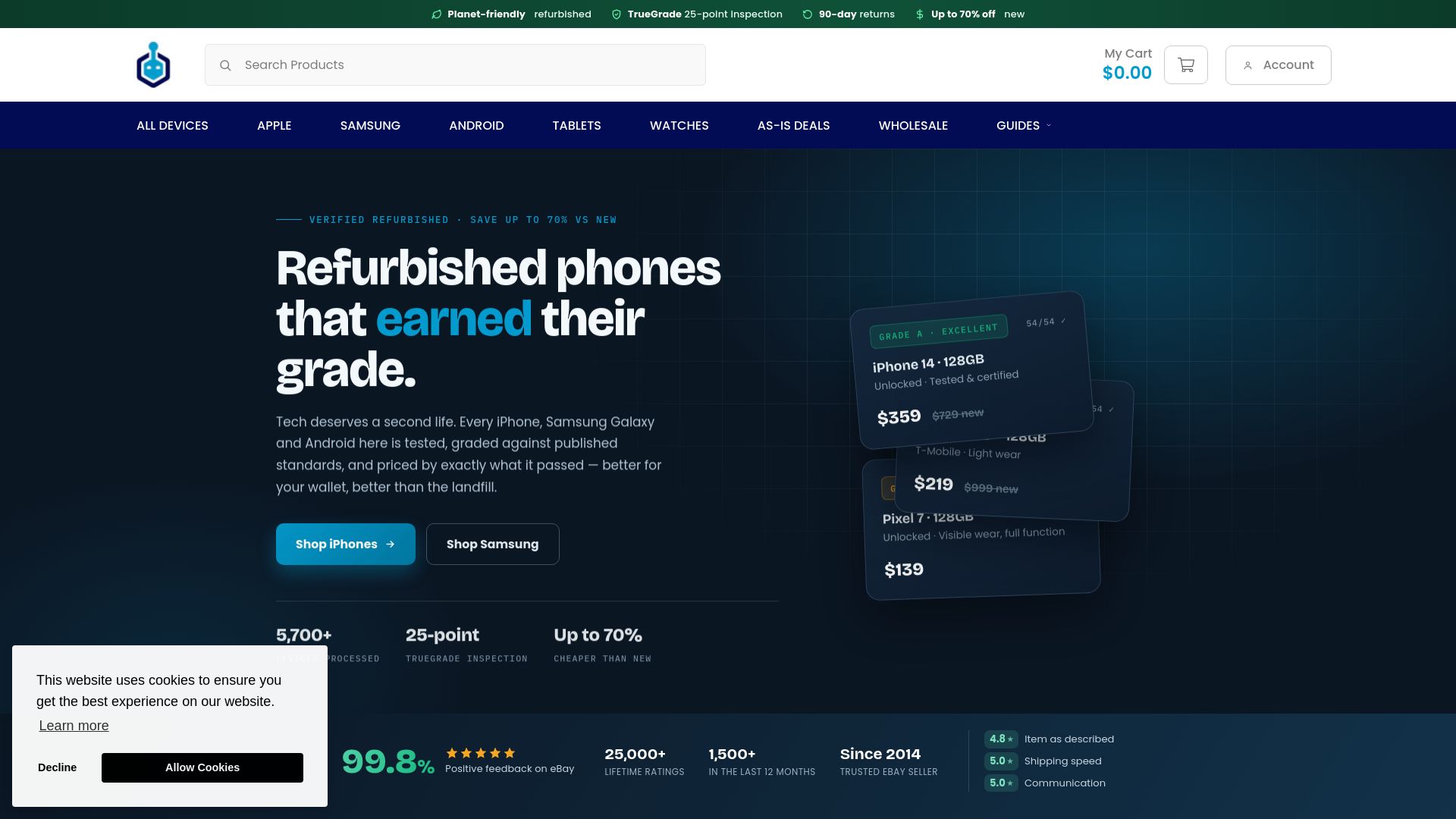
We make the checklist in this guide easy to act on: every device in our inspected refurbished inventory passes the TrueGrade 25-point check before it ships, with cosmetic grading disclosed upfront and a 90-day return window behind it. If a recent flagship fits your budget, our iPhone 15 listings starting at $278 are a practical place to start browsing inspected options.
FAQ
Which second-hand phone has the best camera?
There is no single second-hand phone that wins every photography scenario. DXOMARK’s testing shows different models lead in exposure, color, zoom, or low light, so the better question is which recent flagship, two to three years old with solid remaining software support, matches your specific shooting habits.
What is the best 2nd-hand camera phone for taking pictures?
For everyday photos, a recent flagship with reliable autofocus, accurate color, and at least two years of remaining software updates covers most needs without the premium of the newest release. Prioritize sensor size and stabilization over raw megapixel count when comparing listings.
Which is the best budget phone with a good camera?
In the entry price tier, look for a phone with a capable main sensor even if the tele module is limited, and confirm the battery health and remaining software support before anything else. A documented inspection and a real return window matter more at this price point than any single spec.
Which old phones have the best cameras?
Older flagship phones can still take excellent photos in good light, but their computational photography features and low-light performance age faster than their hardware does, since software updates materially affect camera output over a phone’s lifespan. Check how much update support remains before assuming an older model’s camera still performs like new.
How long should software updates last on a used camera phone?
Aim for at least two years of remaining software support at the time of purchase, since camera-related features and security patches depend on an active update policy. Google documents exact update timelines for its Pixel lines, with newer models guaranteed several years of coverage from release.
Sources
- iPhone 15 Pro Max - Tech Specs - Apple Support
- Learn when you’ll get software updates on Google Pixel phones - Pixel Phone Help
- Google Pixel 8 Pro camera test - DXOMARK

