
Phone Leasing vs Buying: What Cost-Conscious Buyers Should Know

Buying almost always costs less if you keep a phone longer than two years; leasing only wins for people who upgrade every 12 to 18 months and can absorb the fine-print fees when they don’t. That single trade-off decides most of this debate.
- Buy or finance if you plan to keep your phone 3+ years or want to avoid recurring charges entirely.
- Lease through a program like the Apple Upgrade Program if you upgrade annually and value predictable payments over ownership.
- Buy refurbished through a source like Devicegiant if cost is your top priority. The average American replaces a phone every 29 months, longer than most lease terms are built around.
Key Takeaways
Buying or choosing certified refurbished costs less than leasing for anyone who keeps a phone longer than typical lease terms, while leasing only pays off for annual upgraders who avoid its fees.
| Point | Details |
|---|---|
| Buying wins for keepers | Owning a phone for 3+ years almost always beats leasing on total cost. |
| Lease terms rarely match usage | The average replacement cycle is 29 months, longer than most 24-month lease terms. |
| Fees can erase lease savings | Early termination and damage charges are described as substantial by MacRumors. |
| Insurance often costs extra | Programs increasingly separate protection plans from the lease fee itself. |
| Refurbished is the low-cost middle ground | Devicegiant’s 25-point inspection and 90-day returns make refurbished buying a lower-risk way to own a phone outright. |
Table of Contents
- Phone Leasing vs Buying: How Each Ownership Model Actually Works
- What Does Phone Leasing Actually Cost Versus Buying?
- Fees and Contract Traps That Change the Real Cost
- Which Ownership Model Fits Your Upgrade Habits?
- Why Refurbished Phones Beat Both Leasing and New Buying on Cost
- The Bottom Line on Leasing vs Buying a Phone
- Get a Phone You Own, Not One You’re Renting
- Sources
Phone Leasing vs Buying: How Each Ownership Model Actually Works
“Leasing” a phone rarely means a traditional lease. It usually means an upgrade program: you pay a fixed monthly fee for 24 months, then choose to return the device, buy it out, or roll into a new one. The Apple Upgrade Program works this way, and several carrier installment plans mimic it under a different name.
Buying outright means you own the device the moment you pay, full stop. Financing (through a carrier or a buy-now-pay-later plan) means you own it once the last installment clears, typically after 24 or 36 months. Refurbished buying is a variant of outright ownership: you pay less upfront for a device that’s already been inspected and graded.
Here’s how the four models break down by term length and end result:
- Buy outright: No term. You own the phone on day one.
- Financed/carrier installment: 24 or 36 months. You own it after the final payment.
- Upgrade/lease program: Usually 24 months. You return, buy out, or upgrade. You never automatically own the device.
- Refurbished purchase: No term, same as buying outright, but at a lower entry price.
Carrier installment plans and the Apple Upgrade Program look similar on a bill, but only one of them ends in you owning something without an extra step.
What Does Phone Leasing Actually Cost Versus Buying?
Run the numbers on two phones and the pattern becomes obvious fast. Assume a flagship at $999 retail, a midrange phone at $449, a lease rate that mirrors typical Apple Upgrade Program pricing near $32 to $46 a month depending on storage, 24 or 36 month terms, and resale values that drop roughly 35% to 40% after two years, based on industry resale estimates.
- Flagship, 24 months, buying: Pay $999 upfront (or finance interest free over 24 months at about $42/month). At month 24, you own a phone worth roughly $600 to $650 on resale. Net cost after resale: around $350 to $400.
- Flagship, 24 months, leasing: Pay about $42/month for 24 months, totaling roughly $1,008. You own nothing unless you pay a separate buyout fee, often several hundred dollars more. Net cost: $1,000 or more, with zero resale upside because you likely return the unit.
- Midrange, 24 months, buying refurbished: Pay around $250 to $300 for a certified refurbished midrange device. No monthly bill, no lease terms, no buyout math.
The math shifts a little with a midrange phone since the dollar amounts shrink, but the ratio holds. Leasing’s appeal is the low sticker shock of a monthly payment. Its cost shows up later, in the fees section below.
Fees and Contract Traps That Change the Real Cost
Lease programs read simple on the surface and get complicated the moment you deviate from the default path. MacRumors reports that most programs require the device to come back in “good condition,” and early termination usually means paying the remaining balance of the full contract, a fee providers themselves describe as substantial.
Watch for these before you sign anything:
- Early termination fees: Ending the lease early often means owing the rest of the contract, not just what you’ve used.
- Damage fees at return: Scratches, a cracked screen, or a swapped battery can trigger charges that erase whatever you saved on the monthly rate.
- Missed-payment penalties: Late payments can affect both the lease terms and your credit standing.
- Insurance gaps: Newer upgrade programs often separate protection plans like AppleCare from the lease fee itself, according to MacObserver. Skip the add-on coverage and a cracked screen at return can cost far more than a repair would have.
Pro Tip: Before signing any upgrade or lease agreement, ask three questions: What’s the exact buyout price formula at month 24? Is there a grace period if I don’t choose an option in time? And who legally owns the device during the term, you or the leasing partner? The answers determine whether the “flexible” plan is actually flexible.
Which Ownership Model Fits Your Upgrade Habits?
Match your habits to one of these three profiles before you decide anything:
- The annual upgrader: You want the newest camera or chip every year and don’t mind never owning the device. A lease program’s fixed payment and built-in upgrade path fit your pattern, as long as you can stomach fees if you deviate from the schedule.
- The moderate upgrader (18 to 30 months): You sit right at the average replacement cycle. Financing or buying outright usually beats leasing here since you’ll likely keep the phone slightly past a typical lease term anyway.
- The long-term keeper (3+ years) or budget-focused buyer: Buying, financing, or going refurbished wins decisively. There’s no lease term built for holding a phone this long without paying for years you don’t need.
The one-line rule: if you plan to keep a phone 3 or more years, buy. If you upgrade every year without fail, a lease can be worth the cost, but only if you read the fine print first.
Before committing, check three things: your credit readiness for financing approval, your actual tolerance for a recurring monthly bill versus a one-time cost, and whether you have the discipline to sell or trade in a device promptly instead of letting it sit in a drawer losing value.
Why Refurbished Phones Beat Both Leasing and New Buying on Cost
Certified refurbished sits below both leasing and new buying on price without the ownership trade-offs a lease forces on you. A properly refurbished phone has passed a functional inspection, carries disclosed cosmetic grading (A through D), and has had its battery health tested, not just wiped and reboxed.
Devicegiant runs devices through a 25-point TrueGrade inspection before listing them, backs every sale with a 90-day return window, and has built a 99.8% positive feedback record on eBay. That combination matters more than the price tag alone, since a cheap refurbished phone with no return policy is a real gamble.
- Refurbished pricing runs up to 70% below new retail.
- Over a 24 to 36 month hold, a refurbished buyer typically pays a fraction of what a lease costs across the same window, since there’s no recurring bill and no buyout fee waiting at the end.
- The savings compound for long-term keepers specifically, since the upfront discount stretches across more months of use.
The Bottom Line on Leasing vs Buying a Phone
Buy or go refurbished if you keep phones for years; lease only if you’re an annual upgrader who has read every line of the contract. Cost-conscious buyers come out ahead almost every time by skipping the lease altogether.
- Run the math above using your actual phone’s price and your realistic upgrade timeline.
- If cost is the deciding factor, browse Devicegiant’s refurbished inventory before signing any lease paperwork.
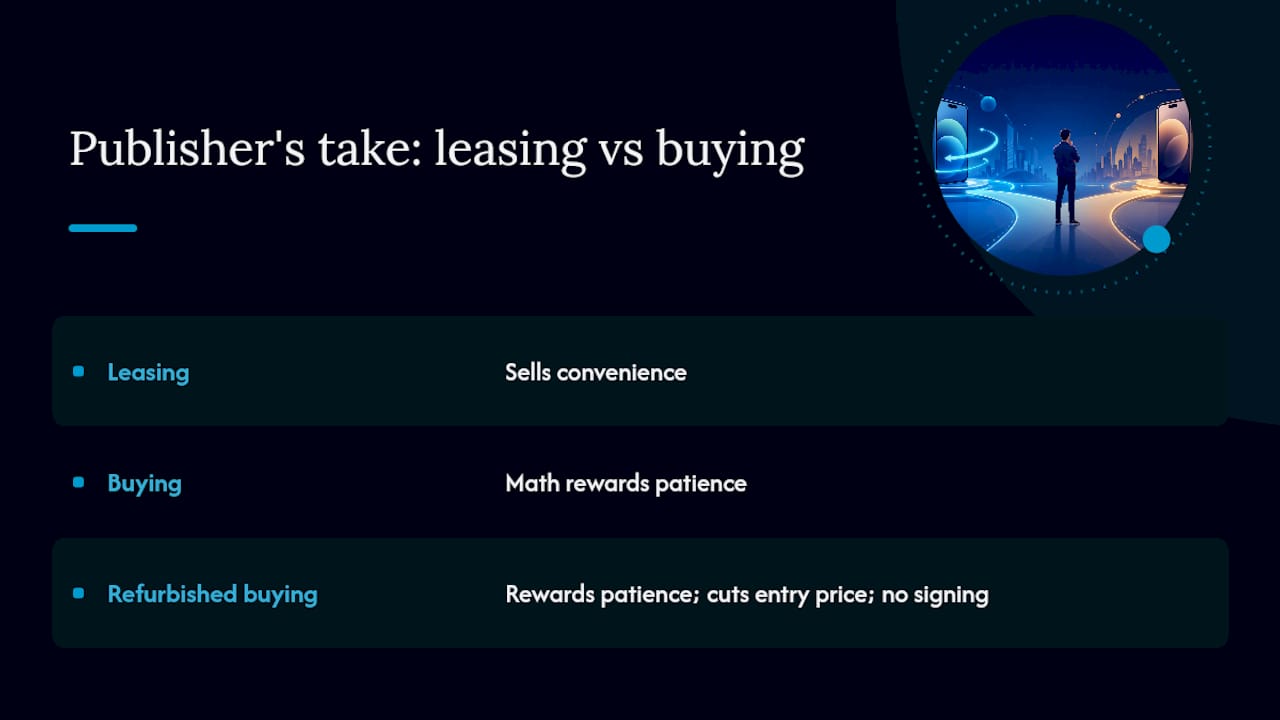
A publisher’s take on leasing versus buying
Leasing sells convenience, but the math rewards patience, and refurbished buying rewards it best by cutting the entry price without asking you to sign anything.
Get a Phone You Own, Not One You’re Renting
Skip the buyout formulas and damage-fee anxiety.
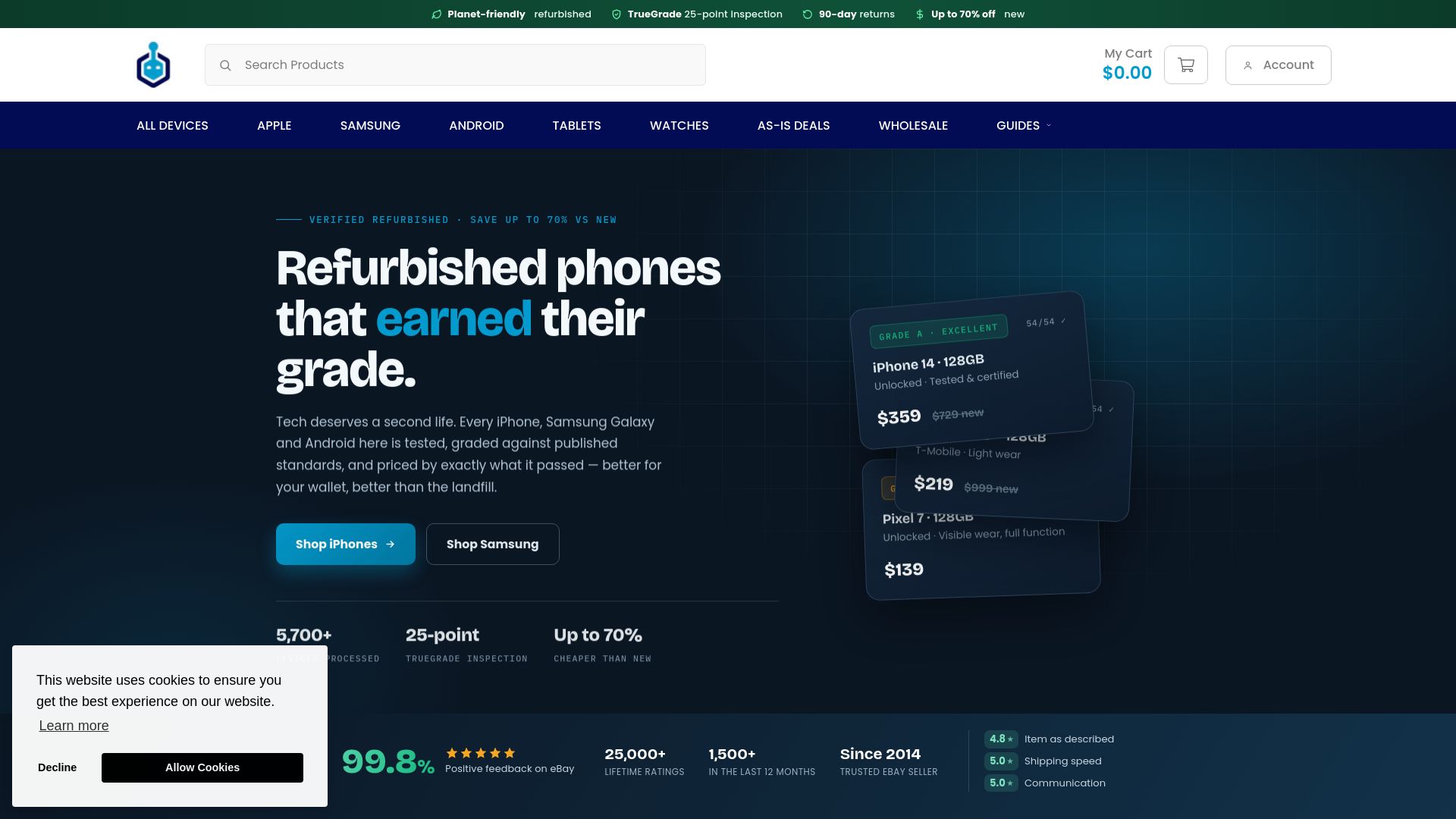
Every phone passes a 25-point TrueGrade inspection covering battery health, screen function, and cosmetic grading before it ships, and you get a 90-day return window to make sure it’s right. If you’ve been eyeing a flagship without the flagship price, the refurbished iPhone 15 starts at $297, well under what two years of lease payments would run you. Browse the full refurbished phone lineup and find a device that fits your budget without a monthly bill attached.
Sources
- What’s the catch with the Apple Upgrade program? | The Verge
- The New Apple Upgrade Program Has Some Hidden Costs You Should Know About | MacObserver
This article is general information, not a substitute for advice from a qualified financial advisor. Consult a qualified financial professional about your own circumstances before acting on anything here.


