
5–10 Minute Refurbished Phone Checklist: IMEI, Battery, Returns

Before you buy any refurbished phone, verify the IMEI and activation lock status, check battery health, inspect the physical condition, test the core functions, confirm carrier compatibility, and lock down the warranty and return terms. Skipping any one of these steps is how buyers end up with a locked, water-damaged, or unreturnable device. Treat this as a sequence, not a suggestion list.
TL;DR:
- Verify the IMEI status and run a device-history check to ensure the phone is not blacklisted or stolen before purchase.
- Confirm there is no activation lock and test core functions like calls, camera, and charging in person or upon unboxing.
- Check battery health and ensure the battery and parts are genuine, as fake or unverified components can lead to faster capacity loss.
- Ensure the device is unlocked or matches your carrier, and test SIM card compatibility by inserting a different carrier’s SIM before buying.
- Obtain clear warranty and return terms in writing, and buy from reputable sellers with transparent inspection processes and real customer reviews.
Table of Contents
- Your 5-to-10-minute pre-purchase checklist
- Checking the screen, frame, ports, and moisture indicator
- Verifying battery health and genuine parts
- Running an activation lock and IMEI check
- Making sure the phone works on your network
- Testing the hardware that actually matters day to day
- Locking in warranty, returns, and payment protection
- Spotting a trustworthy seller versus a red flag
- What a transparent refurbishment process looks like
- When refurbished is the smarter buy
- Where to find a phone that already meets this checklist
- FAQ
- Sources
Your 5-to-10-minute pre-purchase checklist
Run through this before you pay, whether you’re meeting a seller in person or the phone just landed on your porch.
- Pull the IMEI (dial *#06# or check Settings) and run a device-history check for blacklist or stolen status.
- Confirm there’s no Activation Lock screen asking for a stranger’s Apple ID or Google account.
- Check battery health in system settings.
- Inspect the screen, frame, ports, and moisture indicator.
- Test calls, Wi-Fi, camera, speakers, mic, and charging.
- Confirm the phone is unlocked or matches your specific carrier.
- Get the return window and warranty terms in writing before you pay.
- Pay with a credit card or buyer-protected platform and photograph everything.
Steps 1, 2, 3, and 6 can usually be done with the seller present, before money changes hands. Steps 4, 5, and 8 work just as well the moment the box is opened at home.
Checking the screen, frame, ports, and moisture indicator
Start with the screen. Swipe corner to corner to catch dead zones, and open a plain white image to spot dead or stuck pixels against a blank background. Then move to the body.
- Run a finger along the frame and back glass, feeling for gaps, lifted edges, or a slight bulge that can signal a swelling battery.
- Insert a SIM tray and cable to confirm the port isn’t loose, bent, or corroded.
- Locate the moisture indicator, typically inside the SIM slot, which permanently changes color on liquid exposure even when the phone looks spotless in photos.
Sellers usually grade cosmetic condition on a scale from like-new to heavily worn, and the terminology shifts a bit by retailer. Light scuffs on the back or a few hairline marks on the frame are normal for a B or C grade phone and shouldn’t worry you. Walk away if you see cracked glass under a screen protector, a frame that doesn’t sit flush, or a moisture indicator that’s already triggered.
Pro Tip: Photograph the device from all sides the moment you unbox it, timestamped, before you insert your own SIM. It’s your proof if a return dispute comes up later.
Verifying battery health and genuine parts
A refurbished phone’s battery tells you more about its real condition than almost anything else on the spec sheet.
- On iPhone, go to Settings, then Battery, then Battery Health & Charging to see the maximum capacity percentage.
- On Android, battery stats live in Settings under Battery, though the exact menu name varies by manufacturer.
- Watch for an “Unknown” or “Unable to verify” message next to the battery. On iPhone, this often flags a nongenuine or unverified part rather than an official Apple battery.
- Ask the seller directly whether the battery was replaced, and with what part.
A phone’s Parts and Service History will list a battery as “Genuine,” “Used,” or “Unknown,” and that label affects how accurately the health percentage reflects reality. Genuine parts matter beyond just battery life: a nongenuine battery can misreport its own capacity, masking a phone that actually drains far faster than the screen suggests. Certified refurbishers often replace batteries with new genuine parts as a standard part of the process, which is one reason certified units tend to perform closer to new.
Running an activation lock and IMEI check
A locked or blacklisted phone is a paperweight, no matter how good the price looks. Confirm this before you hand over any money.
- Power on the device and watch for a screen reading “iPhone Locked to Owner” or asking for a previous Google or Apple account. If either shows up, the phone is Activation Locked and cannot legally or practically be used until the original owner releases it.
- Dial *#06# or check Settings to find the IMEI number.
- Run that IMEI through a device-history or blacklist checker to confirm it isn’t reported lost, stolen, or carrier-blocked.
- Have the seller fully erase the device and walk it through setup to the Hello or Home screen in front of you, confirming no prior account remains attached.
A clean result means the IMEI has no blacklist flags and the phone boots to a fresh setup screen. A blacklisted result means stop, regardless of how much you’ve already negotiated on price.
Making sure the phone works on your network
An unlocked phone is the safest bet because it isn’t tied to one carrier’s approval process.
- Check Settings under General, then About, or Cellular, for a carrier lock status.
- Pop in a SIM from a different carrier and confirm it connects and makes calls.
- Note that older CDMA networks have mostly been retired, but some legacy or budget devices still carry network restrictions worth asking about directly.
- Ask the seller for a written guarantee of unlocked status, or test the SIM swap inside a carrier store before finalizing payment.
Testing the hardware that actually matters day to day
Specs on a listing mean nothing if the camera won’t focus or the speaker crackles. Run these tests within the first hour of ownership.
- Shoot a still photo, a low-light shot, and a short video to confirm the camera focuses and exposes properly.
- Record a voice memo and make a short call to test the mic and speaker together.
- Plug in a charger and confirm it charges at a normal rate without overheating.
- Connect to Wi-Fi and pair a Bluetooth device to confirm both radios work.
- Test Face ID, fingerprint unlock, and the proximity sensor during a call.
If anything fails intermittently rather than consistently, don’t assume it will fix itself. Start a return or warranty claim the same day rather than waiting to see if the problem repeats.
Locking in warranty, returns, and payment protection
Treat the warranty and return window as part of the price, not an afterthought.
- Insist on a reasonable return window to allow time to catch any delayed battery or software issues.
- Favor sellers who state the warranty scope clearly in writing, not just “warranty included” with no detail.
- Know that manufacturer-certified refurbished programs typically include a new battery and a full one-year warranty, which is longer coverage than most independent sellers offer.
- Pay with a credit card or a platform offering buyer protection, since this preserves your ability to dispute a purchase that isn’t as described.
Pro Tip: Save every message with the seller and the original listing photos. If a dispute happens, that paper trail is what actually gets your money back.
Spotting a trustworthy seller versus a red flag
A legitimate refurbished seller wants you to inspect the phone closely, not rush you past it.
- Look for actual photos of the specific unit you’re buying, not generic stock images.
- Confirm the listing states a clear cosmetic grade and explains what was tested or replaced.
- Check for a published return policy and reviews that mention real post-purchase experiences.
Red flags include sellers who refuse to give you the IMEI before payment, a price far below every comparable listing, photos that don’t match the described condition, or any pressure to skip an in-person check. An activation-locked phone or a refusal to allow returns should end the conversation immediately.
What a transparent refurbishment process looks like
A published, itemized inspection process is one of the clearest signs a refurbisher takes quality seriously. Device Giant’s TrueGrade process runs each device through a 25-point functional check covering battery, ports, cameras, and sensors, then assigns a cosmetic grade from A to D so buyers know exactly what condition they’re getting before the phone ships. That’s paired with a 90-day return window and a stated focus on keeping working devices out of landfills, the kind of disclosure this checklist asks every buyer to demand.

When refurbished is the smarter buy
Refurbished makes the most sense for budget-conscious buyers and anyone trying to avoid e-waste, since reusing devices cuts the emissions tied to manufacturing new ones. Choose manufacturer-certified when you want a new battery and a full year of coverage; choose a reputable third-party refurbisher when you want more selection at a lower price.
— Saad
Where to find a phone that already meets this checklist
Running this checklist yourself takes time, and not every seller makes it easy. Listings from some refurbishers show inspection results, cosmetic grade, and a return window up front, so you are not guessing at condition before you pay.
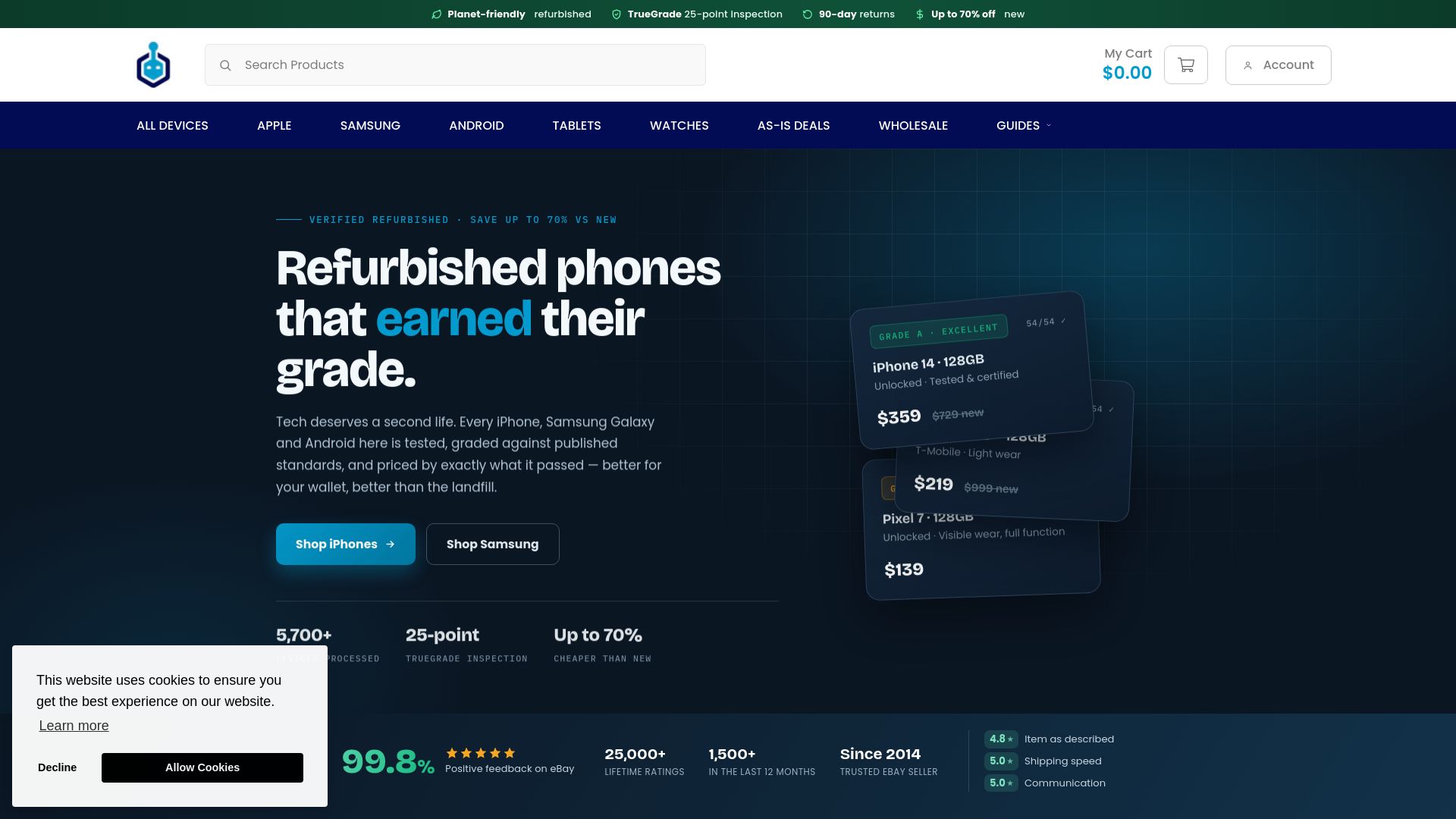
Browse the full refurbished phone selection or check a specific listing like the refurbished iPhone 15 in Pink, from $278, to see the grading and inspection details for yourself before you buy.
FAQ
What should I check before buying a refurbished phone?
Check the IMEI for blacklist status, confirm there’s no activation lock, review battery health, inspect the screen and ports for damage, test the camera and speakers, and confirm the return and warranty terms in writing. Doing this before payment catches most problems that show up later.
What are 5 essential rules for buying a new mobile phone?
Confirm the device is unlocked or matches your carrier, verify the IMEI is clean, inspect physical condition in person or on arrival, test all core functions within the first day, and pay using a method with buyer protection. These same rules apply whether the phone is new or refurbished.
Can I trust buying a refurbished phone?
A refurbished phone from a seller with published grading, a stated inspection process, and a real return window is generally a safe purchase. Certified refurbished programs in particular tend to test thoroughly and replace batteries with genuine parts, which reduces risk compared with an unverified private sale.
How long will a refurbished phone last?
A refurbished phone’s lifespan depends mostly on battery health and how it was refurbished, since a device with a genuine replacement battery and a passed functional inspection can perform close to a new unit for years. Devices with nongenuine or unverified batteries tend to show faster capacity loss, so checking that reading before purchase matters more than the phone’s age.
Is it better to buy a refurbished phone from a certified program?
Certified refurbished programs usually include a new battery and around a year of warranty coverage, which is longer than many independent sellers provide. A reputable third-party refurbisher can still be a solid choice if it discloses its inspection process, grading, and return policy clearly.
Sources
- Shopping online safely — Federal Trade Commission (FTC)
- Should you buy a refurbished phone? — Consumer Reports
- WARM electronics lifecycle guidance — EPA
- About genuine iPhone batteries — Apple Support


