
6 Checks to Verify a Phone Is Refurbished: IMEI First

The fastest way to verify refurbished status is a two-step check: run the phone’s IMEI or serial number through a global block-list tool, then confirm its warranty record with the manufacturer. If either result looks off or inconclusive, follow up with built-in diagnostics, a physical inspection for repair signs, and a look at the seller’s return policy before you pay.
TL;DR:
- Running the IMEI through a global block-list like the CTIA Stolen Phone Checker helps identify if a device has been reported lost or stolen, but it does not confirm refurbishment status.
- Manufacturer warranty data, especially for Pixel phones, can reveal prior use if the warranty duration is significantly shorter than expected or shows an early start date.
- Physical inspections for moisture indicators, battery condition, mismatched parts, and hidden repairs are crucial to detect issues software diagnostics might miss.
- Always verify seller policies, ask for documented warranties and return windows, and avoid transactions where IMEI, warranty info, or diagnostics conflict.
Table of Contents
- Find and use IMEI/serial checks and global block-list tools
- Pixel and manufacturer warranty lookups as a verification signal
- Samsung-specific checks: run Samsung Members and Device care diagnostics
- Physical inspection and parts checks: moisture stickers, battery health, OEM vs aftermarket signs
- Seller, listing, and paperwork verification: warranties, returns, photos, and red flags
- What reputable certified refurbishment looks like
- A quick checklist and when to walk away
- Where to find verified, certified refurbished phones
- Sources
- FAQ
Find and use IMEI/serial checks and global block-list tools
Every phone has a unique IMEI (or serial number on some models). Find it under Settings, under About Phone or About This Device, or dial *#06# on the keypad. Boxed devices also print it on the barcode label, which is worth photographing before you hand over cash for an in-person sale.
Once you have the number, run it through the CTIA Stolen Phone Checker, which draws on GSMA-backed data to flag whether a device has been reported lost or stolen. A red result means the device may be blocked from carrier networks entirely. A green result just means no block exists, it does not confirm the phone is new, factory-sealed, or free of refurbishment.
- Locate the IMEI in Settings, on the box, or by dialing
*#06#. - Enter it into the CTIA Stolen Phone Checker or GSMA Device Check before buying.
- A red flag means the device is likely barred from networks and should be returned or rejected.
- A green result clears theft concerns only, not refurbishment status.
- If a registry flags the phone, call the carrier to ask about its activation and account history.
Treat the IMEI check as a filter, not a verdict. A device can pass every block-list check and still be a refurbished unit sold as new. That’s why the next layer, manufacturer warranty data, matters more for actually confirming refurbished status.
Pixel and manufacturer warranty lookups as a verification signal
Google’s own warranty records are one of the more reliable signals for Pixel buyers, because refurbished and new units are tracked differently on the back end.
- Go to store.google.com/my-devices and sign in with a Google account.
- Enter the phone’s IMEI or serial number to pull up its warranty and repair record.
- Compare the warranty length shown against what the seller claims. Google-refurbished stock typically carries shorter coverage, often around 90 days, while new Pixel devices ship with about a year of coverage, according to Pixel warranty guidance.
- Look for odd warranty start dates or prior repair entries. A warranty that began months before your purchase date, or one that lists a repair, points to prior use or refurbishment.
- If the warranty history conflicts with a “brand new” claim, ask the seller for proof of purchase or a receipt that matches the activation date.
A shorter warranty window by itself isn’t a dealbreaker. Reputable sellers disclose it upfront, and our Pixel 8a guide walks through what to expect model by model. The problem is a seller who hides it.
Samsung-specific checks: run Samsung Members and Device care diagnostics
Galaxy phones carry their own built-in diagnostic suite, which makes them easier to check on the spot than most other Android devices. Install Samsung Members if it isn’t already on the phone, then open Phone diagnostics or go through Device care, according to Samsung’s support documentation.
- Run the battery test first. A battery that reports poor health or unusually fast drain often means a replacement part or heavy prior use.
- Test sensors, including the proximity sensor, accelerometer, and fingerprint reader, for inconsistent or failed readings.
- Check the camera and touchscreen for dead zones, ghost touches, or focus errors.
- Run the charging test to confirm the port and cable deliver a steady charge.
- Confirm the software build is official Samsung firmware rather than a modified or region-mismatched version.
A failed sensor test often points to a loose connector or a swapped module rather than a defective new unit. A worn battery reading alongside a “new” claim is one of the clearer signs you’re holding a refurbished phone sold without disclosure.
Pro Tip: Run Device care diagnostics while still in the store or during an in-person meetup. A seller who won’t let you install Samsung Members for two minutes is a red flag on its own.

If results look inconsistent with the listing, contact Samsung Support directly or ask the carrier to confirm the device’s service record before finalizing the purchase.
Physical inspection and parts checks: moisture stickers, battery health, OEM vs aftermarket signs
Diagnostics catch software-level issues, but a flashlight and a few minutes of close inspection catch what software can’t.
- Remove the SIM tray and check the small moisture indicator sticker nearby. A visible red or pink tint suggests prior liquid exposure, a detail sellers rarely mention, according to CNET’s reporting on moisture indicators.
- Check battery health. On an iPhone, go to Settings, Battery, Battery Health & Charging. On Android, battery stats live in Settings or inside Samsung Device care. A capacity reading well below the expected new-device baseline suggests heavy prior use, a pattern Consumer Reports flags as a practical proxy for whether a phone has been used extensively before resale.
- Inspect the screws, seams, and port edges for scratches, mismatched hardware, or gaps that suggest the case has been opened before.
- Check for nonstandard accessories in the box, like a charger or cable that doesn’t match the brand, which can indicate a swapped kit.
- On supported iPhones, check Settings, General, About for a Parts and Service History entry. Apple labels replaced components as Genuine, Used, Unknown, or Unverified, giving a direct read on prior repairs, per Apple’s support page. Android has no universal equivalent, so buyers rely on diagnostics and seller disclosure instead.
A battery health reading significantly below the model’s expected new-capacity percentage is one of the clearest signs of prior use, according to Consumer Reports’ buying guidance, and it’s worth checking before anything else on a used device.
Seller, listing, and paperwork verification: warranties, returns, photos, and red flags
The device can check out perfectly and the transaction can still go wrong if the paperwork doesn’t back it up. Insist on documentation before you pay, not after.
- Ask for a written warranty and a clear return window, ideally 30 to 90 days, and save every receipt and screenshot.
- Request a photo of Settings, About Phone showing the IMEI, with just enough blurred for privacy while the digits stay legible.
- Check seller reviews and history. Listings built entirely on stock photos with no serial number shown are worth skipping.
- Walk away from a price that’s dramatically lower than comparable listings with no return policy attached.
- Treat a refusal to show the IMEI, or a push to move the conversation off-platform, as a hard stop.
The FTC’s guidance on marketplace purchases echoes this: written warranties, saved receipts, and verified return policies matter more on expensive electronics than almost any other online purchase. Our refurbished return policy guide breaks down what a fair return window should look like if you want a reference point.
What reputable certified refurbishment looks like
Not every “refurbished” listing means the same thing, and that gap is exactly where buyers get burned. A certified refurbishment program should be able to show its work, not just claim good condition.
- A documented inspection process that tests the device across the categories a buyer would otherwise have to test alone.
- A disclosed cosmetic grade instead of a vague “like new” label with no definition.
- A written, enforceable return window. Listings backed with a 90-day return policy, well beyond the 30-day window common at many resellers.
- A visible track record. A 99.8% positive feedback history on eBay, which gives buyers a third-party reference point beyond the seller’s own claims.
- Listing-level documentation covering the inspection report, IMEI record, and battery capacity, the same categories this guide just walked through.
That combination, test results plus disclosed grading plus an enforceable return window, is the practical difference between a certified refurbished phone and a basic resale listing with a hopeful description.
A quick checklist and when to walk away

Run these six checks in order: IMEI/warranty lookup, manufacturer warranty check, built-in diagnostics, battery and moisture inspection, seller policy review, and return option confirmation. If any two of them contradict each other, that’s your answer.
Walk away when a seller won’t provide a written warranty, when IMEI and warranty data don’t match the listing’s claims, or when multiple diagnostic tests fail at once. None of that is worth the discount. Verified refurbished phones, bought from sellers who disclose their process, remain one of the more practical ways to cut electronic waste without gambling on a device’s condition.
— Saad
Where to find verified, certified refurbished phones
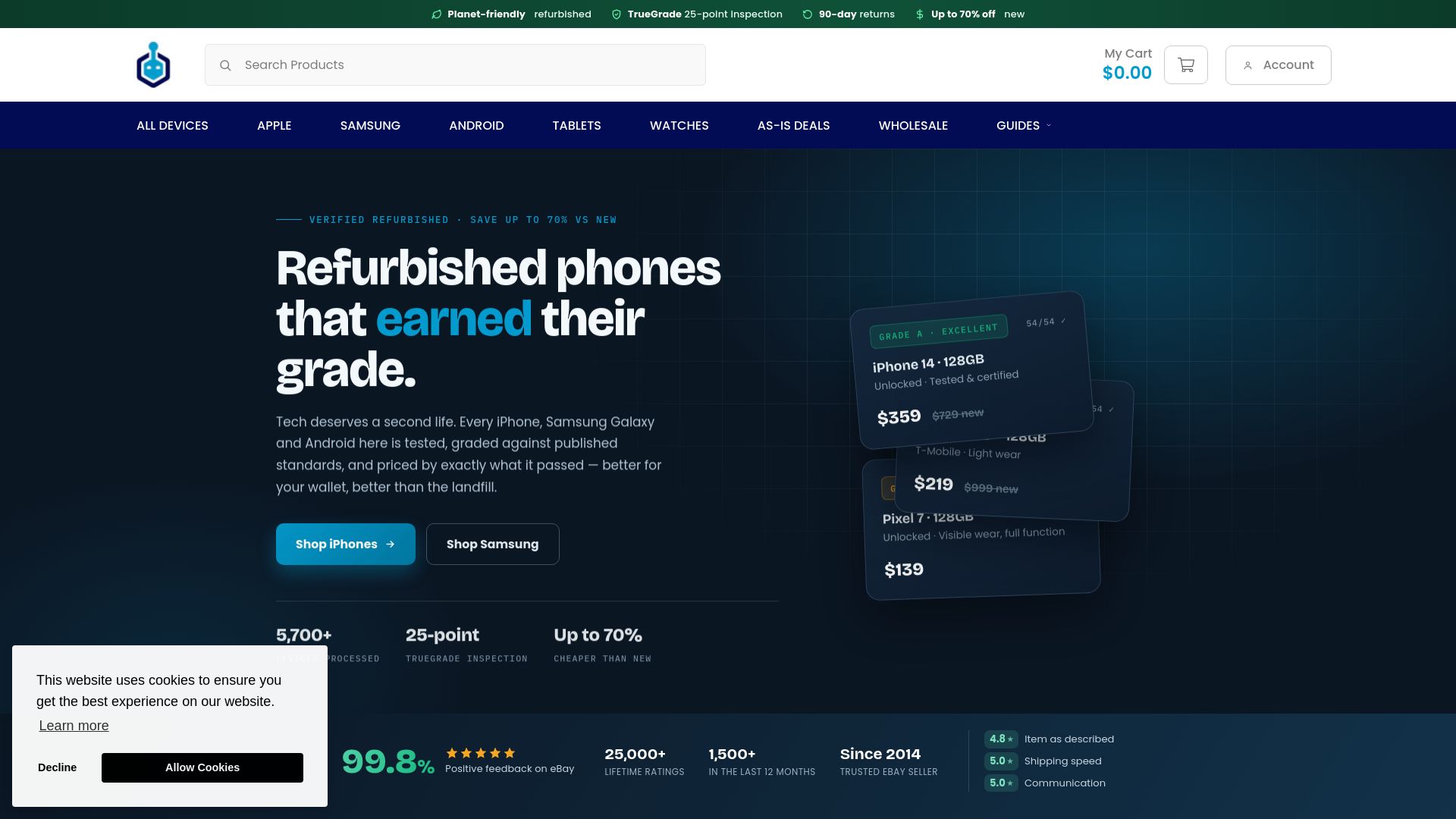
Running every check in this guide takes real effort, and that’s exactly the kind of gap a specialized seller can help close. Every phone listed goes through a detailed multi-point inspection before it’s ever offered for sale, with cosmetic grading disclosed up front instead of buried in fine print. That means the IMEI history, battery capacity, and functional test results you’d otherwise have to chase down yourself are often included in the listing.
Browse the current lineup of Apple iPhones, Samsung Galaxy, and Android phones and look for listings that publish their inspection grade and warranty terms. Every purchase comes with a 90-day return window, longer than most sellers offer, so there’s room to run your own checks after delivery. If you’re comparing specific models, our certified pre-owned checklist and refurbished phone warranty guide cover what coverage to expect before you commit.
Sources
- CTIA Stolen Phone Checker
- Check your Samsung Galaxy device status and run diagnostics
- How to Buy a Used Smartphone - Consumer Reports
FAQ
How to check if it is refurbished?
Start by running the IMEI through the CTIA Stolen Phone Checker and checking the manufacturer’s warranty portal, since refurbished units often carry shorter coverage than new ones. Follow up with built-in diagnostics and a physical check for signs of prior repair, such as battery wear or mismatched screws.
How can I check if a phone is refurbished online?
Enter the IMEI or serial number into the manufacturer’s online warranty lookup, such as Google’s Pixel warranty page or Samsung’s support site, to see repair or coverage history. A warranty start date that doesn’t match the claimed purchase date is a strong sign the unit was refurbished.
How to check if a refurbished iPhone is original?
Check Settings, General, About for the Parts and Service History entry, which Apple labels as Genuine, Used, Unknown, or Unverified for key components. Pair that with a battery health check in Settings, Battery, and an IMEI lookup through the CTIA registry to rule out a blocked device.
Can you tell if a phone has been refurbished?
Often, yes. Battery health readings below the expected new-device capacity, warranty records that start earlier than the sale date, and failed diagnostic tests on sensors or charging all point to prior use, according to Consumer Reports’ buying guidance. No single check is definitive on its own, which is why combining IMEI, warranty, and diagnostic results gives the clearest answer.


