
7 Step Checklist to Verify Certified Pre Owned Phones

Certified pre owned means a used device has been functionally tested, repaired where needed, cosmetically graded, and backed by a limited warranty or return window. That’s the scope: phones, tablets, smartwatches, and select laptops, not vehicles. The catch is that no law defines the term, so certification quality swings hard depending on who’s selling it.
TL;DR:
- Certified pre-owned devices undergo functional testing, repairs with genuine parts when possible, and software updates before resale, but quality varies by seller.
- Cosmetic grading ranges from Grade A, which appears like new, to AS-IS, which has visible flaws and limited warranty, and buyers should always verify actual photos.
- Warranty periods can range from 30 days to two years, but the seller’s reliability and warranty provider determine true coverage.
- Buyers should demand detailed inspection checklists, genuine part confirmation, real photos, and clear warranty terms before purchasing.
- Opt for certified pre-owned if budget and sustainability matter, but choose new if having the latest hardware with zero cosmetic imperfections is essential.
Table of Contents
- What Does “Certified Refurbished” Actually Involve?
- Cosmetic Grades A Through D: What You’re Actually Buying
- How Long Should the Warranty Last?
- Verifying a Seller Before You Buy: The Checklist
- Certified Pre-Owned vs. New: What You’re Trading
- An Inside Look at a Certified Pre-Owned Program
- Buying With Confidence: What to Check on the Product Page
- Sources
- FAQ
What Does “Certified Refurbished” Actually Involve?
A device earning the “certified” label should have gone through three distinct stages, not just a wipe and a resale listing.
Functional testing. A real inspection checks power on/off, charging speed, all ports, biometric sensors, display for dead pixels, front and rear cameras, Wi-Fi and Bluetooth connectivity, speakers and microphones, and a full factory reset before it ships. Carrier programs like Verizon’s certified pre-owned process run through this same category of checks, including pixel tests and port function, before assigning a grade.
Repairs and parts. Screens and batteries are the most commonly swapped components. The question that matters is whether the replacement parts are genuine OEM or aftermarket, since manufacturer refurbishment programs generally use genuine parts and often provide new batteries or shells, while third-party refurbishers vary a lot in this department.
Software work. This includes OS updates, activation lock removal, complete data wiping, and a final quality assurance pass before the device is relisted.
Here’s the split that trips people up:
- Manufacturer-certified programs (Apple, Samsung, Dell) tend to use genuine parts and standardized testing protocols.
- Third-party refurbishers range from rigorous multi-point inspections to a quick wipe and a “tested” sticker, with nothing in between guaranteed.
Cosmetic Grades A Through D: What You’re Actually Buying
Grading tells you what the device looks like, not how it performs. A phone can pass every functional test and still carry visible scratches, which is exactly why grading and functional inspection are reported separately on a legitimate listing.
Most refurbishers use some version of this scale:
- Grade A / “like new”: no visible scratches or scuffs, screen and body look essentially new.
- Grade B / “good”: light, faint scratches visible under close inspection or angled light, nothing that shows in normal use.
- Grade C / “fair”: noticeable scratches, scuffs, or minor dents, still fully functional.
- AS-IS: sold with visible cosmetic flaws and often reduced warranty coverage, priced accordingly.
The grade should always come with photos, not just a text label. A seller who describes a device as “Grade B” without showing you the actual unit, or who uses stock photography instead of real images, is asking you to trust a word instead of evidence. That’s a real gap in accountability.
Pro Tip: Zoom into listing photos at the corners, around the camera bump, and along the screen edge. Sellers photograph the flattering angle first, but wear almost always shows up at the edges.
Grade also affects price and resale math. A Grade A device commands the highest resale value later, while AS-IS units are the cheapest entry point but carry the most cosmetic risk and often shorter or no warranty. If you’re buying to resell, grade consistency matters more than the price gap between grades.
How Long Should the Warranty Last?
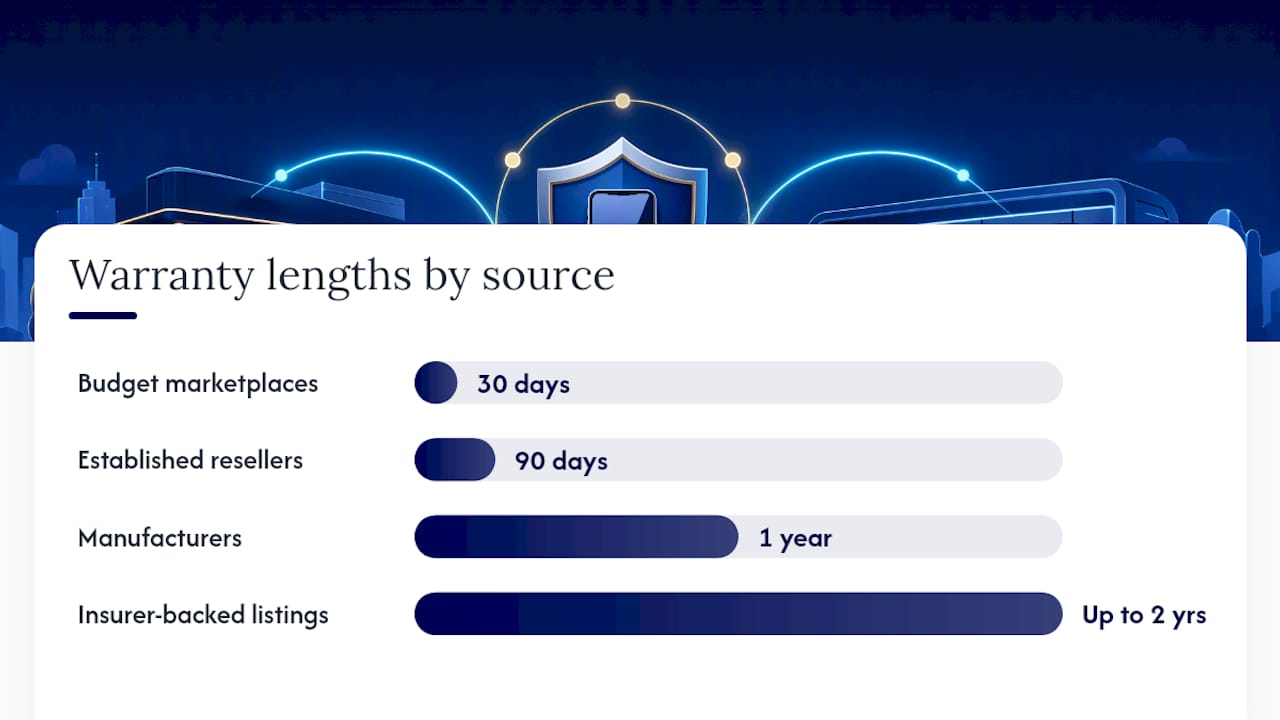
Warranty length is where “certified” claims either hold up or fall apart. Consumer Reports found refurbished warranty coverage varies widely depending on who’s selling and what program backs the listing. depending entirely on who’s selling and what program backs the listing.
Typical patterns look like this:
- 30 days: common baseline for budget marketplaces and smaller resellers.
- 90 days: standard for many established resellers and a common floor for a legitimate certified program.
- One year: Apple and Dell often extend refurbished coverage this long since they control the repair process end to end.
- Up to two years: some eBay Certified Refurbished listings carry extended coverage through third-party insurance partners like Allstate, layered on top of the seller’s base warranty.
The seller matters as much as the number. A manufacturer warranty gets honored by the manufacturer’s own service network. A third-party seller warranty depends on that company staying in business and answering support tickets. An insurer-backed warranty, the kind you sometimes see wrapped around marketplace listings, adds a claims process that’s separate from the seller entirely.
Coverage usually applies to functional failures, battery performance, and defective parts, with exclusions for accidental damage, water damage, and cosmetic wear. Don’t confuse a “30-day satisfaction guarantee” with a warranty. One lets you return the device for any reason within a window; the other covers defects that show up after you’ve decided to keep it.
Verifying a Seller Before You Buy: The Checklist
Run through these steps on any listing before you check out, in this order:
- Ask for the inspection checklist. A legitimate seller can show you what was tested, not just tell you it “passed inspection.”
- Confirm part origin. Ask directly whether any replaced battery or screen is genuine OEM or aftermarket — a seller who can’t answer this quickly usually doesn’t track it.
- Check battery health percentage. Most decent listings disclose this number; anything below 80% should be reflected in the price.
- Verify the serial number or IMEI against the manufacturer’s own lookup tool before you finalize the purchase.
- Demand real photos, not stock images, especially for anything graded below “like new.”
- Read the exact warranty terms, including who honors claims and what’s excluded.
- Confirm the return window separately from the warranty, since they’re rarely the same length.
Watch for these red flags: no stated warranty at all, grading described only in vague terms like “good condition,” evasive answers about parts, or a price so far under market that the seller isn’t disclosing something. Earth911 recommends buying from manufacturers or established outlets and treating anything under 30 days of coverage as a minimum floor, not a good sign.
Pro Tip: If a seller claims R2 or ISO refurbishing certification, ask for the certificate number and verify it independently rather than taking the badge on the page at face value.
Certified Pre-Owned vs. New: What You’re Trading
Buying certified pre-owned saves money, keeps a functioning device out of a landfill, and gets you documented testing plus a warranty, all without new-device pricing. The tradeoffs are real too: you might get slightly less remaining battery life than a brand-new unit, some cosmetic wear is normal even at Grade A, and quality varies more between refurbishers than it does between new-device retailers.
- Choose certified pre-owned if: budget matters, you care about e-waste, or you want a warranty without paying full retail.
- Choose new if: you need the absolute latest hardware or zero tolerance for any cosmetic imperfection.
For most buyers replacing a phone every two to three years, the pre-owned tradeoff barely registers day to day.
An Inside Look at a Certified Pre-Owned Program
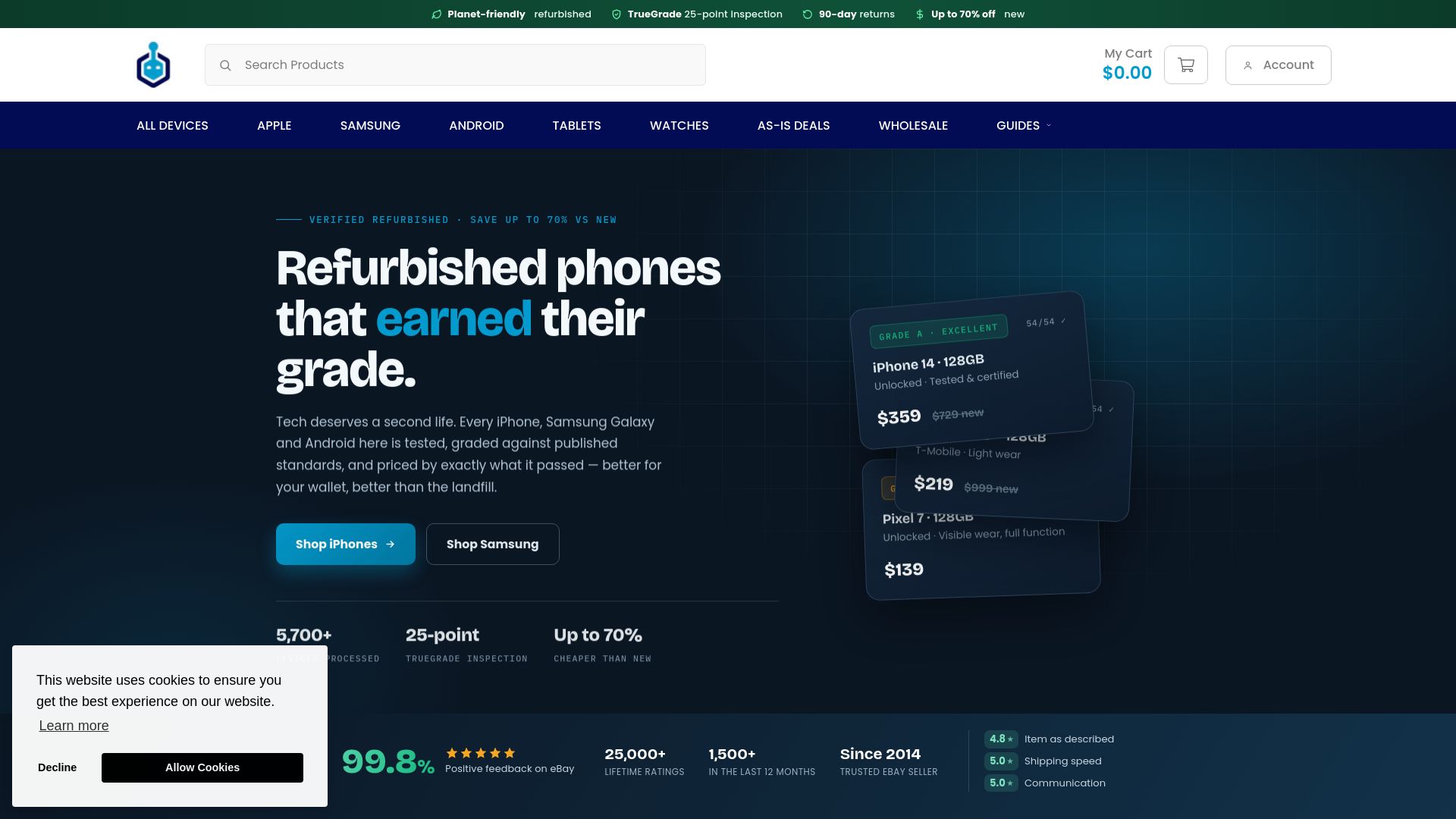
Devicegiant runs its TrueGrade inspection against a 25-point checklist covering functional testing on every device before it’s listed, and cosmetic condition gets graded and disclosed separately, not folded into one vague label.
Mapped against the verification checklist above: the 25-point check answers “what was tested,” the disclosed grading answers “what does it look like,” and the 90-day window answers “what happens if something’s wrong.” That’s the same structure any careful buyer should be looking for on any listing, from any seller. Programs that skip one of those three pieces are asking you to trust rather than verify.
— Saad
Buying With Confidence: What to Check on the Product Page
Devicegiant is built around the exact protections this article walks through: a documented 25-point functional inspection, disclosed cosmetic grading instead of a vague label, and a 90-day return window that’s longer than the 30-day floor most guides call the minimum.
Before you check out on any device, whether it’s here or elsewhere, confirm three things on the product page: the inspection details, the exact cosmetic grade with real photos, and the return window in writing. Browse the current lineup of refurbished phones and tablets, including listings like the refurbished iPhone 15 in Pink starting at $278, and check the grading and warranty terms on the page before you buy.
Sources
- Should you buy refurbished electronics? | Consumer Reports
- Never buy refurbished tech without asking these 5 things first | BGR
- The Earth911 guide to buying refurbished electronics | Earth911
FAQ
What Does Certified Pre-Owned Mean for a Phone?
It means the phone passed a functional inspection, received any needed repairs, got a disclosed cosmetic grade, and comes with a warranty or return window. Devicegiant applies this through its TrueGrade 25-point inspection paired with a 90-day return policy.
Is Certified Refurbished the Same as Certified Renewed?
Not exactly. “Renewed” is typically a marketplace program name (like Amazon Renewed) with its own seller standards, while “certified refurbished” is a broader term that can come from a manufacturer, carrier, or independent reseller with varying inspection depth.
How Long Should a Refurbished Device Warranty Last?
Coverage commonly runs from 30 days at smaller resellers up to a full year with manufacturers like Apple and Dell, and some marketplace listings extend to two years through partner insurance. Anything under 30 days should raise questions about what’s actually being covered.
What’s the Difference Between a Grade A and Grade C Device?
Grade A means no visible scratches or scuffs and a like-new appearance, while Grade C means noticeable cosmetic wear despite full functionality. Both should perform identically if they passed the same functional inspection.
Does Devicegiant Offer Returns on Refurbished Phones?
Yes, Devicegiant backs every device with a 90-day return policy, longer than the 30-day minimum most buying guides recommend. Current pricing and inventory are listed on the product pages themselves.


