
Verify Unlocked Phone Bands Before You Buy With a 90 day Return

Unlocked means the carrier’s software lock is gone, not that every network will work. Whether an unlocked phone actually gets service comes down to hardware: the phone’s modem has to support the specific LTE and 5G bands your carrier runs on. Before you buy or switch, run the phone’s IMEI through your carrier’s BYOD tool, or compare its published band list against the carrier’s own band pages.
TL;DR:
- Phone models must support the specific LTE and 5G bands used by a carrier, especially low-band frequencies for rural or indoor coverage.
- Compatibility depends on verifying the IMEI or model number against carrier band lists, not just the unlocked status.
- Missing key bands, like low-band 600 or 700 MHz, can cause weak signals indoors, while skipping mid-band may only slow data speeds.
- eSIM support requires both hardware and carrier provisioning; confirm both before purchasing an unlocked phone.
- Buying from certified sellers with detailed band support and valid return policies minimizes risks of carrier incompatibility.
Table of Contents
- Why Radio Bands Determine Unlocked Phone Compatibility
- Which Carrier Bands Should You Check For?
- How Do You Verify a Specific Phone Will Work?
- eSIM vs. Physical SIM: What Changes for Compatibility?
- What If the Phone Turns Out to Be Incompatible?
- Our Take: Why “Unlocked” Alone Isn’t the Whole Answer
- Shop Inspected Unlocked Phones With Confirmed Band Support
- Where to Verify the Details Yourself
- Sources
- FAQ
Why Radio Bands Determine Unlocked Phone Compatibility
An unlock removes a software restriction that ties a phone to one carrier’s SIM. It does nothing to the antenna and modem hardware sealed inside the device. Those two things are separate problems, and mixing them up is the single biggest reason people buy an unlocked phone and then can’t get reliable service.
Every carrier transmits on specific slices of radio spectrum called bands. LTE bands carry 4G traffic, and 5G bands (labeled with an “n” prefix, like n41 or n77) carry 5G NR traffic. If your phone’s chipset doesn’t support a band your carrier depends on in your area, that phone simply cannot use it, no matter how unlocked it is. Major US networks operate on distinct frequency bands, and a mismatch here is what causes dropped calls, no signal, or a phone stuck on a weaker network technology.
Band type matters as much as band count:
- Low-band (600 to 850 MHz) travels far and penetrates walls, which is why it covers rural areas and building interiors.
- Mid-band (roughly 1700 to 2500 MHz, including n41 and n77) balances range with speed and now carries most everyday 5G traffic.
- mmWave (24 GHz and up) delivers the fastest speeds but barely passes through glass or foliage, so it’s mostly a stadium or downtown-block technology.
Skip a carrier’s key low-band, and you may get a strong signal outdoors that vanishes the moment you walk inside. Unlocked phones still need compatible radio hardware and supported bands to make any of this work, regardless of what the box says.
Which Carrier Bands Should You Check For?
You don’t need to memorize every band a US carrier uses. You need the handful that carry the bulk of real-world coverage and speed, because those are the ones a missing modem chip will actually cost you.
For nationwide reach, prioritize low-band coverage: bands in the 600 to 700 MHz range are what keep a phone connected in rural stretches and deep indoors. For speed and 5G capacity, mid-band matters most, and n41 and n77 show up across multiple networks, forming the backbone of everyday 5G.
Roughly, here’s what to look for by carrier:
- T-Mobile: low-band 600 MHz (B71/n71) for wide coverage, plus mid-band n41 for speed and capacity. T-Mobile publishes its full band lineup, including where extended-range and 5G Ultra Capacity overlap.
- AT&T: low-band 700 MHz (B12/B17) for baseline coverage, plus mid-band n77 for 5G speed in populated areas.
- Verizon: low-band 850 MHz (B13) for coverage, plus mid-band n77/C-band for its faster 5G tier.
Any phone missing the low-band for its intended carrier will struggle indoors and in less dense areas, even if the mid-band 5G numbers on the spec sheet look impressive. Skipping the mid-band, on the other hand, typically just means slower speeds rather than no service at all.
One detail people overlook: MVNOs like Mint Mobile, Metro, or Visible don’t run their own towers. They lease space on the major networks, so a phone needs the same bands to work on an MVNO that it would need on the parent carrier.
How Do You Verify a Specific Phone Will Work?
Guessing gets people stuck with a phone that half-works. Here’s the order that actually settles the question.
- Run the IMEI through the carrier’s BYOD tool. This is the closest thing to a definitive answer, since carrier IMEI checks confirm whether a specific device is cleared for activation on that network. You’ll find the IMEI in phone Settings or printed on the box.
- No IMEI yet? Compare the model number, not just the phone’s marketing name. International variants of the same phone frequently drop US-specific bands, so check the exact model number against the carrier’s band list before you buy. Our guide on phone carrier compatibility walks through this in more detail.
- Confirm VoLTE, VoNR, and SIM support. A phone can technically connect to data and still fail to make calls if it lacks VoLTE support for that carrier, and you’ll also want to know whether it takes a physical SIM, eSIM, or both.
- Do a live SIM test if you can. Borrow a SIM from the target carrier, or activate your own, and see whether the phone registers and holds a signal before you commit.
Pro Tip: Keep the original packaging and receipt until you’ve completed the SIM test. A phone that passes the carrier’s IMEI check can still surprise you once it’s in your hand, and a return window is your safety net if it doesn’t.
For anyone moving to Verizon specifically, running the IMEI through Verizon’s BYOD compatibility check will flag issues that a spec sheet alone won’t catch.
eSIM vs. Physical SIM: What Changes for Compatibility?
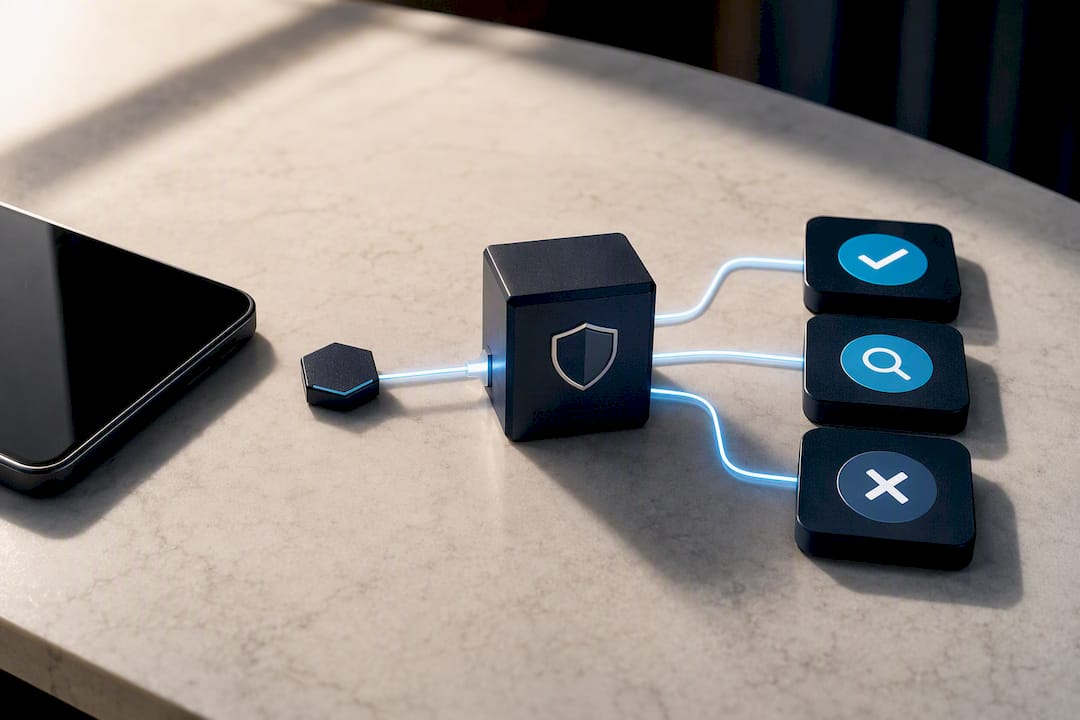
eSIM adds a wrinkle that has nothing to do with radio bands and everything to do with provisioning. A phone can support every band your carrier needs and still fail to activate if the eSIM profile won’t load correctly for that carrier’s BYOD program.
Before buying, check two things:
- Does the phone itself support eSIM, or is it physical SIM only?
- Will your carrier actually provision an eSIM for a bring-your-own-device activation, or does that model require a physical SIM for BYOD?
Most current phones and the major carriers support eSIM, but “most” isn’t “all,” so confirm it rather than assume it. If eSIM support is murky or unconfirmed, a physical SIM swap works as a reliable fallback test, since it sidesteps the provisioning question entirely and just checks the radio connection.
What If the Phone Turns Out to Be Incompatible?
Finding out a phone won’t work isn’t the end of the road. It usually means one of three fixes.
- Find the correct US variant. Many phones sold internationally under the same name ship with a different, more limited band set, so look for the model number built for US networks rather than assuming any “unlocked” listing is interchangeable.
- Buy a tested refurbished unit with published band support. A refurbished phone that lists its exact bands and comes with a genuine return window removes most of the guesswork.
- Bridge the gap temporarily. Wi-Fi calling, a signal booster, or a carrier-loaned device can keep you connected while you sort out a permanent replacement.
Following T-Mobile’s specific 25-point band checklist before purchase catches most of these problems before money changes hands.
Our Take: Why “Unlocked” Alone Isn’t the Whole Answer
Most compatibility complaints trace back to one bad assumption: that unlocked is a spec, when it’s really just a policy. Devicegiant’s TrueGrade 25-point inspection checks each refurbished device’s functionality before it ships, and a 90-day return window gives you room to run the exact IMEI and SIM tests this guide describes. That combination, verified hardware plus a real return policy, closes the gap that “unlocked” by itself leaves wide open.
— Saad
Shop Inspected Unlocked Phones With Confirmed Band Support
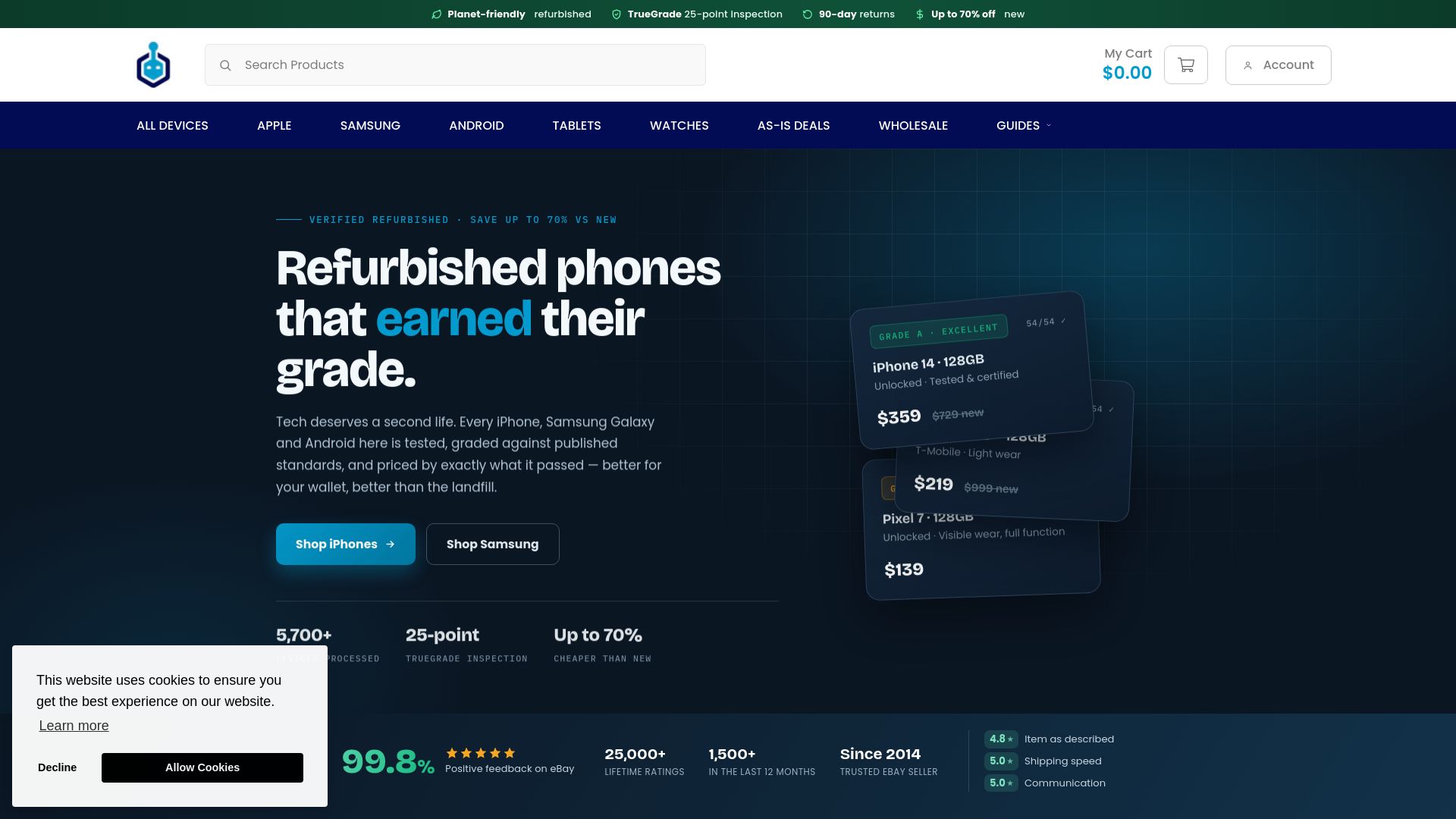
Devicegiant is the alternative to buying a mystery “unlocked” listing online: every phone on the refurbished phones landing page passes the TrueGrade 25-point inspection and ships with a 90-day return window, so you’re not stuck if a carrier rejects the IMEI.
Before you check out, confirm the band list on the product page against your carrier, the same way this guide walks through. If you’re on T-Mobile’s network, the T-Mobile Revvl 5G comes pre-matched to that network’s bands. If you want a flagship with broad 5G support, the Samsung Galaxy S22 Ultra 5G lists its unlocked status and band coverage right on the page. And if you’re prepping a device for resale rather than buying one, resetting it properly first protects both you and the next buyer. Pick a model, check its bands against your carrier, and place your order with the return window as backup.
Where to Verify the Details Yourself
The FCC’s cell phone unlocking guidance lays out CTIA’s carrier commitments, including the two-business-day response window for unlock requests. T-Mobile’s network band page documents its own frequencies down to the specific n71 and n41 assignments. For an unlocked phone’s own specs, the manufacturer’s model page and Devicegiant’s how-to-tell-if-it’s-unlocked guide cover what to check before you buy.
Sources
- FCC — Cell Phone Unlocking (CTIA commitments)
- FrequencyCheck — United States
- T-Mobile network frequencies and coverage
- Android Authority — What is an unlocked phone?
FAQ
What’s the Difference Between Unlocked and Factory Unlocked?
They mean the same thing in practice: no carrier software lock, sold without a contract tie. Neither term guarantees the phone supports every carrier’s radio bands.
How Do I Check My Phone’s IMEI?
Find the IMEI in phone Settings or printed on the box, then enter it into your target carrier’s BYOD or IMEI check tool.
Will an Unlocked Phone Get 5G on Any Carrier?
Only if its modem supports that carrier’s specific 5G bands, such as n41 or n77. An unlocked 5G phone can still fall back to 4G LTE or get no service if it lacks the right band.
Are Refurbished Unlocked Phones Reliable for Carrier Compatibility?
They can be, if the seller publishes band details and backs the sale with a return policy. A thorough inspection process and a return window can help cover the risk of carrier compatibility issues with refurbished unlocked phones.
Does eSIM Support Affect Whether a Phone Works With My Carrier?
Yes. The phone needs eSIM hardware and your carrier needs to provision an eSIM profile for BYOD devices, so confirm both rather than assuming either.


