
3 Checks to Activate an Unlocked Phone on AT&T; Buy Inspected Refurbs

Yes. Most unlocked phones work on AT&T once they clear three checks: AT&T’s IMEI compatibility check, a confirmed unlock status, and a clean (non blacklisted) IMEI. Run those three first. Then order a physical SIM or activate through eSIM, whichever your device supports, and you’re on the network within minutes to a week.
TL;DR:
- Running AT&T’s IMEI compatibility check and verifying the exact model number are essential since identical-looking phones can have different hardware support for AT&T bands.
- Most recent U.S. iPhones typically work on AT&T, but always confirm with the IMEI check and ensure the model supports needed 4G or 5G bands.
- Activated phones must be unlocked, paid off, and not reported lost or stolen; check the IMEI or original carrier status before purchase.
- Import or gray-market devices often lack AT&T support due to region-specific hardware differences, requiring careful band and IMEI validation.
- Buying certified inspected used phones from trusted vendors like Devicegiant reduces risks of blacklisted IMEI, activation issues, and hardware surprises.
Table of Contents
- Running the AT&T Unlocked Compatibility Check
- Which Unlocked Phones Usually Work on AT&T?
- How Do You Activate an Unlocked Phone on AT&T?
- What Are AT&T’s Unlock Requirements?
- Is a Used Unlocked Phone Safe to Activate?
- Why Buying an Inspected Unlocked Phone Lowers Your Risk
- An Editorial Take on Unlocked Phones and AT&T
- Where to Buy an Unlocked Phone That’s Actually Ready for AT&T
- Sources
Running the AT&T Unlocked Compatibility Check
Before you buy anything or hand a phone to AT&T for activation, you need three pieces of information: the IMEI, the exact model number, and (for eSIM devices) the EID. You get all three the same way, on almost any phone: dial *#06#. That pulls up the IMEI immediately, and on eSIM capable devices, the EID appears right below it. You can also find the IMEI under Settings → About Phone → Status on Android, or Settings → General → About on an iPhone.
The model number matters more than most people realize, and it’s the detail that trips up secondhand buyers constantly. A phone’s marketing name (the name on the box, the name in the ad) is not the same thing as its model number. Two phones can say “Galaxy S22 Ultra” on the front and be electrically different devices underneath, built for different regions with different radio hardware. AT&T’s own devices working on AT&T network PDF lists compatibility by exact model number, not by product name, and that distinction is the whole reason phones that look identical can behave differently on the same network.
Once you have the IMEI, the fastest path is AT&T’s own BYOD compatibility tool. Here’s the process:
- Go to AT&T’s Bring Your Own Device page and find the compatibility checker.
- Enter the 15 digit IMEI exactly as it appears (no spaces, no dashes).
- Read the result carefully. AT&T will tell you whether the device is compatible outright, compatible with limitations (some services may not work, like Wi-Fi calling or 5G), or not compatible at all.
- If the result is ambiguous or you want a second confirmation, cross-reference the exact model number against the devices working PDF.
AT&T’s own guidance is blunt about a point a lot of buyers miss: “unlocked” and “compatible” are not synonyms. An unlocked phone from another country or from a different carrier’s device family can be perfectly unlocked and still lack the radio bands AT&T’s network runs on. That’s a hardware limitation, not a software one, and no unlock code fixes it. AT&T’s BYOD guidance treats the IMEI check as the definitive test precisely because “unlocked” alone tells you nothing about band support.
If you want to go one layer deeper, check the specific bands. AT&T’s network runs on a mix of 4G LTE bands and, for 5G, bands including n5 and n77. Manufacturer spec pages (Apple’s tech specs, Samsung’s spec sheets, Google’s Pixel support pages) list exactly which bands each model supports. Matching those bands against AT&T’s published list is the most reliable way to confirm compatibility for a device that isn’t showing up cleanly in the IMEI tool, particularly with imported or carrier-locked-elsewhere phones.
- Confirm the IMEI, not just the marketing name, before you buy.
- Run the IMEI through AT&T’s compatibility tool and record the exact result.
- Cross-check the model number against AT&T’s devices working PDF if the tool result seems off.
- Note whether the device supports eSIM (check for an EID via
*#06#). - Check listed 4G/5G band support if you’re buying an international or imported unit.
Pro Tip: Screenshot the AT&T compatibility result before you buy a used phone. If the seller’s listing doesn’t match what the IMEI check tells you, that’s your leverage to walk away or negotiate the price down.
Which Unlocked Phones Usually Work on AT&T?
Recent U.S. market iPhones are about as close to a safe bet as this gets. Apple sells its U.S. unlocked models with the band support American carriers expect, and AT&T’s network generally recognizes them without drama. “Generally” is doing real work in that sentence, though. Still run the IMEI check. A used iPhone bought from an online marketplace, a pawn shop, or an out-of-state seller can carry history you don’t know about, and model number confusion isn’t exclusive to Android.
Android phones follow a similar pattern with one important caveat: it depends heavily on where the specific unit was sold. A phone bought as “unlocked” through a major U.S. retailer, sold specifically for the American market, tends to carry the right band support out of the box. A phone with the same name imported from Asia or Europe often does not, because manufacturers build region-specific hardware variants of the same product line, and the radio inside can differ block for block.
This is the part that catches secondhand buyers off guard. Two phones can share every detail down to the storage size and color, and still be different products from AT&T’s perspective. AT&T’s own devices working PDF makes this explicit: it lists one Galaxy S20 variant as fully compatible while a different regional variant of the exact same phone, same marketing name and all, does not appear as supported. Same box art. Different SKU. Different result on AT&T’s network.
Why does this happen? Manufacturers build multiple hardware versions of a single phone to hit different regulatory and network requirements around the world. A model built for sale in South Korea might skip a 4G band that’s common in the U.S. because that band doesn’t matter there. A model built for the U.S. carrier market includes it. Both phones get the same name on the box because from a marketing standpoint, they’re “the same phone.” From a network standpoint, they’re not.
A few patterns worth knowing:
- Phones sold specifically as “U.S. unlocked” retail units, from the manufacturer’s own U.S. store or a major American retailer, are the safest category.
- Carrier-locked phones from other U.S. carriers (once unlocked) usually work fine on AT&T because they were built for the U.S. market in the first place, even if they were originally sold by a different carrier.
- Imported or gray-market units, even from well-known brands, are the highest-risk category and deserve the closest IMEI and band scrutiny.
- Older devices (roughly five-plus years old) may lack support for newer network requirements even if they technically “connect,” so check for feature limitations, not just a yes/no compatibility answer.
If you’re staring at an IMEI check result you don’t fully trust, or a listing that doesn’t specify the exact model number, go straight to AT&T’s PDF and search by model number rather than product name. It’s the one document that tells you the truth regardless of what the box says. A phone carrier compatibility check walks through the same logic in more general terms if you’re comparing a device against more than one carrier, and a closer look at 5G band compatibility is worth a few minutes if you’re buying anything marketed primarily on its 5G speed claims.
How Do You Activate an Unlocked Phone on AT&T?
The activation sequence is short once the compatibility groundwork is done: run the compatibility check, confirm the unlock status, pick a plan, then choose between a physical SIM and eSIM. Here’s the full flow in order.
- Confirm compatibility. Run the IMEI through AT&T’s BYOD tool as described above. Don’t skip this even if you’re confident. It takes thirty seconds and it’s the step people regret skipping.
- Confirm the device is unlocked. Check device settings or contact the previous carrier if you’re not sure. A locked phone will fail activation regardless of network compatibility.
- Choose a plan. AT&T’s BYOD process ties your new SIM or eSIM to whatever plan you select during signup.
-
Decide between physical SIM and eSIM. Check for eSIM support by dialing
*#06#and looking for an EID. If it’s there, your device almost certainly supports eSIM. - Order or activate. A physical SIM kit ships in 3 to 7 business days; eSIM activation, when supported, often completes within minutes through the AT&T app or account portal.
- Complete setup and verify signal. Restart the device after activation, check that it registers on the network, and confirm data, calling, and texting all work before you consider the process finished.
By the numbers: physical SIM shipments run 3 to 7 business days door to door, while eSIM activation for a supported device typically finishes in minutes rather than days, since there’s no physical card to mail or swap.
eSIM has real advantages beyond speed. AT&T’s own BYOD page notes that eSIM reduces the risk of losing a physical card, supports multiple profiles on one device (handy if you travel and want a local plan alongside your AT&T line), and skips the tray-swap step entirely. The tradeoff: not every phone supports it, and older or budget devices are more likely to lack an eSIM chip. Weigh eSIM against a physical SIM based on what your specific device actually supports, not what you’d prefer in theory.
If activation doesn’t take, work through this short list before calling support:
- No signal after activation: restart the device. This resolves a surprising share of “it’s not registering” complaints because it forces the phone to re-request network registration.
- Data doesn’t work but calls and texts do: check your APN settings. AT&T’s APN configuration sometimes needs to be entered manually on phones that weren’t originally sold by AT&T.
- Phone shows “no service” persistently: double-check the IMEI compatibility result. A phone that passed the check for voice and text sometimes has partial data limitations that only surface after activation.
- eSIM won’t install: confirm you have a stable Wi-Fi connection during the eSIM setup step. A dropped connection mid-install is one of the most common eSIM activation failures.
What Are AT&T’s Unlock Requirements?
AT&T’s unlock policy comes down to four practical conditions: the device has to be paid off in full, it can’t be reported lost or stolen, the account tied to it needs to be in good standing, and there’s usually a minimum time-on-service requirement before a request qualifies. AT&T’s own unlock support page lists roughly 60 days of active service as a common threshold, though the exact number can shift depending on your plan type, prepaid or postpaid.
Here’s the encouraging part: for major brands, you often don’t have to do anything at all. Apple, Samsung, and Google devices frequently unlock automatically once AT&T’s system confirms you’ve met the eligibility criteria. No form, no phone call. If you check your device settings a few weeks after finishing payments or hitting the service minimum and it’s already unlocked, that’s the automatic process working as intended.
For everything else, or if the automatic unlock didn’t trigger, you submit a manual request through AT&T’s unlock request form. If your device needs a specific unlock code rather than a network-side unlock, AT&T’s device unlock code instructions walk through the process, and they include an important warning: there’s a limit on incorrect code attempts. Entering the wrong code too many times can lock the device further, so don’t guess.
Quick eligibility checklist before you request an unlock:
- Device is fully paid off (no remaining installment balance).
- Device has never been reported lost or stolen on the account.
- Account is current with no unpaid balance.
- Minimum time-on-service requirement has been met (check your specific plan terms).
- You have the account holder’s information ready if you’re requesting on someone else’s behalf.
Pro Tip: If you bought the phone from another carrier or directly from the manufacturer, check that carrier’s unlock policy first, not AT&T’s. AT&T can’t unlock a device it never sold. You’ll need the original carrier’s unlock process, or confirmation the phone shipped factory-unlocked to begin with. A quick unlock-status check walks through how to confirm this from the device itself if you don’t have paperwork from the original purchase.
Is a Used Unlocked Phone Safe to Activate?
Secondhand and refurbished phones carry one risk that new devices almost never do: someone else’s unresolved problem baked into the hardware. A phone can pass every compatibility check, have the right bands, the right model number, be genuinely unlocked, and still fail to activate for one reason: it’s blacklisted.
A blacklisted IMEI means the device was reported lost or stolen at some point, and network carriers block those IMEIs from activating, full stop, regardless of who currently holds the phone. AT&T explicitly warns about this in its BYOD guidance for small business customers, and the fix isn’t a support call. It’s checking before you buy. Run the IMEI through stolenphonechecker.org before you hand over any money. It takes a couple of minutes and it’s the single best protection against buying a phone you can never use.
Beyond the blacklist check, a few other things deserve a look before you commit to a used device:
- Activation lock removal. iPhones need iCloud “Find My” fully removed by the previous owner before they’ll accept a new user. Android devices with Factory Reset Protection need the previous Google account signed out. Ask the seller to do this in front of you, or before you pay, not after.
- Dual SIM unlocking. If the phone has two SIM slots, confirm both are actually unlocked. It’s common for one slot to be tied to a specific carrier even when the device is marketed as unlocked overall.
- Proof of ownership. A legitimate seller can usually produce a receipt or account screenshot showing the device history. Hesitation here is a red flag.
-
IMEI double-check at pickup. The IMEI printed on the box should match the IMEI on the device itself (dial
*#06#again on the spot). Box swapping is a known scam tactic.
A quick IMEI check before buying covers the mechanics of pulling and verifying this number in more detail if you want the step-by-step version. The short version, though, is this: never skip the blacklist check on a used phone, no matter how good the deal looks.
Why Buying an Inspected Unlocked Phone Lowers Your Risk
Every check covered so far exists because private used-phone sales carry an information gap. You’re trusting a stranger’s word about unlock status, IMEI history, and hardware condition, and you’re the one who eats the cost if any of it turns out to be wrong. Devicegiant closes that gap before the phone ever reaches you.
Every device sold through Devicegiant goes through the TrueGrade inspection, a 25-point functional checklist covering everything from network connectivity and SIM tray function to battery health and charging performance. That inspection process is specifically what a private seller’s phone hasn’t been through, and it’s the reason “verified unlocked” means something concrete instead of a claim you have to take on faith.
Here’s what that inspection process practically eliminates for an AT&T buyer:
- Blacklist and stolen-IMEI risk. Inspected devices are checked for clean IMEI status before listing, removing the single biggest cause of failed activations.
- Locked or account-tied devices. Activation lock and account ties are cleared before the phone is sold, so you’re not stuck negotiating with a previous owner after the fact.
- Hardware surprises. The 25-point check covers connectivity components directly relevant to whether a phone will register properly on AT&T’s network, not just cosmetic condition.
- No-recourse purchases. Devicegiant backs every sale with a 90-day return window, so if something still doesn’t activate cleanly, you’re not out the money.
Devicegiant’s eBay storefront carries a 99.8% positive feedback rating built on exactly this kind of reliability, which matters more in the used-phone category than almost any other, since the entire point of buying used is trusting that what’s described is what arrives. If you’re weighing a specific device against AT&T’s compatibility requirements before buying, Devicegiant’s team can confirm compatibility questions directly rather than leaving you to guess from a listing description alone.
An Editorial Take on Unlocked Phones and AT&T
Here’s what I’d actually do if a friend asked me this question over coffee: run the three checks, in order, every single time, no exceptions for how confident you feel about a specific phone. IMEI compatibility, unlock status, blacklist status. If your device supports eSIM, use it. There’s no good reason to wait a week for a SIM card to ship when the alternative takes minutes.
Buying private and used still makes sense when the price gap is large enough to justify doing your own diligence, and when you’re comfortable running IMEI checks yourself before money changes hands. That’s a legitimate way to save money on a solid phone. But if you want a guaranteed compatible, guaranteed unlocked, guaranteed clean device without spending an afternoon cross-referencing model numbers against a PDF, a verified refurbished phone from Devicegiant is the lower-friction path. You’re paying for someone else to have already done the checking.
— Saad
Where to Buy an Unlocked Phone That’s Actually Ready for AT&T
Skipping the private-seller guesswork is the whole appeal here. Devicegiant is the alternative to hunting through marketplace listings and hoping an unlock claim holds up: every phone in the catalog has already cleared the TrueGrade 25-point inspection, so the IMEI, unlock status, and blacklist checks this article just walked you through are already done before the listing goes live.
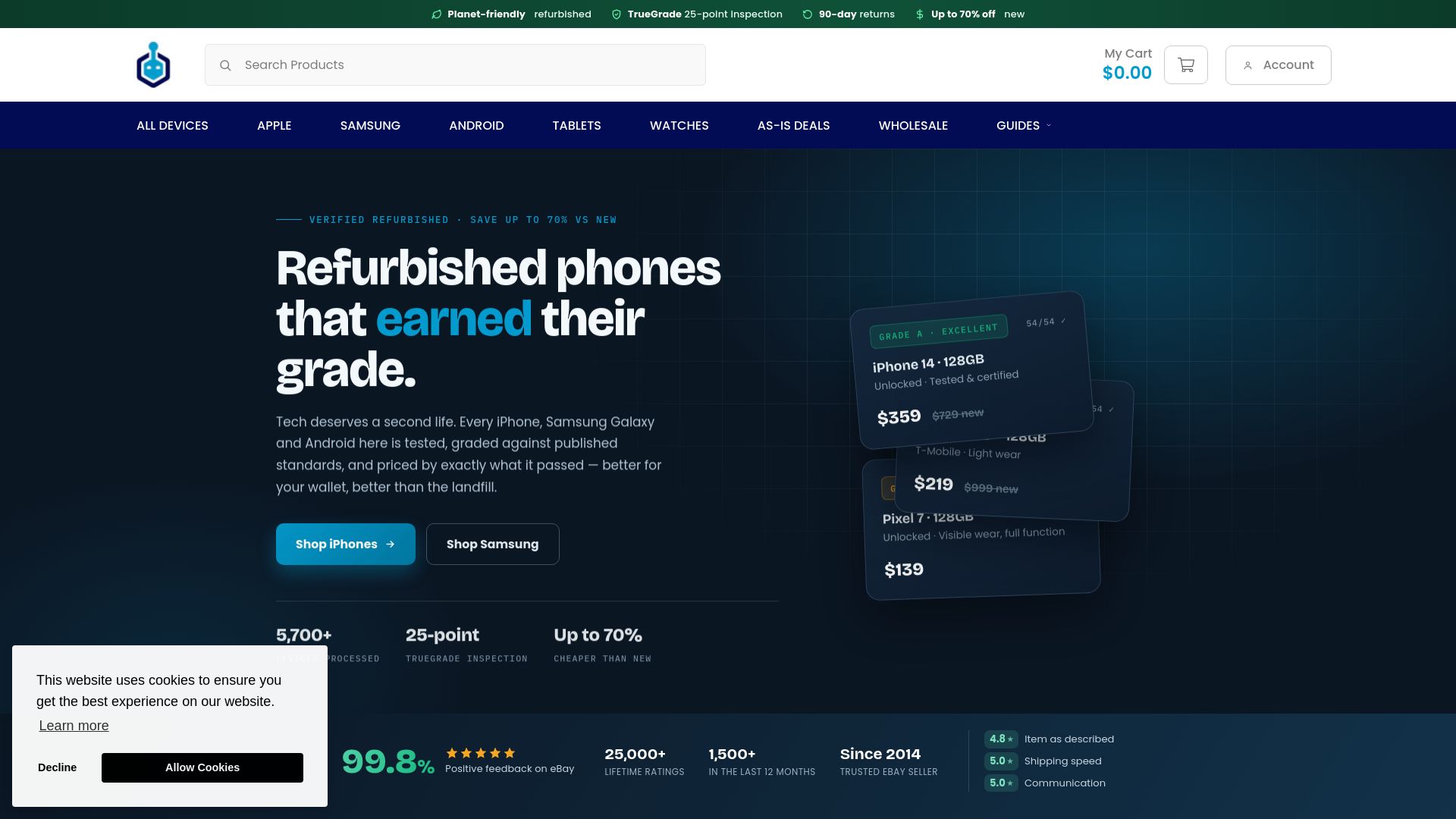
That means less time spent cross-referencing model numbers against AT&T’s PDF and more confidence that the phone you order will actually activate on the first try. Every purchase comes with a 90-day return window, so if a device somehow doesn’t perform the way it’s described, you’re not stuck. Browse Devicegiant’s refurbished phone selection to see current unlocked inventory, or check a specific model like the Samsung Galaxy S22 Ultra 5G if you want a device with confirmed AT&T band support and an inspection report behind it. If you’re unsure whether a particular model will work with your plan, reach out before you buy. Confirming compatibility upfront is a lot cheaper than troubleshooting it after activation.


