
Grade C Phones Meaning: What Cosmetic Grade C Really Is

Grade C on a refurbished phone is a cosmetic rating. It means the phone works but looks clearly used: expect visible scratches, scuffs or small dents on the body or screen frame. Grade C is generally the most affordable of the A, B and C tiers, and the grade describes how the phone looks, not whether it was tested. Below you’ll find what the wear looks like, what a letter can’t tell you, and how to decide if Grade C is the right price-to-looks trade for you.
TL;DR
- Grade C means a fully working phone with obvious cosmetic wear. It is the budget tier of the A, B and C scale.
- The letter rates appearance. Battery health, carrier lock status and device history are separate checks.
- There is no universal grading standard, so the seller’s own written definition matters more than the letter.
- Before you buy, confirm the return window, the warranty and the battery policy. Then inspect the phone as soon as it arrives.
- Grade C suits backup phones, work phones, kids’ phones and anyone who will put the phone in a case anyway.
Table of Contents
- What Grade C means on a refurbished phone
- What the wear actually looks like
- What a Grade C letter does not tell you
- Battery on a Grade C phone
- Is a Grade C phone safe to buy and does it work well?
- Who should buy Grade C, and who should step up to B
- What to check before you buy any Grade C phone
- How we grade at Device Giant
- Our perspective
- Shop refurbished phones with disclosed grades
- FAQ
- Sources
What Grade C means on a refurbished phone
Refurbished sellers sort phones into cosmetic tiers so buyers can pay less for more wear. The most common ladder runs from Grade A (near flawless) to Grade B (light signs of use) to Grade C (clearly used). Some sellers label the same tiers with words such as Excellent, Good and Fair instead of letters. The idea is the same.
Grade C sits at the bottom of the normal retail range. The phone still does everything a phone should do. What changed is the finish: marks, scratches and possibly dings that a Grade A or B unit doesn’t have. Phonecheck, a device-diagnostics company, describes it as a phone that still works but shows substantial wear and tear.
Two points often get lost:
- Grade C is not “broken.” A phone that fails a functional test belongs in a different category, often sold “as is” or for parts.
- Grade C is not a performance grade. Processor speed, storage and software are the same as an identical model in Grade A.
What the wear actually looks like
When sellers describe Grade C, you will usually see some mix of the following:
- Scratches on the back glass or frame that are visible in normal light, not just under a lamp
- Scuffs and rubbed edges where the phone met keys, tables or pockets
- Small dents or nicks on corners or the frame
- Light marks on the screen that disappear when the display is lit
What varies by seller is how far “deeper” goes. One seller’s Grade C may be another seller’s Grade B, which is why you should read the definition and look at the photos rather than rely on the letter alone.
How to tell a surface mark from a deep one
A practical test comes from refurbishing-industry inspection guidance: tilt the phone under changing angles of light to see how many scratches show up, and if your fingernail catches in a scratch, it is deeper than a surface scuff. Surface scuffs are cosmetic only. A catch-your-nail scratch across the screen is the kind you will notice every day.

When the phone arrives, look at all sides, not just the front. The same guidance suggests checking for serious damage, missing parts, a swollen battery, damaged ports and the condition of the cameras. Those problems are not “cosmetic grade” issues. They are reasons to use your return window.
What a Grade C letter does not tell you
This is where buyers get surprised. Phonecheck notes that grades mainly rate cosmetic condition, not battery health, unlock status or whether a device has been reported stolen. So a letter on its own leaves four questions open:
| Question | Does the grade answer it? | Where to look |
|---|---|---|
| How does it look? | Yes, that is what the grade rates | Seller’s grade definition and photos |
| Does it work? | Only if the seller states every unit passes functional testing | Seller’s inspection description |
| How is the battery? | Not by default | Battery policy, or Settings on the phone |
| Is it unlocked and clean? | No | IMEI or device-history check, carrier listing |
Because there is no single grading system that every refurbisher follows, Phonecheck advises asking for the seller’s specific grade definition and an IMEI or device-history report instead of trusting the letter. If you want a walkthrough, our guides on how to verify a phone’s refurbished status with an IMEI check and checking a refurbished phone’s repair history cover the steps.
Battery on a Grade C phone
Battery health is the most common hidden variable. Some sellers set a minimum capacity for every grade. Others set a higher bar only for the top tier. Consumer Reports explains that refurbished phones are often sold in tiers such as “like new” or “very good,” and that the highest tier may have less visible wear or a higher battery threshold. That means a lower cosmetic tier may come with a lower battery bar, so read the policy.
A general target quoted for refurbished phones is more than 80% of original capacity. On an iPhone you can read it in Settings under Battery. Our explainers on what battery health means on a refurbished iPhone and whether refurbished phones have new batteries go into the 80% line in more detail, and our refurbished phone battery life guide covers what to expect day to day.

Is a Grade C phone safe to buy and does it work well?
A properly refurbished phone should be functionally sound whatever its cosmetic grade. Rich Fisco, who leads electronics testing at Consumer Reports, says that pre-owned phones can be indistinguishable from new ones if they are properly refurbished. He describes certified programs that run phones through dozens of diagnostic tests covering the speakers, screen, buttons and charging port, sometimes with a fresh battery.
The word to notice is “properly.” The cosmetic letter does not prove the testing happened. The seller’s inspection process and return policy do. That is why the buying checklist below puts the seller’s terms ahead of the grade.
Who should buy Grade C, and who should step up to B
Grade C makes sense when the phone’s looks matter less than its price. Typical good fits:
- A backup or travel phone that will live in a bag
- A first phone for a child, which will be scratched within a week anyway
- Work phones for a small team, where you need many working devices on a budget
- Anyone using a thick case and a screen protector from day one
- Shoppers trying to cut e-waste who care more about keeping a working device in use than about its finish
Step up to Grade B or A if you resell phones to customers who judge appearance, if you plan to keep the phone for years and want it to look good, or if scratches on the back glass would bother you every time you pick it up.
A quick way to weigh the price gap
Compare the same model, same storage and same lock status across grades. The price difference is what you are being paid to accept the wear. If the gap is small, buy the better grade. If it is large, ask yourself whether a case would hide most of what you’d see. Because grades reflect how much value the phone retained after refurbishing, the price should track that wear.
What to check before you buy any Grade C phone
- Read the seller’s grade definition. Letters are not standardized, so find the written description and the photos.
- Check the return window. How-To Geek advises favoring a seller with a free return option and using the window to inspect the phone and check battery health.
- Read the warranty. Phonecheck recommends reading the warranty duration, coverage and whether the sale is “as is”. Short-warranty and as-is sales are the ones to avoid when you want peace of mind.
- Confirm lock status and compatibility with your carrier before ordering.
- Run the IMEI check when the phone arrives. Our 5 to 10 minute refurbished phone checklist covers IMEI, battery and returns in one pass.
Warranty lengths differ a lot across the market. Consumer Reports found that some manufacturer and marketplace programs give a full year, while big retailers commonly give 90 days. Ninety days is a real, usable window, provided you test the phone hard inside it. Our warranty-first buying checklist walks through that process.
How we grade at Device Giant
Every phone we sell goes through our TrueGrade inspection, a 25-point functional check. Cosmetic condition is graded separately, so you see both what we tested and how the phone looks. Our grades run from A to D, with refurbished variants, and we disclose them on the listing instead of leaving you to guess. For the full ladder, see our phone grades explained guide and our breakdown of how the CTIA refurbished grading scheme reads for buyers. To see what ships in the box and what the inspection covers, read what comes with a refurbished phone.
Our perspective
We built TrueGrade on one idea: the cosmetic letter should never be the only thing a buyer knows about a phone.
A Grade C label can mean very different things from one seller to the next. So we separate the two questions. First, does every function work? That is what the 25-point check answers. Second, how does the phone look? That is the cosmetic grade, which we state openly.
That split is why Grade C can be a smart buy and not a gamble. You get the price benefit of visible wear, and you know the phone passed a functional inspection. Our listings are designed to show condition and compatibility clearly, and our 90-day return policy gives you time to confirm it in your own hands.
Buying a working phone that someone else would have thrown away is also the lowest-waste way to upgrade. Our devices cost up to 70% less than new, and every one kept in use is one less in a landfill.
Saad
Shop refurbished phones with disclosed grades
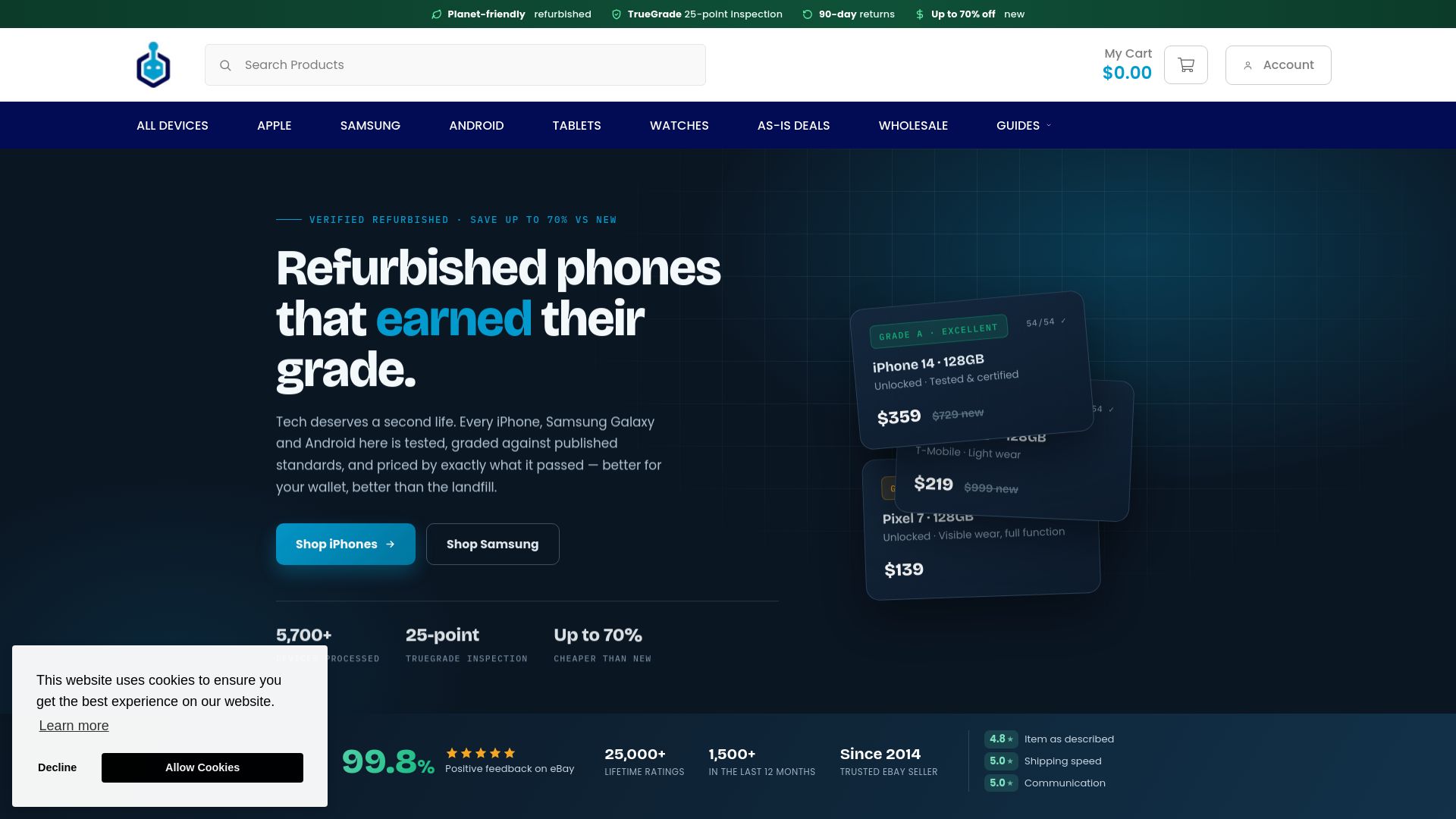
If Grade C fits your budget, browse our refurbished phones, tablets and watches. You can filter Samsung Galaxy phones or Android phones, and each listing shows its inspection and cosmetic grade. Orders include our 90-day return policy, and our eBay history stands at 99.8% positive feedback. Resellers and repair shops can also ask about our wholesale and bulk lots.
For business buyers, Grade C and AS-IS lots are often where the margin is, and we describe each lot’s condition up front so you can plan your repairs and resale grades.
FAQ
What does it mean when a phone is Grade C?
It means the phone is a working device with clear cosmetic wear, such as visible scratches, scuffs or small dents. It is the lowest of the usual A, B and C retail tiers and typically the cheapest. Always read the seller’s own definition, since grades aren’t standardized.
Is a Grade C phone worth buying?
It is worth it when the price gap to Grade B is meaningful and you will use a case. It also works for backup, kids’ and work phones. Make sure the seller documents testing, offers returns and states its battery policy.
Does Grade C mean the battery is worse?
Not necessarily, because the grade mainly rates appearance. Some sellers do set a lower battery threshold for lower tiers, so check the policy. A common general target is more than 80% of original capacity, and you can verify it in your phone’s settings.
What is the difference between Grade B and Grade C?
Grade B shows light signs of use, while Grade C shows more obvious wear such as deeper scratches or dents. Both should be fully functional. The line between them differs by seller, so compare photos and written definitions.
Sources
- Refurbished Phones Have Grades: What’s The Difference (SlashGear)
- Understanding Refurbished Phone Grades (Phonecheck)
- Complete Guide to Buying Refurbished Phones (Phonecheck)
- Should You Buy a Refurbished Phone? (Consumer Reports)
- Refurbished Pixels beat new ones if you avoid these 6 common mistakes (How-To Geek)
- Decoding Refurbished Phone Grades (NSYS Group)


